TL;DR
Solar provided a record 14.4% of UK electricity in July, up 50% YoY. Plug-in solar kits become legal August 27 under new legislation. They cost ~£400, need no professional installation, and save up to £110/year.
Solar output was 50% higher than last year. The UK installed more panels in H1 2026 than any similar period in 15 years. Plug-in kits will cost ~£400 and save up to £110/year.
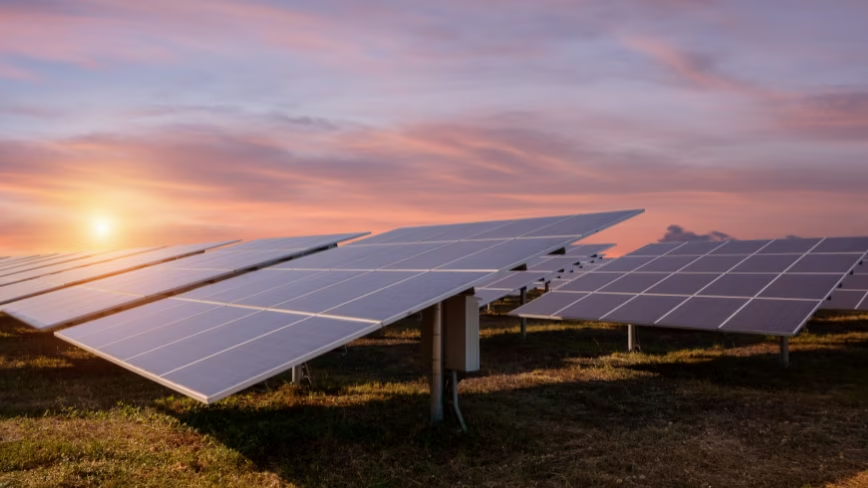
Solar-power
 Credit: Canva
Solar provided a record 14.4% of UK electricity in July, up 50% YoY. Plug-in solar kits become legal August 27 under new legislation. They cost ~£400, need no professional installation, and save up to £110/year.
Solar energy provided a record 14.4% of the UK’s electricity in July, 50% more than the same month last year, according to National Energy System Operator data. The record came from a combination of exceptional sunshine, roughly twice the UK’s average for July, and a surge in rooftop panel installations. The UK installed more solar capacity in the first half of 2026 than in any comparable period for 15 years. Last year saw a record 269,000 solar installations.
The bigger regulatory shift lands on August 27. The UK government confirmed last week that plug-in solar kits, which send electricity into a wall socket without professional installation, become legal under Statutory Instrument 2026/848. The kits are expected to cost around £400 and save households £70 to £110 per year. They will be sold through retailers including Lidl, Currys, and Amazon. Renters, people without roof access, and anyone who cannot afford a full rooftop installation can now participate in solar for the first time.
Germany has been ahead on balcony solar for years, with “Balkonkraftwerk” systems already common in apartment buildings. The UK legalisation closes that gap. Just under a third of the UK’s total solar capacity comes from rooftop panels rather than ground-based farms, and plug-in kits will add a new residential layer that requires no planning permission and no electrician. Denmark paused all new grid connections in March after AI data centre demand overwhelmed capacity. Solar that feeds directly into households without touching the grid is a distributed answer to a centralised problem.
“Fifteen years ago, solar energy was a footnote in the electricity mix. Now it is a major player,” said Chris Hewett, chief executive of Solar Energy UK. Communities across the US have revolted against data centres over power and water consumption, and the UK’s solar record shows that consumer-scale renewable energy can grow alongside industrial demand rather than competing with it. The August 27 legislation opens the door. Whether millions of £400 kits on balconies and garden walls can meaningfully shift the UK’s energy mix depends on how quickly retailers stock them and how fast consumers buy.
Get the most important tech news in your inbox each week.


