TL;DR
Nashville Zoo is fighting a DC BLOX data centre proposed 50 yards from its animals, citing noise risks to endangered clouded leopards.
A petition against the 69,000-square-foot DC BLOX facility has drawn nearly 300,000 signatures, and the Metro Council is considering a data centre moratorium
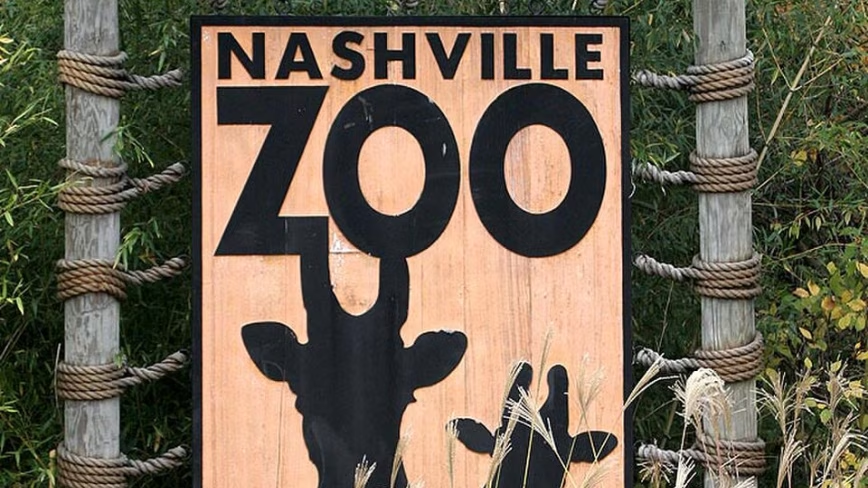
ZOO
 Credit: Peter Meenen
Nashville Zoo is fighting a DC BLOX data centre proposed 50 yards from its animals, citing noise risks to endangered clouded leopards.
The Nashville Zoo has launched a campaign to block a 69,000-square-foot AI data centre proposed by Georgia-based DC BLOX on a site roughly 50 yards from the zoo’s animal enclosures. A petition against the project has drawn nearly 300,000 signatures in less than a week. Nashville’s Metro Council is now considering a data centre moratorium, and the mayor has directed his legal department to review the proposal.
The zoo’s primary concern is noise. Southeast Asian clouded leopards, which the zoo breeds as part of a conservation programme, are classified as vulnerable on the IUCN Red List and as endangered under the US Endangered Species Act. The species is notoriously difficult to breed in captivity and is, according to the zoo’s own website, “sensitive to auditory and visual disturbances.” Zookeepers worry that the constant hum of cooling systems and backup generators could stop the animals from reproducing entirely.
“We are vehemently opposed to having a data centre so close to animals,” Nashville Zoo president and CEO Rick Schwartz told NBC News. The zoo houses more than 3,000 animals across its grounds at Grassmere, and the proposed facility at 648 Grassmere Park would sit immediately adjacent to the property.
The backlash has drawn national attention. Country music star Brad Paisley publicly opposed the project over the weekend, calling it an “absolute nightmare scenario” and urging fans to sign the petition. Courtney Johnston, the Metro Council member whose district includes the zoo, has filed a zoning appeal and said she will push for a vote on a data centre moratorium at a Tuesday council meeting. Nashville mayor Freddie O’Connell told reporters that “we have a lot of concerns about the project and have our legal department looking into it.”
The metropolitan government was caught off guard. Nashville does not yet have zoning rules or building regulations specific to data centres, a gap that DC BLOX appears to have identified. The company filed a grading permit application for a single-storey structure on a 23.5-acre site currently owned by MarketStreet Enterprises. The property has not yet been sold. A separate Metro Council bill that would ban data centres larger than 500,000 square feet and restrict them from being built within half a mile of homes, schools, churches, and zoos has already passed its first reading.
DC BLOX has said it will maintain and test “noise levels to measurable and acceptable levels” and adhere to all federal and local environmental requirements. The company also promised to use “closed-loop or waterless cooling designs to minimize ongoing water use” and stated that the proposed facility is not an AI factory. Those assurances have not slowed the opposition.
Nashville’s fight is the latest in a pattern of community revolts against data centre projects across the United States. In Utah, residents protested a 40,000-acre hyperscale campus backed by Kevin O’Leary until the governor signed an executive order establishing new development standards. In New Brunswick, New Jersey, residents successfully blocked a data centre development entirely. The political dynamics are shifting ahead of November’s midterm elections, with data centre opposition drawing bipartisan support in communities that had never previously organised around infrastructure policy.
The environmental footprint of data centres extends well beyond noise. A United Nations University report published this month found that AI data centres could consume as much water as the basic needs of 1.3 billion people by 2030, reaching 9.3 trillion litres annually. US utilities are planning to spend $1.4 trillion on electricity infrastructure by 2030 to accommodate the demand, more than double the investment of the prior decade. Residential electricity prices have already risen approximately 40 per cent since 2021, and a further 5.1 per cent increase is projected for this year.
The strain is not confined to the US. Denmark paused all new grid connection agreements in March after a 60-gigawatt queue, nearly nine times the country’s peak demand, overwhelmed the system. Ireland imposed a similar moratorium on new data centre connections in Dublin in 2021 that lasted more than two years. The Nashville Zoo case adds a dimension those examples did not have: the tangible, visible harm to animals that a community already cares about, giving the opposition an emotional anchor that electricity bills and grid capacity numbers alone have not provided.
Get the most important tech news in your inbox each week.


