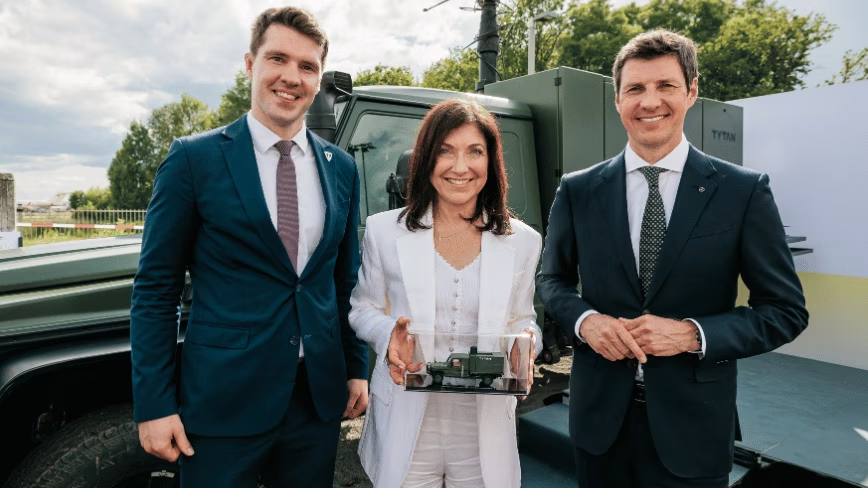
 Credit: TYTAN Technologies
Mercedes-Benz is leaning deeper into defence. The carmaker has signed a memorandum of understanding with TYTAN Technologies, a Munich counter-drone startup, to develop vehicle-based systems that detect and shoot down hostile drones, built on its G-Class SUV and Sprinter van.
Mercedes calls the defence sector “a strategic growth field”.
The deal, signed at the ILA Berlin air show in the presence of Germany’s economy minister, pairs Mercedes’s vehicle platforms with TYTAN’s sensors, AI, and interceptor drones, and the two showed a prototype of a joint vehicle-mounted system at the event.
For now it is exploratory: the agreement sets a framework to “evaluate possible applications” and pursue “later industrial implementation,” within export-control and defence-law limits, rather than a firm production order.
The carmaker-to-defence shift
Mercedes is not pivoting from scratch, it has built military and government versions of the G-Class for years, but it is leaning in as Europe rearms and its core car business stalls under weak demand, Chinese competition, and tariffs. Berlin has openly pushed its industrial base toward defence.
Katherina Reiche, the economy minister who attended the signing, framed it as strengthening “Germany’s technological sovereignty”, while Mercedes board member Michael Schiebe said the company would supply “robust and reliable base vehicles” as TYTAN brought “drone, sensor and mission technology”.
For TYTAN, a deep-tech firm whose interceptors have been tested in Ukraine, the appeal is industrial muscle. “The threat is real, every day we witness overflights above German and European critical infrastructure,” said co-founder and chief executive Balázs Nagy, who wants to protect against drones “not in 2029, but today”.
The company is reported to be opening a Munich factory targeting thousands of interceptors a month.
The timing tracks a boom. Counter-drone systems are one of the fastest-growing corners of defence tech, a market analysts expect to more than triple from about $6.6bn in 2025 to roughly $20bn by 2030, and Europe is racing to build its own.
TNW has tracked the surge from Berlin’s Stark to counter-drone specialists like Norway’s Stendr, and to established players such as Rheinmetall moving in alongside the startups.
The deal is still only a memorandum of understanding, and much of the talk of volumes and timelines reflects the partners’ ambitions rather than signed orders.
But the symbolism is hard to miss: a company that sold more than 2.1 million cars and vans last year now wants to mount drone-killers on them, and in today’s Europe, that looks less like a detour than a hedge.
Get the TNW newsletter
Get the most important tech news in your inbox each week.


