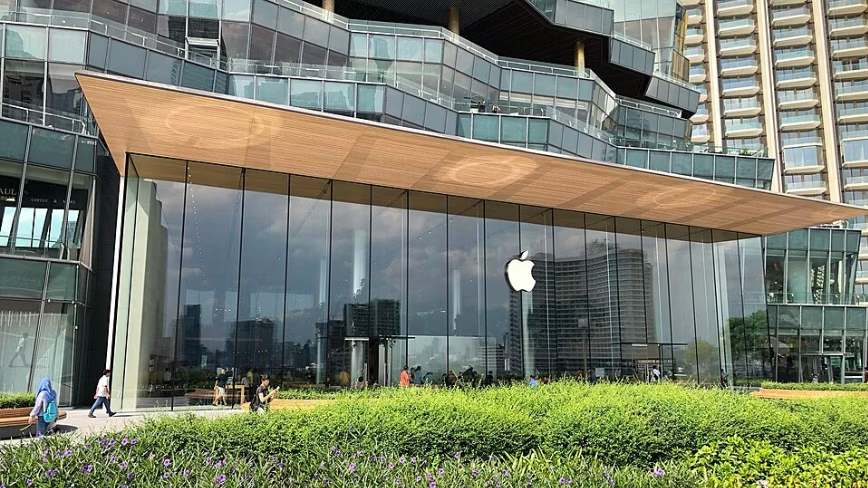
Apple-Store
 Credit: Slyronit
Apple’s most popular laptop has become oddly hard to buy. Order a MacBook Air today and it will not arrive until the end of August, with some memory and colour options slipping into September. Retail staff told Bloomberg’s Mark Gurman that stock is more constrained than they can ever recall.
It also costs more than it did in spring. Apple launched the M5 MacBook Air at $1,099 in March, then lifted it to $1,299 in June. Buyers now pay $200 extra and still wait weeks. The same crunch has raised prices on gear from Roku players to Google’s Pixel 11.
The cause is a memory shortage some call “Ramageddon.” AI data centres are buying up the world’s memory chips. It hit Apple’s niche machines, the Mac mini and Mac Studio, first, and, as TechCrunch noted, has now reached the mainstream Air. Tim Cook called it a “hundred-year flood.”
Apple’s first move is to sell you something else. It is steering shoppers to the pricier entry MacBook Pro, a step Gurman says it has rarely taken. It added a “subject to availability” warning to the Air, delayed its back-to-school promotion, and is chasing Chinese memory for its China devices.
Even the upgrades are shrinking
The squeeze is reshaping what an upgrade even means. Apple’s next budget iPhone, the 18e, is tipped to ship with an odd 9GB of memory, built from six 1.5GB dies rather than a round number. That is one gigabyte more than the 17e, and the bare minimum needed to run Apple Intelligence.
The reason is cost. Apple’s better on-device AI reportedly needs 12GB, so the 18e and even the standard iPhone 18 may miss its best features. In a normal year, a cheap phone would jump to 12GB. In this one, it gains a single, awkward gigabyte, and probably a higher price.
The fix Apple wants is a subscription
The bigger answer arrived last week. Apple Upgrade lets you lease an iPhone or Mac in monthly instalments, financed by Klarna. Apple pitches a flagship as about a dollar a day. The idea is not new, but the timing is. Rising prices make a monthly fee an easier sell than a bigger sticker, with a foldable iPhone expected above $2,000.
The catch is ownership. Lease and re-lease, and you may never own the device, though you can pay off the balance to keep it. Miss payments and, by one account, three strikes ends the lease. Cook keeps steering buyers toward Apple’s strong resale values, which happen to favour Apple.
The software is going the same way, for a different reason. Running AI is expensive, and on his final earnings call, Cook suggested a heavy Siri AI user might have to move up an iCloud+ tier. Some AI camera features already require a $9.99 plan. The sticker price is becoming a monthly line item.
The Siri gamble
All of this funds a bet on AI. When Siri AI arrives this autumn in iOS 27, it becomes the most widely distributed chatbot on Earth overnight, preinstalled on hundreds of millions of iPhones back to the 15 Pro. Reach, for once, is Apple’s advantage.
Winning is another matter. Bloomberg’s testing found Siri AI strong at reading your screen and personal data, but behind ChatGPT on conversation, productivity and third-party apps. Apple is also suing OpenAI over trade secrets, even as both race to put an assistant in your home.
The next thing on the plan is your body
Apple wants more of your life on the subscription, too. A job listing seeks a leader to “define the future of health, well-being and fitness experiences” across its vision products. The plan is to make its coming smart glasses a fitness device, like the Apple Watch and AirPods before them.
It has done this before. AirPods gained heart-rate tracking and hearing-aid features, and camera versions are next. A fitness purpose also gives the glasses a friendlier face than filming strangers, the “creep” problem Apple is wary of. Do not expect it on the first pair, likely due late in 2027.
AI is straining Apple from the other side, too
The boom is even clogging Apple’s security desk. The Financial Times reports Apple has capped how many bug reports researchers can file, with a 30-day cool-off, after a flood of AI-generated submissions. One firm found 50 possible macOS flaws in three weeks. A genuine $200,000 bug reportedly went unread beneath the slop.
Put it all together and the picture is consistent. The memory crisis will pass, though suppliers expect it to worsen first. The habits it is accelerating will not. Apple is nudging you to buy less and rent more, to pay by the month and by the feature, and to stop counting on ever owning the thing at all.
Get the TNW newsletter
Get the most important tech news in your inbox each week.
Also tagged with


