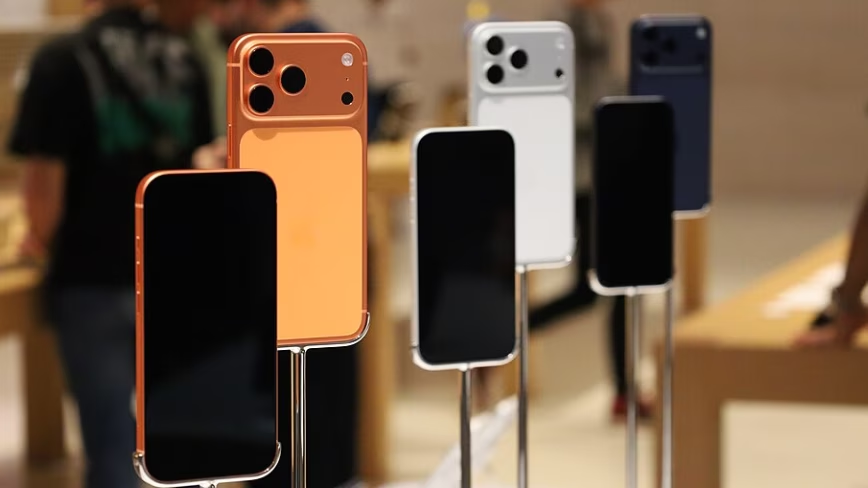
Iphone
 Credit: Ahmad Ali Karim
Apple has a new answer to the complaint that its products cost too much. Do not buy them. Lease them.
On Tuesday the company launched Apple Upgrade in the US, a leasing programme run by the buy-now-pay-later firm Klarna. It covers the iPhone, Apple Watch, Mac and iPad, and it starts at $17.99 a month for an iPhone. It also quietly retires the iPhone Upgrade Program Apple has run since 2015.
The timing is the tell. In June, Apple raised Mac and iPad prices by $100 to more than $1,000, blaming the AI-driven memory shortage. It warned that iPhone rises were coming. Cook called the increases unavoidable. Six weeks later, the fix is not a lower price. It is a smaller-looking one.
The price does not change. The feeling does.
Leasing does not make an iPhone cheaper. It makes it feel cheaper. A $1,099 iPhone 17 Pro becomes $31.99 a month. The sticker shock is replaced by a line item.
“It doesn’t reduce the price of an iPhone, but it changes how consumers perceive the cost by replacing sticker shock with a predictable monthly payment,” Forrester analyst Dipanjan Chatterjee told CNET. That is the entire product. Apple has limited room to keep raising prices, so it is changing how the price lands instead.
You lease it. Klarna owns it.
The catch is ownership, or the lack of it. This is a lease, so Klarna owns the device while you pay for it. At the end of the term you can upgrade, buy the device with a one-time fee, or hand it back. Do nothing, and you roll onto month-to-month payments that Apple says “may increase,” before an automatic purchase charge kicks in.
The fine print rewards attention. Ending a lease early or upgrading early carries fees Apple calls “substantial.” The device has to come back in good condition or you pay a damage fee, and AppleCare is no longer bundled the way it was under the old programme. It is cheaper month to month, but it is a rental, and WIRED reports critics calling the launch “the financialization of the affordability crisis.”
The bricking scare, defused
There was a darker version of this story. Before launch, 9to5Mac found code in an iOS 27 beta for a system that could put a financed device into a “Restricted Mode” over missed payments, locking the owner out of most apps.
Apple headed that off. “There will be no limitations put on device functionality due to missed payments,” spokesperson Brian Bumbery told The Verge. The lender still has leverage, though. Klarna says three missed payments in a row ends the lease and makes the whole balance due at once.
The business Apple is really fixing
Underneath the consumer pitch is an Apple problem. People keep their iPhones for nearly four years now. A company that lives on upgrade cycles would rather they did not. A lease nudges you back to the store every year or two, and smooths the lumpy, launch-driven sales that investors dislike.
It also puts Apple head to head with the carriers. They have long used device financing to lock people into wireless plans. And it lands at a pointed moment. Analysts expect the iPhone 18 to be more expensive in September, with a foldable model rumoured near $2,500. A monthly payment is a gentler way to sell a $2,500 phone.
The move fits a longer pattern. Cook spent a decade turning Apple into a subscription business, and the hardware was the last thing you still simply bought. Now the devices are metered too. Apple reports earnings on Thursday, in Cook’s final quarter before he becomes chairman. He leaves the iPhone looking a little more like a service, and a little less like a thing you own.
Get the TNW newsletter
Get the most important tech news in your inbox each week.
Also tagged with


