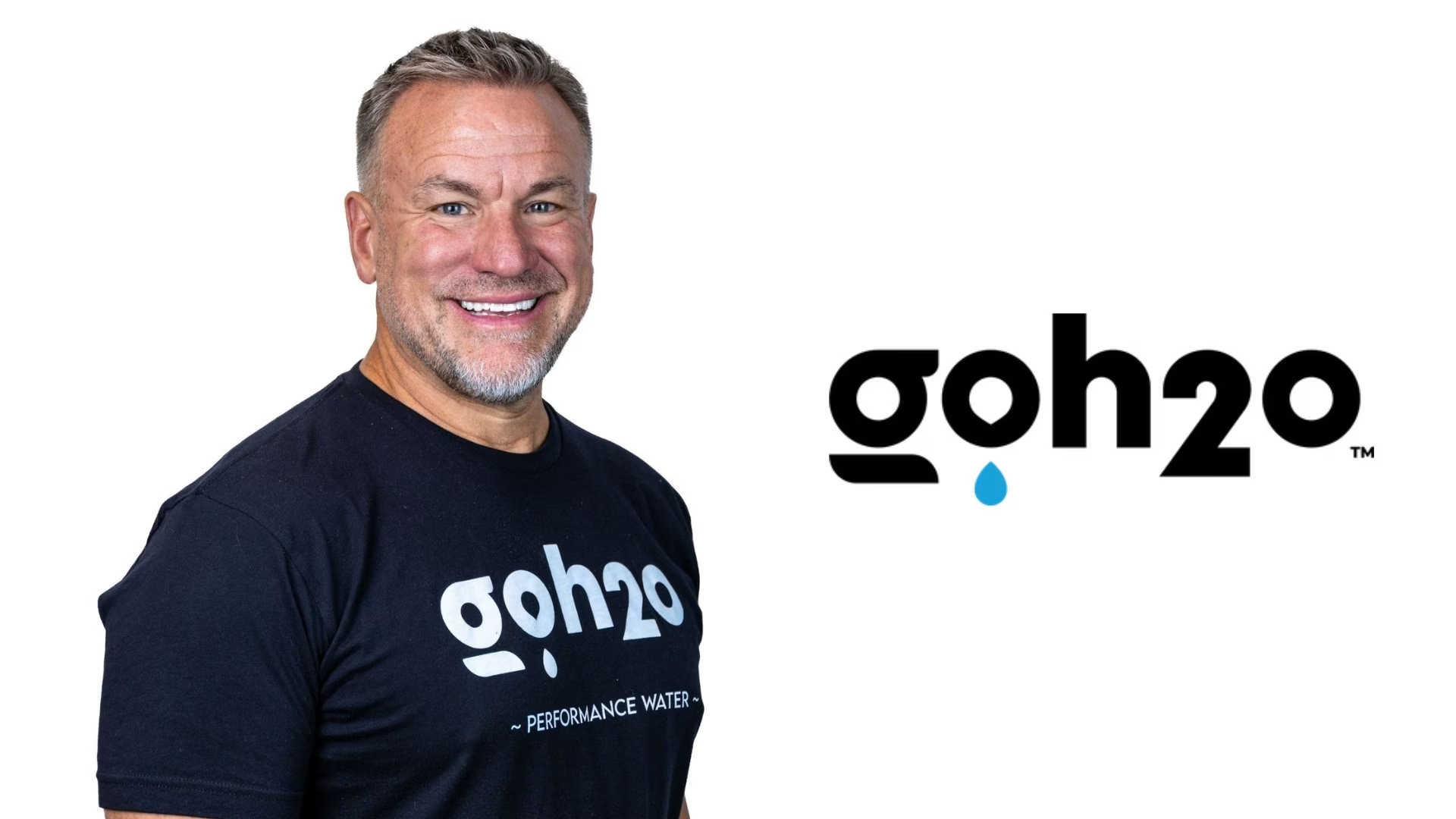
Robert Hawkins, founder and CEO of goh2o. (Source: Rob Hawkins)
Most people expect the water from their tap to be safe, yet many no longer take that for granted. In Gallup’s March 2026 Environment poll, 56% of Americans said they worry “a great deal” about drinking water pollution. Another 26% said they worry “a fair amount.” That concern may shape everyday choices, from buying cases of bottled water to installing water filters at home.
Those choices can carry their own costs, including recurring spending, single-use plastic waste, and filters that need regular upkeep. Founded in 2000, Colorado Springs-based goh2o designs and manufactures water vending and refill machines, along with purification systems for homes.
Its founder and CEO, Robert Hawkins, believes the quality of drinking water matters for personal health as well as for the environment, particularly where single-use plastic bottles are concerned.
From the Navy to vending machines
His interest in water treatment began in the U.S. Navy, where he served on an aircraft carrier that purified seawater for its engines, cooking, laundry, and drinking. After leaving the Navy, he worked in engineering for a research and development company.
As a competitive cyclist, he also paid close attention to hydration. He later began placing water purification vending machines in health food stores in Colorado.
Today, the company’s machines range from personal bottle refill stations to window-mounted, wall-mounted, and bulk water vending units. Businesses such as laundromats, gyms, schools, hotels, and retailers host them. Members of the public use them to refill their own bottles and containers.
Host businesses can purchase the machines or take part in a revenue-sharing arrangement in which the company handles installation and maintenance. It also supplies the replacement filters and parts that the machines require.
Built in Colorado
According to the company, the machines treat water through multistage reverse osmosis filtration and ultraviolet treatment before it is dispensed. They are built from stainless steel and designed to resemble household appliances, a choice Hawkins links to trust. In his view, a worn machine can suggest the filters are not being changed.
“I just felt like the visual quality of the equipment mattered as much as the quality of the water,” he says.
That focus on equipment led the company to take on its own manufacturing. Hawkins bought the business that previously supplied his machines, despite doubts from others in the industry. The company now builds its machines in Colorado.
“My timing was better,” he notes. “Everybody who told me it wasn’t going to work would have been right if I had done it 10 years earlier.”
The residential systems follow a similar principle. They are designed to monitor themselves so that users do not need technical knowledge to maintain them. Hawkins explains that the units display water quality as it is dispensed. They also flush themselves periodically to help maintain the filters.
“As simple as water should be, it’s not,” he remarks. “But you shouldn’t have to know what I know to fill up your cup and take a drink.”
The limits of the approach
The approach has limits. Cheaper machines and filters are widely available. Stainless steel units cost more to build, while the water they sell is priced in cents. The return for a host business may therefore depend on steady use.
Hawkins acknowledges that upfront cost is the main drawback for buyers. A college he recently presented to, for example, is considering machines for its athletic facility, and any wider rollout would depend on its budget.
Hawkins says he prefers to explain how water quality works rather than push a sale. In his experience, many of the people he speaks with are unsure what their tap water contains or how it is treated.
“I’m not here to convince people of something more than I am to educate you,” he states. “And then you make your own decisions.”
Over time, he sees refill stations becoming a common option for people who carry their own bottles. That could also reduce reliance on single-use plastic.
Recent attention on how much water AI data centers consume has shaped his view of what purification technology could do more widely.
“If we can do this for a data center, how can we duplicate this to get this to other human beings around the globe?” he asks.
In the meantime, the company is buying the sheet metal shop that fabricates its machines, a move intended to help production keep pace with demand.
Get the TNW newsletter
Get the most important tech news in your inbox each week.


