TL;DR
GM sold 714,896 vehicles in Q2, down four percent from a year ago, as EV demand declined and Toyota continued closing the gap.
The automaker sold 714,896 vehicles from April through June, beating Cox Automotive forecasts but still losing ground to Toyota in the sales race
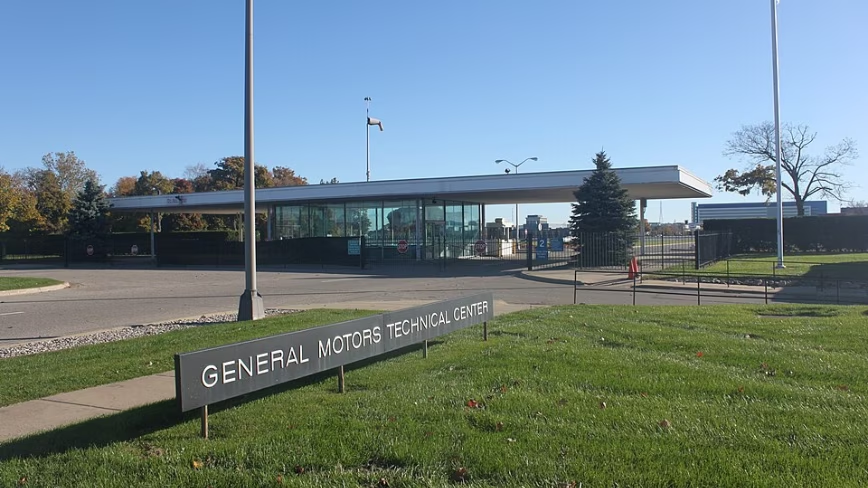
GM
 Credit: Darren56brown
GM sold 714,896 vehicles in Q2, down four percent from a year ago, as EV demand declined and Toyota continued closing the gap.
General Motors’ second-quarter US sales fell just over four percent as demand for its all-electric vehicles and Chevrolet Silverado pickup trucks declined year over year. The Detroit automaker reported selling 714,896 vehicles from April through June, down from 746,588 units during the same period in 2025. First-half sales came in at roughly 1,300,000 units, down nearly seven percent compared with a year ago.
The results were slightly better than analysts expected. Cox Automotive had forecast a decline of about five percent for the second quarter and more than seven percent through the first half. GM North America President Duncan Aldred said in a release that business is performing well and that customer demand remains resilient, especially for trucks and SUVs.
The headline number masks a deeper problem with GM’s electric vehicle strategy. In the first quarter, Blazer EV sales crashed 83 percent year over year and Silverado EV sales fell 41 percent, and CNBC reported that the EV decline continued into the second quarter. GM indefinitely suspended development of its next-generation electric truck earlier this year and took roughly eight billion dollars in EV-related charges during 2025, including writedowns tied to scrapped production plans and cancelled battery contracts.
The decline comes as Toyota continues to close in on GM’s position as America’s top-selling automaker. Cox Automotive projected last week that Toyota would narrow the gap to fewer than 100,000 vehicles through the first half, the closest the two companies have been since Toyota briefly took the crown in 2021. Toyota’s gains have been driven by its hybrid lineup, which is growing at roughly 10 percent while EV sales across the industry have fallen more than 23 percent.
GM’s lack of hybrid models has left it particularly exposed. The company dismissed hybrids as transitional technology and bet heavily on a full EV portfolio, leaving the Corvette E-Ray as its only hybrid while competitors like Toyota, Honda, and Hyundai leaned into hybrids as the market shifted. CEO Mary Barra said in January that GM is working on a hybrid and plug-in hybrid strategy but has given no production timeline.
Tariffs are adding to the pressure. GM has projected between two and a half billion and three and a half billion dollars in gross tariff costs for 2026, driven by Section 232 levies on steel and aluminum imports. A dozen EV models have been discontinued or cancelled across the US market this year as 25 percent import tariffs and the expiration of the $7,500 federal tax credit have made many electric models uneconomic.
GM is not the only automaker losing ground. Cox Automotive estimates that Ford’s first-half sales fell more than 10 percent and Tesla volumes dropped nearly 15 percent, while Stellantis posted a rebound with sales up nearly five percent for its first market-share gain since 2019. The pattern is consistent: automakers with strong hybrid or domestically built lineups are holding up, while those that bet on EVs without a hybrid fallback are retreating.
The broader US new-vehicle market is expected to finish 2026 at roughly 15,800,000 units, down about three percent from 2025, according to Cox Automotive. GM retains the sales lead for now, but the second straight quarterly decline, combined with Toyota’s momentum and an EV strategy that is visibly stalling, leaves the company defending a position it has held almost continuously since 1931.
Get the most important tech news in your inbox each week.


