TL;DR
Flock Safety pitched using 350,000 rideshare dashcams as mobile license plate scanners via a partnership with Nexar. Leaked document from Georgia AG public records request. Flock says the deal was never executed. Passengers would not have been told.
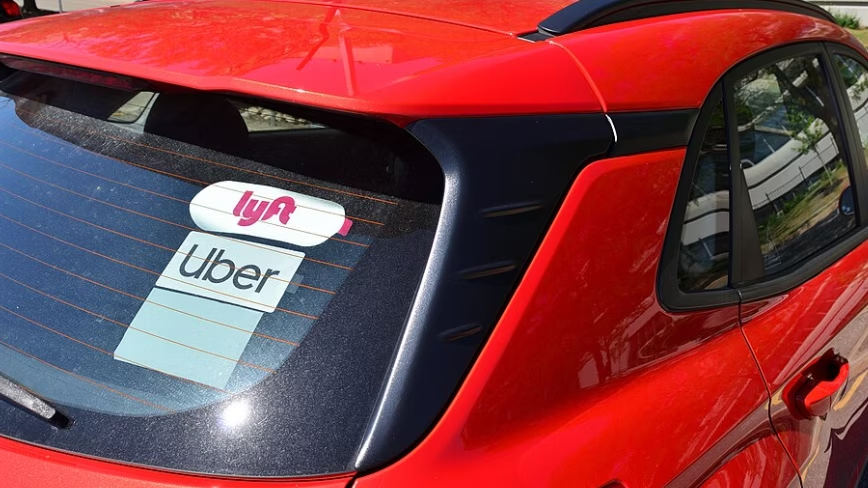
Flock Safety pitched a plan to equip hundreds of thousands of Uber, Lyft, and delivery drivers with dashcams that would scan license plates along their routes, effectively turning the rideshare fleet into a mobile extension of its surveillance network. A company presentation obtained by 404 Media through a Georgia public records request describes a proposed partnership with Nexar, a dashcam maker already popular with rideshare drivers. The document was presented to Georgia’s attorney general’s office. Flock told 404 Media the deal was never executed.
The scale was ambitious: roughly 350,000 rideshare and delivery vehicles would have joined Flock’s existing network of fixed cameras, expanding coverage far beyond poles on the side of the road. It remains unclear whether Uber, Lyft, or the drivers themselves would have known their vehicles were collecting data for law enforcement. Passengers certainly would not have been told. Flock already operates more than 100,000 fixed cameras across the US, and police departments in one state can search footage captured in another through its national network.
The proposal fits a pattern. 404 Media previously reported on a security breach that exposed a large trove of Nexar customer footage, including footage near military sites. It also reported on a separate Flock effort, later abandoned, to build a tool linking license plates to specific individuals using leaked data. A similar arrangement involving BusPatrol, which outfits school buses with cameras and shares the data with police, has already been deployed.
That Flock says the Nexar deal never went through does not settle the question. The presentation shows the company actively marketing the concept to a state attorney general, which means the idea was far enough along to pitch to law enforcement as a product. Uber, Lyft, and Nexar did not respond to 404 Media’s requests for comment. The document was obtained by a Georgia resident through a standard public records request, the kind of discovery that only happens when someone thinks to ask.


 Credit: Raysonho @ Open Grid Scheduler / Scalable Grid Engine