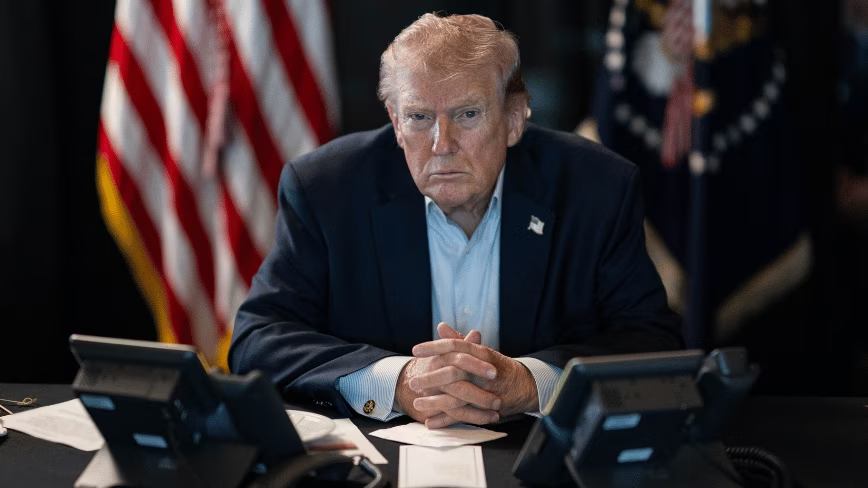
President Donald J. Trump oversees Operation Epic Fury at Mar-a-Lago, Palm Beach, FL, March 1, 2026.
 Credit: Daniel Torok / White House via Rawpixel.com / Shutterstock
The US Department of Homeland Security proposed a rule on Monday. It would charge employers $103,265 for a new H-1B visa. Daniel Wiessner reported the filing for Reuters. A federal judge blocked a similar fee in June, calling it unlawful.
H-1B visas let US employers hire foreign workers trained in specialty fields, and the technology sector leans on them heavily. The programme offers 65,000 visas a year, plus another 20,000 for workers with advanced degrees, approved for three to six years. Those visas used to cost between $2,000 and $5,000.
What the rule says
The fee would apply to petitions subject to the annual cap of 85,000 visas. That includes the 20,000 reserved for workers holding a US master’s degree or higher. Employers would pay it on top of existing filing fees.
Nothing changes yet. The Federal Register publishes the notice on 25 August, and the rule must then clear the federal regulatory process. Reuters reported the administration could finalise it by the end of the year.
Who it does not touch
The rule spares cap-exempt petitions, including many posts at universities and at nonprofit or government research institutions.
It would also spare foreign citizens already in the United States on student visas. They make up a large share of new H-1B recipients. Renewals of current visas escape the charge as well.
A judge already blocked this
Trump first imposed a $100,000 fee by order last year. He invoked the president’s power under immigration law to restrict the entry of foreign nationals who would be detrimental to US interests.
A federal judge ruled it unlawful in June and stopped the government collecting it. A Boston appeals court is reviewing that decision. A separate court weighs a challenge from a major business group.
The order expires in September unless extended, a year after Trump signed it. DHS says the new fee rests on different legal authority.
Where the money would go
The proposal splits the revenue across six agencies. US Citizenship and Immigration Services would take about $3bn. The Executive Office for Immigration Review, which runs the immigration courts, would take about $2.96bn.
Immigration and Customs Enforcement would receive roughly $1.05bn and the Labor Department about $1.21bn. The State Department would get about $484m and Customs and Border Protection around $76m. Billal Rahman listed the split for Newsweek.
Those allocations add up to about $8.78bn. The annual cap of 85,000 visas, charged at $103,265 each, comes to about the same figure.
DHS says the money would fund adjudications, fraud detection and national security vetting. It also lists labour compliance enforcement, visa screening, immigration court operations and border biometric systems.
The legal fight
The US Chamber of Commerce is challenging the fee, alongside Democratic-led states and a coalition of unions and employers. The plaintiffs could amend those suits to cover the new rule once it is final.
The challengers make two arguments. Trump’s power to restrict entry does not let him override the law that created the H-1B programme, they say. And the Homeland Security Department cannot impose fees or taxes to raise revenue without permission from Congress.
The administration says the fee is not a traditional tax. Courts have little power to question presidential authority over entry into the country, it argues.
Almost nobody paid the first one
About 70 employers had paid the $100,000 fee, across 85 visa applications, as of late February. That figure comes from court filings cited by Reuters.
Applications were already falling
Employers registered for about 344,000 H-1B visas last year, on figures from US Citizenship and Immigration Services. That is down more than 25% from 2024.
It is also fewer than half the 794,000 registrations sought in 2023.
The rest of the crackdown
The fee is one piece of a wider overhaul. The administration has ordered enhanced vetting of H-1B applicants. It has also proposed replacing the lottery with a weighted system favouring higher-paid and higher-skilled workers.
It has also proposed scrapping the grace period that lets laid-off H-1B workers stay while they look for another job.
Earlier this month DHS added fees of up to $4,500 to applications to extend an H-1B worker’s stay, or to move an employee into the United States from abroad. That charge arrived in a separate rule covering the 9/11 response and biometric entry-exit fee.
Newsweek also reported that DHS is weighing a $100,000 charge on F-1 graduates who want to join Optional Practical Training, the post-graduation work scheme international students rely on.
The argument over the programme
Trump and other critics say companies abuse the visa to replace American workers with cheaper foreign labour. They argue it suppresses wages and narrows opportunities for American graduates. Business groups counter that they cannot find enough qualified American workers for some jobs. They say the route lets them fill specialised roles in fields such as engineering and software development.
Newsweek reported the proposal is likely to intensify a long-running divide among Republicans over high-skilled immigration.
The dispute is not hypothetical for the industry. OpenAI paid $3.2m to settle a US claim that it favoured visa workers over Americans.
The domestic labour market it is meant to protect is moving on its own. New York now has more tech workers than San Francisco for the first time.
Hiring markets elsewhere
In India, Nomura found AI creating more jobs than it destroys. Chinese AI and chip companies are handing out equity to hold on to their engineers.
At $103,265, one cap-subject hire would cost an American employer more than twenty times the old fee.
Get the TNW newsletter
Get the most important tech news in your inbox each week.


