TL;DR
Anti-data center groups doubled to 833 across 49 US states and disrupted 75 projects worth $130bn in Q1 2026, matching all of 2025 in three months.
A new report from Data Center Watch finds opposition groups have doubled to 833 across 49 states, and the number of projects blocked or delayed in Q1 matched the total for all of 2025
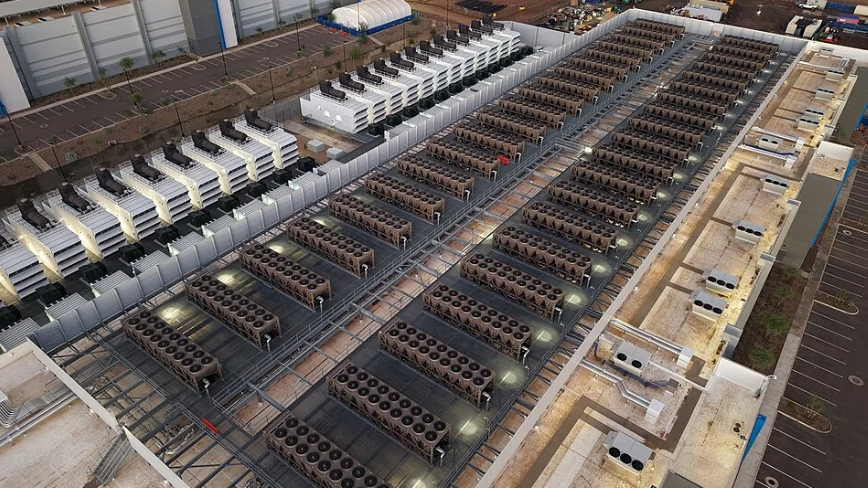
Roof of a data center featuring cooling towers and backup generators
 Credit: Rsparks3
Anti-data center groups doubled to 833 across 49 US states and disrupted 75 projects worth $130bn in Q1 2026, matching all of 2025 in three months.
Grassroots opposition to data center construction in the United States has reached a scale that is starting to reshape where and whether the AI industry can build. A new report from Data Center Watch, a tracker maintained by AI research firm 10a Labs, found that activists blocked or delayed at least 75 projects worth a combined $130 billion in the first quarter of 2026. According to NBC News, that is the most disruptions recorded in a three-month period since the group began tracking in 2023.
The pace represents a structural shift, not a spike. The total number and value of projects disrupted in Q1 roughly matched the full-year total for 2025, according to the report. The number of active anti-data center groups more than doubled from 396 at the end of 2025 to 833 by March, spread across 49 states, with Maryland, Ohio, and Texas hosting the most.
The opposition is bipartisan and locally driven. Communities are organising around electricity costs, water consumption, and noise, the same concerns that have already forced Denmark to pause all new grid connections for data centres and prompted the EU to ask households to cut peak electricity use because AI data centres are straining the grid.
Legislative momentum is building alongside the grassroots resistance. Data Center Watch counted 14 statewide measures introduced in Q1 2026, and a separate analysis by MultiState identified moratorium bills across 11 states with proposed pauses ranging from three months to four years. More than 300 data-center-related bills were introduced in statehouses in just the first six weeks of the year.
None of the statewide moratoriums have passed yet, but they are getting close. Maine’s legislature passed one in April that would have paused permitting for facilities drawing 20 megawatts or more, the first of its kind in the country. Governor Janet Mills vetoed it but said she would have signed it if the bill had exempted a specific project in Jay, Maine that had strong local support, and she separately signed a law barring data centers from state tax incentives.
A Heatmap Pro poll found that a majority of Americans would “strongly” oppose a data center being built near their home, a shift from a survey nine months earlier that showed the public roughly evenly divided. Gallup data puts the figure at 70% opposed. The speed of the opinion shift suggests the issue is crossing from local planning disputes into broader political territory.
The industry is spending as though the opposition will not hold. US utilities plan to spend $1.4 trillion by 2030 on grid infrastructure driven largely by data centre demand, and hyperscaler capital expenditure is projected to exceed $690 billion in 2026 alone. The gap between what the industry wants to build and what communities are willing to accept is widening faster than either side expected.
In some cases, opposition is now mobilising before any project is officially filed. The mere rumour of a data center has been enough to trigger organised resistance, according to the report. That pre-emptive organising makes siting decisions harder even in states without formal moratoriums, because local permitting bodies face political pressure before a single application lands on their desk.
The Atlantic published a contrarian essay on Friday arguing that the backlash is overblown and that data centers can bring real economic benefits to host communities. The piece acknowledged that opposing data centers is good politics but argued it is not always good policy. Whether that argument gains traction will depend on whether the industry can demonstrate tangible local benefits beyond tax revenue, something most communities have not yet seen.
The report paints a picture of an industry that assumed it could build its way through local opposition with money and speed, and a country that is deciding otherwise, one zoning board at a time.
Get the most important tech news in your inbox each week.


