TL;DR
China’s passenger car sales fell 20.2% in H1 2026 to 8.7M units. ICE vehicles down 39% in June. Exports up 82%. Industry margins at 3.4%. A shakeout is coming.
ICE vehicle sales collapsed 39% in June. Industry profit margins fell to 3.4%. Analysts say only seven or eight automakers will survive to 2030.
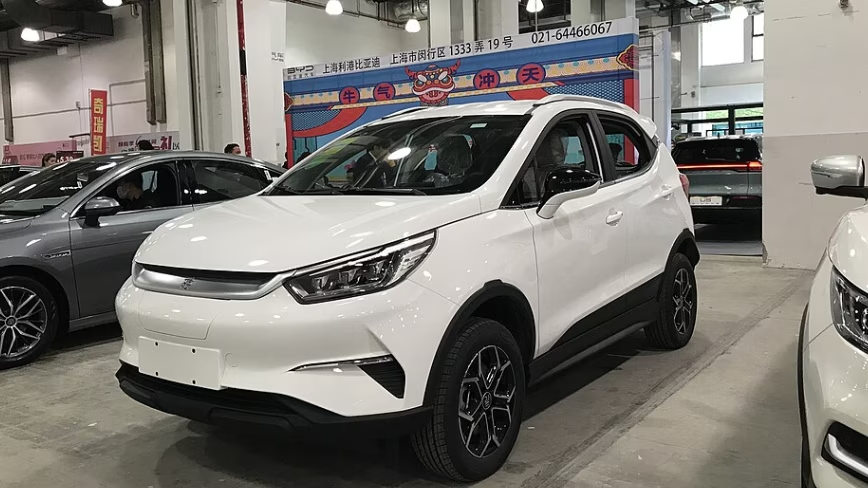
BYD
 Credit: Jengtingchen
China’s passenger car sales fell 20.2% in H1 2026 to 8.7M units. ICE vehicles down 39% in June. Exports up 82%. Industry margins at 3.4%. A shakeout is coming.
China’s passenger car sales fell 20.2% in the first half of 2026 to 8.7 million units, and the China Passenger Car Association has lowered its full-year forecast to a 14% decline, projecting 20.4 million deliveries, down from a record 23.7 million in 2025. Citic CLSA’s Xiao Feng expects a 20% full-year drop. “This is going to continue to be a brutal year,” said Tu Le, founder of Sino Auto Insights.
The collapse is concentrated in petrol cars. Retail sales of internal combustion engine vehicles fell 39% year-on-year in June, with pure gasoline models down 42%, accounting for 78% of the total decline that month. Transportation energy costs soared 15.3% year-on-year in June, crushing demand for cars that burn fuel. On the electric side, Beijing’s pullback of NEV subsidies that had stimulated record 2025 sales is now pulling demand forward in reverse. “Policy only moves demand around,” Feng told CNBC. Even new energy vehicle sales are expected to fall 5-6%.
Automakers are being squeezed from both ends. Battery input costs, including lithium and memory chips, are rising. Industry profit margins fell to 3.4% in January-May, while industry profits dropped 20% year-on-year. Passenger vehicle prices fell more than 1% in June, further thinning already razor margins. Feng estimates a Chinese automaker needs 500,000 annual sales to break even, 1 million for sustainable profits, and 2 million for full economies of scale. He expects the market to consolidate to seven or eight players by 2030, with BYD (1.8 million H1 sales), Geely (1.4 million), and Leapmotor (356,000) among the survivors alongside Volkswagen and Toyota. Chinese automakers are opening new markets, from Canada to the UK, precisely because the domestic market can no longer absorb their output.
Exports are the lifeline. Total passenger vehicle exports surged 82.3% year-on-year to 877,000 units in June. Chinese EV content is flooding American social media even though 100% tariffs block the cars themselves. The Middle East conflict has driven fuel costs higher worldwide, pushing overseas consumers toward cheaper Chinese EVs. Feng expects a rebound in 2027 as vehicle fleets age and replacement cycles kick in. But between now and then, the shakeout will decide which companies are still around to benefit.
Get the most important tech news in your inbox each week.


