 Credit: OpenAI
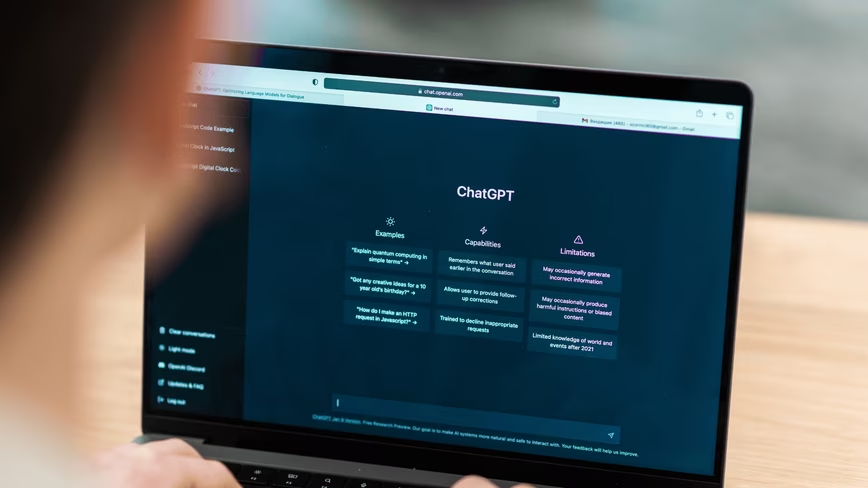
ChatGPT is about to hit 1 billion weekly active users. OpenAI wanted to be here seven months ago.
The chatbot is on the verge of the milestone, based on figures OpenAI has shared internally, The Information reported. The company had hoped to reach a billion weekly users by the end of last year. It is arriving in the middle of 2026 instead.
Late, and still the fastest ever
The delay barely dents the achievement. ChatGPT is one of the fastest internet products in history to reach this scale, and it has done it in under four years. Roughly one in eight people online now open it in a given week, for everything from code to medical questions.
The climb has been steep. ChatGPT had about 400 million weekly users in February 2025. Sam Altman put the figure at 800 million by October, and it passed 900 million in February 2026. In June it became the fastest app ever to reach a billion monthly users.
Missing its own targets
The seven-month miss is the more revealing number. It is the first real sign that even the runaway leader in consumer AI is bumping against its own forecasts. Growth at a billion users is far harder to sustain than growth at a hundred million.
Competition is not helping. Google’s Gemini and a wave of cheaper Chinese models are chipping at the edges. Rivals no longer trail as far behind as they did a year ago. OpenAI still leads by a distance, but the lead is being defended, not extended.
Why the number matters
The user count is not just a bragging right. It underpins the valuation behind OpenAI’s march toward an IPO, and the case that consumer attention, not only enterprise contracts, will pay for the compute.
Sceptics such as Gary Marcus argue those expectations have run ahead of the business. A billion people a week is a powerful answer, even if it landed later than promised.
Get the TNW newsletter
Get the most important tech news in your inbox each week.


