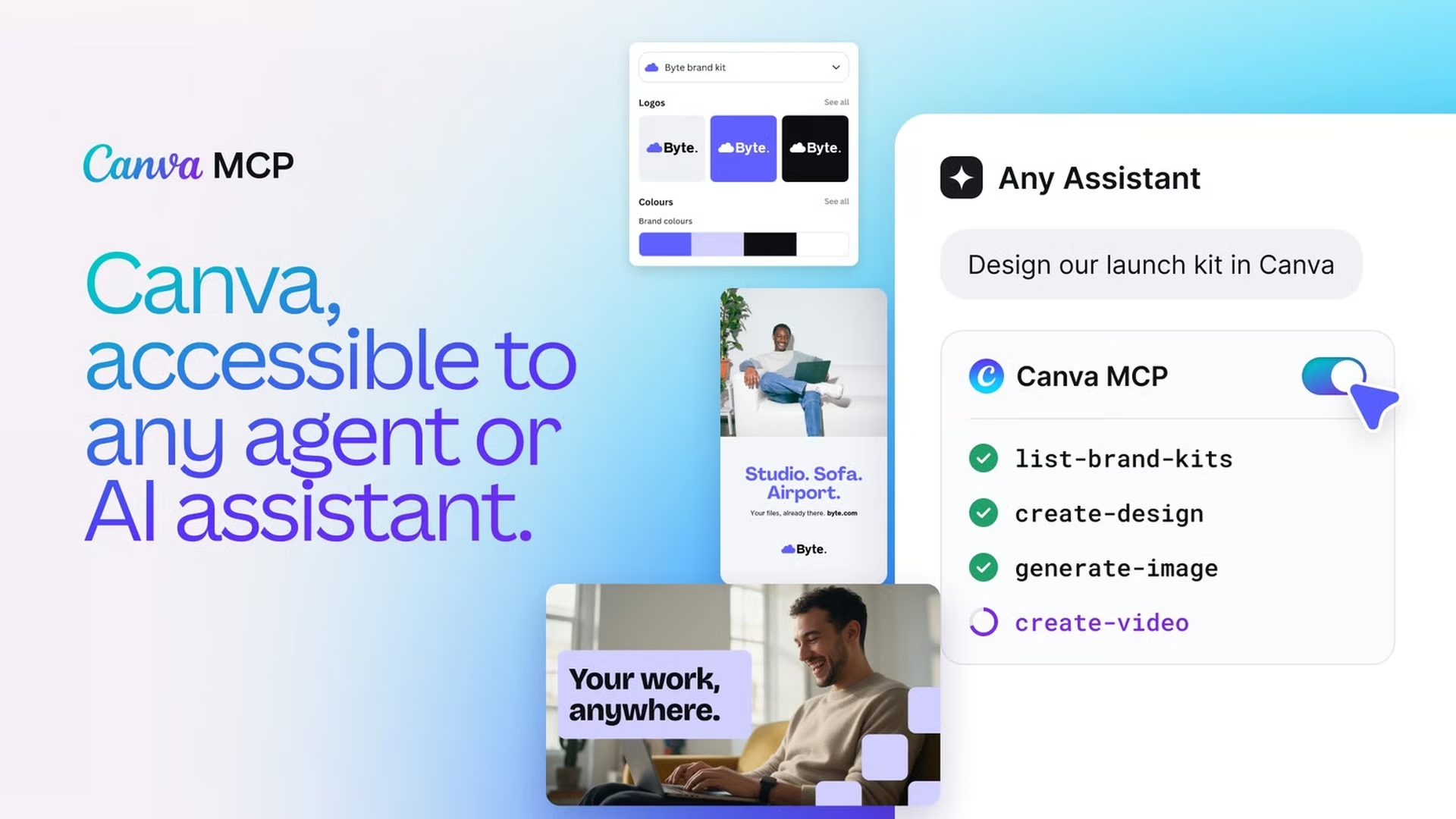
Canva MCP — any agent or AI assistant
 Credit: Canva
Canva is opening its design tools to AI agents and to developers building other products. The company has made its MCP server generally available with no waitlist, and added new APIs so Canva can run inside other software rather than only in its own apps.
MCP is short for Model Context Protocol, an open standard that lets AI assistants plug into outside tools. Canva’s server, built on it, already powers millions of design tasks inside assistants such as ChatGPT, Claude, and Gemini.
Canva becomes the design layer inside Claude with new Anthropic partnership
Moreover, Canva says nearly 500,000 people have signed up through MCP since October, and that usage grew 93% in a month.
The company has also rebuilt the server around how agents behave, merging overlapping tools so that even agents running on smaller models pick the right one. Agents can now generate editable designs, images, and video, remove backgrounds, turn flat images into layered files, and resize and export the finished work.
For someone sitting in a chat, it works like this: ask for an Instagram post, and back comes a real Canva design in the brand’s own colours and fonts. The result opens in an editing panel beside the conversation, so a wonky headline gets fixed by hand rather than by another round of prompting.
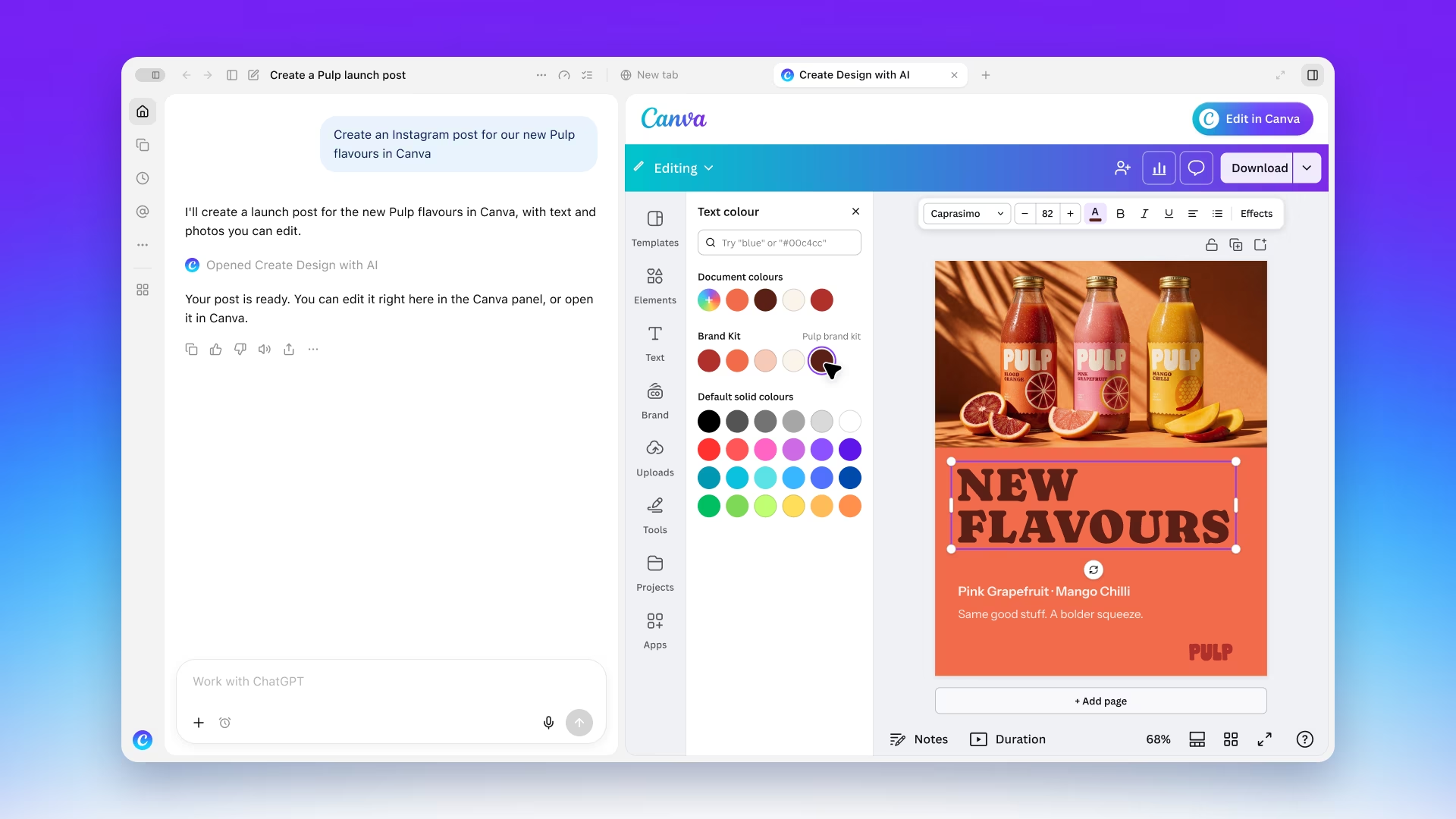
Video gets the same treatment, as an agent can turn out a short product clip, voiceover included, and hand it back on an editable timeline rather than as a finished file nobody can change.
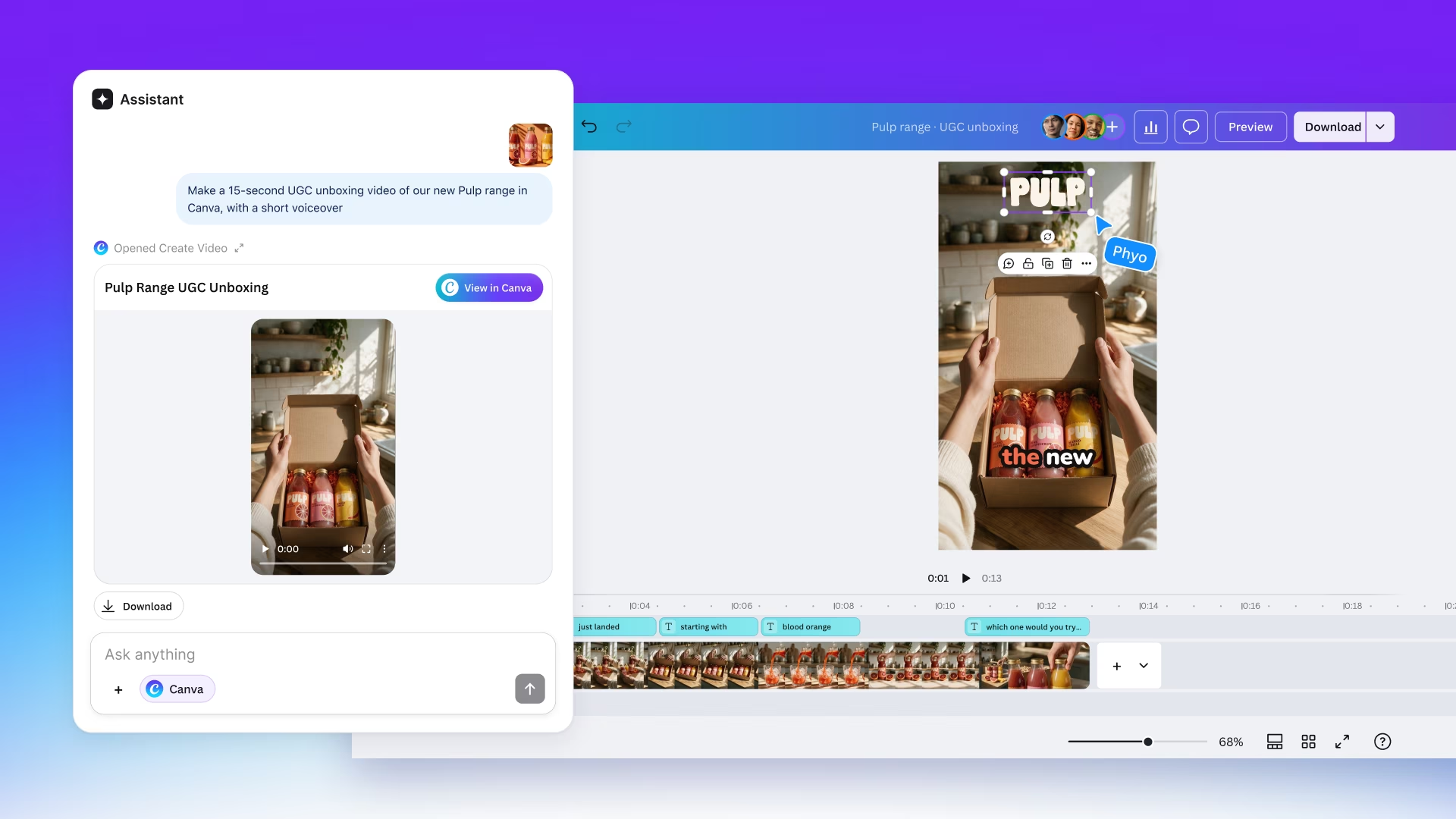
Developers who want more control can reach the same features through new REST APIs instead, and a command-line tool covers bulk jobs. That tool’s main users are already agents, which Canva says typed 72% of its commands in October.
For bigger companies, new service accounts and API billing let automated workflows run without an employee being signed in. People using a product built on Canva won’t each need a Canva account of their own, while the developer manages usage and costs.
Canva is also opening up Craft, its in-house image generation model, through the API and MCP. The models, built by Canva Research for design and editing work, were until now only available inside Canva’s own products.
Canva says four in ten people arriving through MCP are new to the product or returning after a long absence. Those who come in through an AI assistant are 2.5 times more likely to use its AI tools. The yearly revenue it expects from MCP has more than tripled since September.
The pitch to other companies is a simple one: any product whose users need to make something can now carry Canva inside it, without building design tools of its own.
All of it serves an ambition Canva calls “the design layer of the internet”: being the technology other products build on whenever their users need to create something.
Get the TNW newsletter
Get the most important tech news in your inbox each week.


