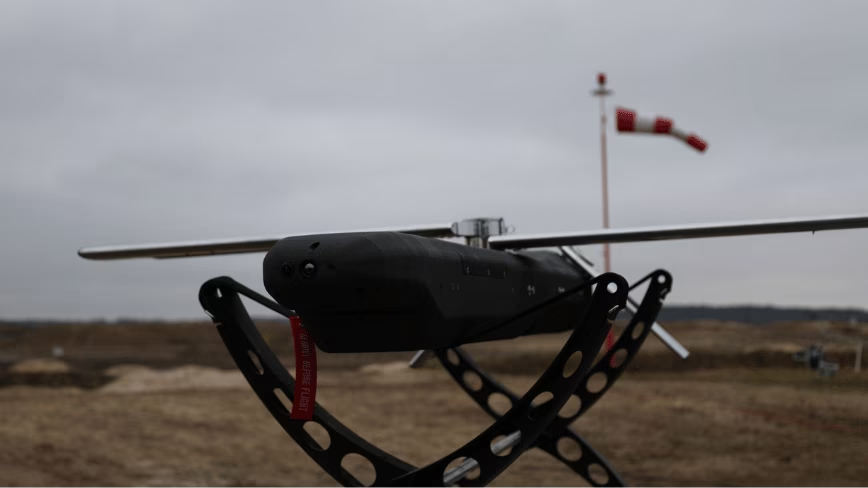
Cambridge Aerospace, a British defence-technology startup building systems to shoot down drones and cruise missiles, is in talks to raise around $300M at a valuation of about $3.5bn, according to a Bloomberg report citing people familiar with the matter.
Venture firm DFJ Growth is in talks to lead the round, the people said. The financing is not finalised and the amount could still change. A spokesperson for Cambridge Aerospace declined to comment, and DFJ Growth did not respond to Bloomberg’s requests.
If it closes at that level, the round would value the company at almost nine times the $400M valuation Bloomberg reported it raised at a year ago, before it had shipped a single product.
What Cambridge Aerospace builds
Founded in late 2024 by aerospace engineer and University of Cambridge professor Steven Barrett, the company has become one of Europe’s most valuable defence startups. Its backers include Accel, Lakestar, Lux Capital, and Spark Capital.
It is developing two interceptor drones. The Skyhammer is tube-launched, with a range of up to 30 km and a top speed of 700 km/h. It has been in testing since early 2025 and is entering early-stage production. The Starhammer is rocket-powered and built to catch faster missiles.
In April, the UK signed a supply deal with the company for hundreds of Skyhammer systems, an early government customer that helps explain investor appetite.
A defence boom pricing startups like incumbents
Cheap drones have reshaped the battlefield, and with them the economics of air defence. Low-cost interceptors can down an unmanned aircraft for a fraction of the cost of a traditional air-defence missile, which can run into the millions. They have been used heavily in Ukraine and during the recent conflict involving Iran and Israel.
That shift has triggered a funding surge across the continent. Berlin’s Stark is raising €300M at a €2.5bn valuation, Paris-based Alta Ares raised €50M for AI interceptors, and German startups have absorbed most of Europe’s record defence-tech investment. A Cambridge Aerospace round would put a UK name near the top of that table, alongside efforts such as ARX Robotics.
The harder question is what investors are paying for. Cambridge Aerospace is 18 months old and only now moving Skyhammer into early production. A $3.5bn price tag assumes the order book, and the war-driven demand behind it, holds. The round is still in talks, the terms could change, and the company is not commenting.
Whether Europe’s defence re-rating has run ahead of what these startups have actually delivered is the question this deal puts on the table.
Get the TNW newsletter
Get the most important tech news in your inbox each week.


