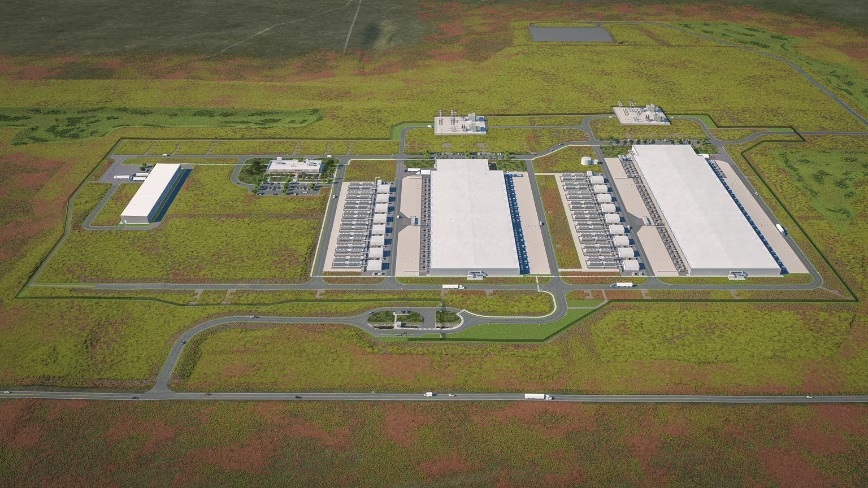
 Credit: Meta
Big Tech built its reputation on mountains of cash. It is building its AI empire on debt, and the bill is starting to land in Europe.
The five biggest builders of AI data centres in the US have doubled their debt over five years. Together, Alphabet, Amazon, Meta, Microsoft and Oracle have piled on about $350bn, according to data compiled by Bloomberg. They are betting that cutting-edge AI will one day pay it all back.
For now, the interest is almost a rounding error. The five paid a combined $10bn on their debt last year. That is more than double 2019, but tiny beside Google’s cash flow of roughly $64bn last quarter. These are still some of the most profitable firms on Earth.
The strain shows at the edges. Amazon’s free cash flow turned negative in the March quarter. Oracle’s debt reached about 2.5 times its sales, and S&P cut its rating on Thursday to one notch above junk, blaming AI spending.
The market is starting to flinch
Investors have lapped up the bonds so far. That may be changing. Amazon’s $25bn sale this week drew a notably cool reception, the softest hyperscaler launch since Meta’s last October. Traders are now dumping older tech bonds, including Amazon’s, Nvidia’s and Oracle’s, simply to make room for the new flood.
The buyers are running out of space, not confidence. Still, the warning signs are stacking up. “Credit risk is too undervalued right now in the market,” Morgan Stanley’s Vishal Khanduja told Bloomberg TV.
Why this reaches Europe
Here is the part that should matter on this side of the Atlantic. American tech has run short of dollars to borrow, so it has turned to Europe. Hyperscalers issued no non-dollar bonds in 2024. By 2026 it is a core part of their funding.
Morgan Stanley expects their euro borrowing to reach €50bn this year, as TechFundingNews reports. That would make US Big Tech the single largest source of corporate debt in the eurozone, ahead of France. Alphabet alone has borrowed in yen, Canadian dollars, Swiss francs and sterling inside a year, and even sold a 100-year bond.
When American giants crowd into the same euro debt that European scale-ups and infrastructure funds rely on, the cost of money shifts here too. A startup in Munich or Paris with no AI exposure at all can end up paying more, simply because Amazon got there first.
The Intel warning
Not everyone is worried. Amazon boss Andy Jassy says he has “high confidence this will be monetized.” Mark Zuckerberg insists demand for computing power keeps outstripping supply. Gil Luria of DA Davidson agrees the load looks manageable: “If they were borrowing an order of magnitude more? That would look bad.”
Others are blunter. “It seems like a lot of demand hype that is very aspirational at this point,” said Fitch’s Jason Pompeii. The cautionary tale sits one industry over. Intel spent years loading up on debt, missed the AI chip boom entirely, and needed a US government bailout and an Nvidia investment to survive.
Why it matters
The AI build-out has quietly become one of the largest debt bets in corporate history, and one research shop thinks the AI debt market could reach $7tn by 2029. Only Alphabet’s stock has beaten the market this year, while Microsoft and Oracle have both fallen more than 20%.
The share buybacks that once defined these companies have all but stopped. The gamble is no longer just whether AI works. It is whether the revenue arrives before the debt does, echoing the bubble warnings and eye-watering valuations already circling the sector. It is the same wager driving Nvidia’s bond sales and ByteDance’s borrowing.
Europe just became a place where that wager gets settled.
Get the TNW newsletter
Get the most important tech news in your inbox each week.


