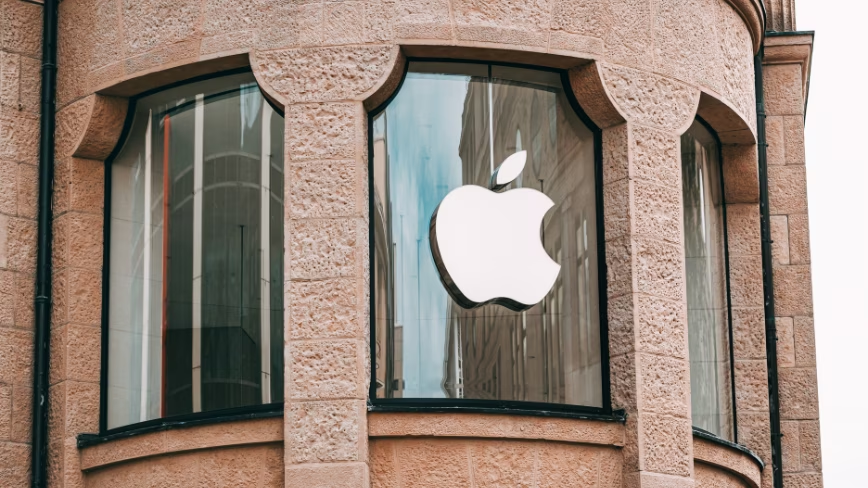
COLOGNE, GERMANY OCTOBER, 2017: Apple Logo on a Apple store. Apple is the multinational technology company headquartered in. ideal for websites and magazines layouts
 Credit: Rclassenlayouts via Dreamstime
Apple is quietly looking to China to solve a very expensive problem. The company is testing memory chips from CXMT for use in iPhones and MacBooks, according to a Wall Street Journal report, as it scrambles to ease a component shortage that the AI boom has made acute.
The appeal is straightforward once you follow the money. CXMT is China’s largest chipmaker by market value, and its memory is cheaper than what the established suppliers charge, which matters enormously at a moment when the price of memory has been climbing fast.
That price pressure is the real driver here. Demand from AI data centres has swallowed so much memory that the chips that once went into cheap phones are being diverted to servers instead, squeezing everyone who builds consumer hardware, Apple included.
For now, the ambitions are modest and carefully bounded. The talks are said to be at an early stage, with any CXMT components aimed initially at devices sold within China, a limited first step rather than a wholesale switch of suppliers.
Apple would also not be the pioneer here. HP and Acer already use CXMT memory in some devices sold outside the United States, so the Chinese firm has a track record with big Western brands, even if none carries quite the symbolic weight of Apple.
CXMT, for its part, is clearly building for this moment. The company has been expanding aggressively, weighing a second memory plant in Beijing, and it is closing in on next-generation LPDDR6 production that would put it in direct competition with Samsung and SK Hynix in premium phone memory.
Here, though, is where the commercial logic runs into politics. Sourcing memory from a Chinese national champion is exactly the kind of move that alarms Washington, and Apple has already been navigating that minefield rather than ignoring it.
In fact, the company has been seeking permission first. Apple has been lobbying US officials for approval to buy from CXMT as memory prices quadrupled, an unusually public acknowledgement that the decision is as much geopolitical as it is technical.
Not everyone in Washington is inclined to grant it. US senators have warned Apple off Chinese memory chips, citing security worries and the risk of deepening American reliance on a strategic rival for a foundational component.
Those concerns cut to a genuine tension in Apple’s position. The company has spent years trying to diversify away from China, yet the economics of the memory crunch keep pulling it back toward the very suppliers its home government would prefer it avoid.
The caveats are worth stating plainly, too. Reuters could not independently verify the report, and neither Apple nor CXMT responded to requests for comment, so this remains, for now, a reported plan rather than a confirmed deal.
Even as a plan, though, it is telling. That a company as image-conscious and politically exposed as Apple is even testing Chinese memory shows how painful the shortage has become, and how far the AI build-out’s appetite reaches down the supply chain.
It also underlines how thoroughly the memory market has been upended. For years the business was a sleepy, commoditised corner of the industry, but the scramble for chips to feed AI has turned memory into a strategic bottleneck, one that even the world’s most powerful hardware company cannot simply buy its way out of at the old prices.
CXMT, meanwhile, gains something valuable no matter how the talks end. Being taken seriously as a potential Apple supplier is a milestone for a company Washington has treated with suspicion, and it signals that China’s memory makers are closing the quality gap that once kept them out of premium Western devices.
The outcome will hinge on forces beyond Apple’s control. If prices keep rising and Washington relents, CXMT could win a marquee customer; if the security hawks prevail, Apple will be left paying a premium for the reassurance of keeping its memory out of Chinese hands.
Get the TNW newsletter
Get the most important tech news in your inbox each week.
Also tagged with


