TL;DR
CXMT has nearly completed LPDDR6 R&D at 12.8Gbps. Mass production could begin H2 2026. LPDDR5X prices surged 78-83% in Q2. Samsung may skip LPDDR6 in the Galaxy S27 Ultra due to cost. CXMT could change the supply equation.
R&D verification for LPDDR6 at 12.8Gbps is nearly complete. Trial production could start this year. LPDDR5X prices jumped 78-83% in Q2. Samsung is reportedly reconsidering LPDDR6 for the Galaxy S27 Ultra.
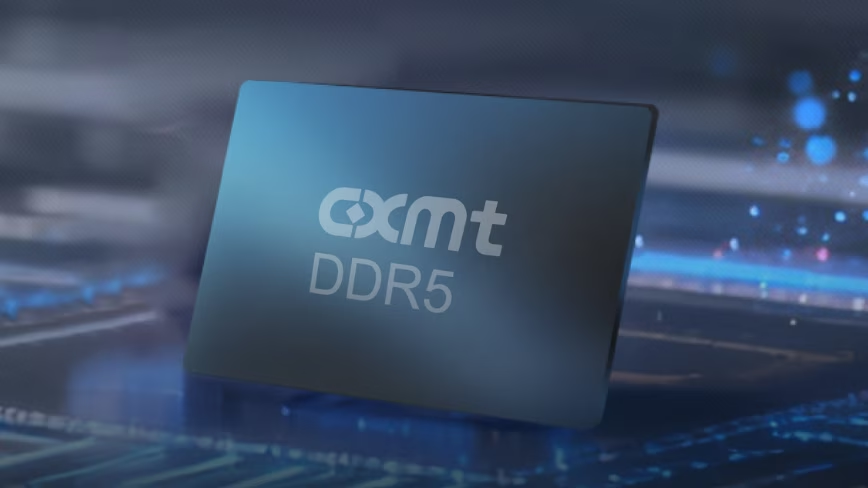
CXMT
 Credit: CXMT
CXMT has nearly completed LPDDR6 R&D at 12.8Gbps. Mass production could begin H2 2026. LPDDR5X prices surged 78-83% in Q2. Samsung may skip LPDDR6 in the Galaxy S27 Ultra due to cost. CXMT could change the supply equation.
ChangXin Memory Technologies has nearly completed R&D verification for LPDDR6 smartphone memory at speeds of up to 12.8Gbps, China Business News reported. This is one of the final technical stages before trial production. CXMT could begin mass production in the second half of this year. If it does, the company that surged 470% on its Shanghai IPO debut last week would become one of the first manufacturers to ship next-generation mobile memory alongside Samsung and SK Hynix.
The timing matters because the current memory market is broken. LPDDR5X prices surged 78-83% in Q2 alone as AI data centres absorbed available production capacity, according to TrendForce. Samsung is reportedly reconsidering LPDDR6 and UFS 5.0 storage for the Galaxy S27 Ultra because of cost and mass-production concerns. LPDDR6 is expected to cost roughly 20% more than LPDDR5X, initially restricting it to expensive flagships. A second supplier with competitive pricing could change that equation.
Apple has already begun testing CXMT’s memory chips for devices sold in China, though the idea faces political pushback from Washington. Xiaomi is reportedly preparing a flagship that could be among the first phones to adopt LPDDR6. CXMT holds over 30% of China’s domestic LPDDR market and roughly 8% of global DRAM. Adding LPDDR6 to its portfolio would give it a product that competes directly with Samsung and SK Hynix at the frontier, not just in commodity DDR5.
CXMT still needs to prove production yields, reliability, and manufacturing scale. The AI boom has been killing the cheap smartphone by diverting memory supply to data centres, and a new LPDDR6 supplier would not immediately lower prices. But it would give phone makers negotiating leverage they currently lack. Samsung, SK Hynix, and Micron control over 90% of global DRAM. CXMT reaching LPDDR6 production would be the first serious challenge to that oligopoly in next-generation mobile memory.
Get the most important tech news in your inbox each week.


