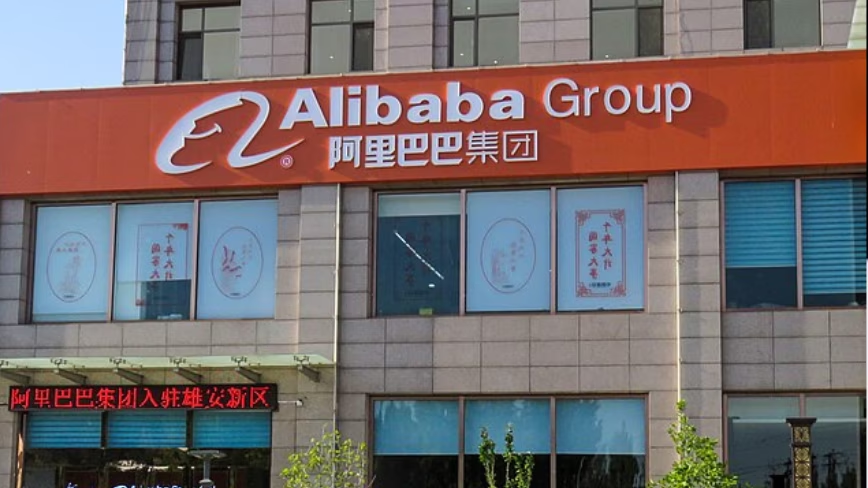
Alibaba Group provisional office at Xiong’an
 Credit: N509FZ
Alibaba’s AliExpress has been hit with a €550 million ($629 million) fine from the European Union. Brussels says the Chinese shopping platform failed to keep illegal, unsafe and counterfeit products off its site.
The penalty, announced on Monday, is the biggest yet under the EU’s Digital Services Act (DSA). That law forces very large platforms to find and reduce the risks their services create.
What AliExpress got wrong
The European Commission set out a long list of failures in its statement. At the core: AliExpress did not properly assess the risk of illegal goods spreading, and did not do enough to stop it.
The platform did not check whether it had enough staff to review suspect listings, the Commission said. It leaned on a single metric to judge its own moderation, which flattered the results. Its own tests told a different story. Counterfeit clothing, unsafe toys and dangerous cosmetics stayed online for weeks, even after being flagged.
The recommender and advertising systems made it worse. Commission testing found illegal products were being pushed to shoppers before they were taken down. A penalty policy meant to punish bad sellers went unenforced, so flagged stores kept trading.
Traders gamed the system in simple ways. They mis-categorised products to dodge stricter checks. AliExpress’s “brand authorisation” system, built to block fakes, was understaffed and easily bypassed.
The third big DSA fine
AliExpress is the third platform to be fined under the DSA, and the hardest hit so far. Brussels fined Elon Musk’s X €120 million in December and Chinese rival Temu €200 million in May. Both were for breaking the same rulebook.
The scale explains the size. AliExpress had 193 million users in Europe last year, EU tech chief Henna Virkkunen told reporters, Reuters reported. Shein had 156 million and Temu 130 million. “One in five Europeans say they shop once a month from Shein, Temu and AliExpress,” she said. Shein is under its own EU investigation.
Brussels has grown far more willing to use the DSA against the world’s largest platforms since it took full effect in 2024. The fine could have been larger still. The Commission said it treated the newness of the law as a reason to go easier this time.
‘Scale is not an excuse’
Virkkunen framed the case as consumer protection, not red tape. “The spread of counterfeit clothing, unsafe toys, dangerous cosmetics and other illegal and harmful products is not an unavoidable cost of shopping online,” she said. “Scale is not an excuse.”
She added that lax platforms hurt honest ones. Fakes, she said, are “unfair for companies which are complying with all our rules.” Alibaba did not immediately respond to a request for comment, Reuters said.
What happens next
The fine is not the end of it. AliExpress has until 20 October to hand Brussels a plan to fix the problems. A panel of national regulators then gets a month to weigh in, and the Commission a further month to rule.
If it falls short, the company faces more pain. The Commission could impose periodic penalty payments on top of Monday’s fine. Serious DSA breaches can in theory cost a platform up to 6% of its global annual turnover. For a business the size of Alibaba, that ceiling is a long way above €550 million.
Get the TNW newsletter
Get the most important tech news in your inbox each week.


