U
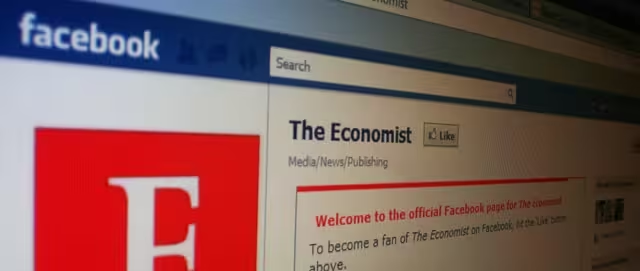
The Economist is today launching an ad campaign in London Underground stations asking travelers where they stand on the issue of social media censorship.
The Economist’s ‘Where do you stand?’ brand campaign was originally launched in 2010 to drive debate and discussion on key issues covered in the weekly magazine. Its latest initiative includes a double-pronged approach to inspire heated debate around the question: Should social media be censored?
‘Challenge misconceptions’
The campaign presents arguments for and against each topic and will run until the 20the of February. The Economist says it wants to continue “challenging non-readers’ misconceptions of the brand by demonstrating its wide-ranging editorial content”. Posters also offer potential readers a free copy of The Economist through a text code.
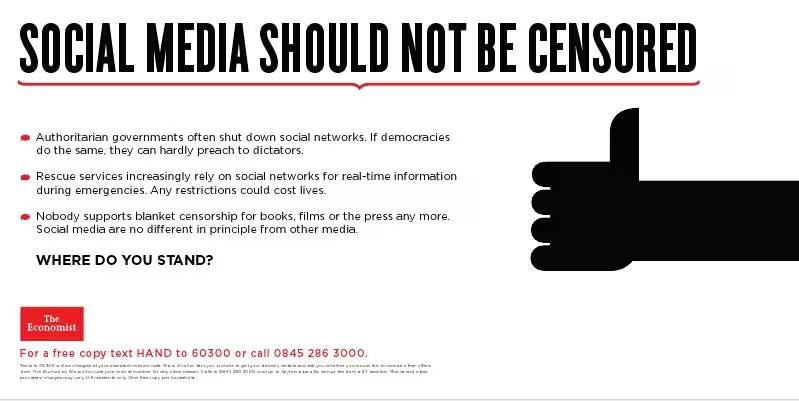
The anti-argument says:
- Authoritarian governments often shut down social networks. If democracies do the same, they can hardly preach to dictators.
- Rescue services increasingly rely on social networks for real-time information during emergencies. Any restrictions could cost lives.
- Nobody supports blanket censorship for books, films or the press any more. Social media are no different in principle from other media.
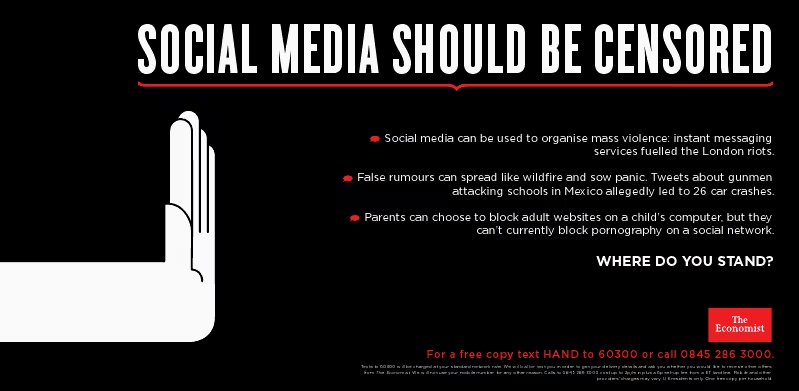
The ‘social media should be censored’ arguments are:
- Social media can be used to organise mass violence: instant messaging services fuelled the London riots.
- False rumours can spread like wildfire and sow panic. Tweets about gunmen attacking schools in Mexico allegedly led to 26 car crashes.
- Parents can choose to block adult websites on a child’s computer, but they can’t currently block pornography on a social network.
The Economist will also be running a second campaign along the same lines, asking whether drone strikes are justifiable. The ads coincide with Social Media Week which kicks off around the world next week.
The Economist is launching a series of activities to run concurrently with the event to promote its Facebook and Twitter accounts – over 940,000 people now Like its Facebook Page, and over 1.5 million follow its Twitter feed. Part of its plans include a discussion on the two ad topics, asking readers to consider where they stand on each issue on Facebook, and a poll on Twitter asking people to choose between the compelling arguments on both sides.
With a global readership of 4.5m people, The Economist is one of the most widely recognised current affairs publications. The paper covers politics, business, science and technology, and books and arts, concluding each week with the obituary. Its website offers articles from the past ten years, in addition to Web-only content such as blogs, debates and audio/video programmes. People can tweet and join in the debate here.
Get the TNW newsletter
Get the most important tech news in your inbox each week.


