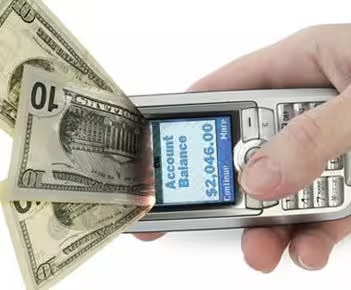
The future is coming and this is not it. A hats off to Google for undertaking the effort of creating a method of paying for goods in physical stores using Google Checkout and Android phones, but this attempt is just too complex to take off.
If you make a payment with a mobile phone you are choosing to not make that payment with cash or a card. Using your phone as a payment device must either be simpler and faster than either of those traditional methods, or provide some extra value that compensates for it not being as simple, or as easy. Given that cards and cash are simple, quick, and generally (if not completely, as with cash) secure, this new offering from Google needs to beat them at that game, or provide a serious ancillary value to the purchase to make the switch from cash and cards to mobile payments worth the work.
That is just not the case that we have seen from Google with their ‘Chrome Checkout Extension’ and its integration with Google Checkout on Android phones. ReadWriteWeb summarized well how you, the user, would employ the service in a store and how it interacts with the merchant you are trying to buy something from:
Google’s technology requires a little forethought from the merchant, but seems simple and safe in its execution. The merchant has to set up a Google Checkout merchant account, populate the store with merchandise and then install the Android Payment Chrome Extension. From there, when a customer wants to buy something, the merchant creates a shopping cart with those items on their computer. The extension will then create a QR code, which when scanned with the phone will take the customer to Google Checkout page where they can complete the transaction.
How likely does it sound that a major merchant would take the time to populate an online register with all of their items, then take the time to build you a shopping cart of your set collection of items, and then provide you with a QR code to scan with your phone which would then allow you to pay for your gum and toilet paper from your mobile. Given how much time, energy, and effort that requires, the answer is plainly that they won’t. The only real advantage to using this form of payment is that (assuming Google holds up), it is slightly safer than using your credit card on its own. While that is real advantage, it is hardly something to write home about.
Credit cards are popular because they are fast, and are safe enough for nearly everyone. If you don’t like them you can use cash. Where does a payment using a phone fit in? If this is the future, we need to tweak it so the transactional friction is far, far lower.
Get the TNW newsletter
Get the most important tech news in your inbox each week.
Also tagged with


