
From reputable news organizations to gossip magazines, everything is moving online. And to keep the flow of information going, content providers need profits. Everyone knows heaping revenues lie in advertising.
You might have noticed the adverts beside our posts here, on The Next Web. The odds are, you’re accustomed to being pitched to, and understand that free services like news have to pay writers somehow. But Ads can be done the right way or the wrong way.
Intrusive, auto-playing videos, gigantic banners that hide content below the fold and “Click here to continue” pages are some examples of what you are about to see.
CNN
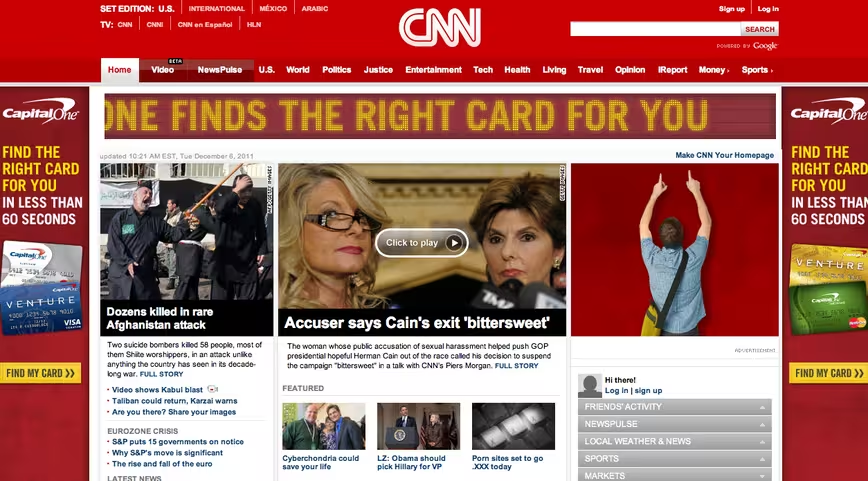
CNN’s offenses are clear. The internationally known company features a faux-led scrolling banner, squeezed between two sidebar ads, with another ad snuck into the content area. This screen shot really doesn’t do the level of distraction CNN has achieved justice.
CNN recently won the Society for News Design’s award for the world’s best designed news site, and when I activate Adblock Plus to hide the madness, I actually consider them to be a reasonable candidate.
Mashable
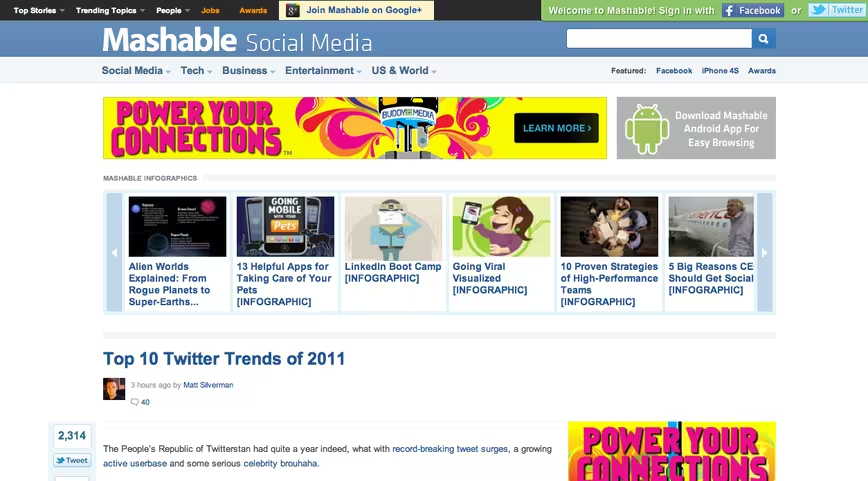
Mashable‘s homepage balances ads with content, but individual posts are nearly 100% hidden below the fold by advertising, related articles and wasted white space.
The balance returns half-way down the page, a point I usually don’t reach before closing the browser tab.
National Geographic
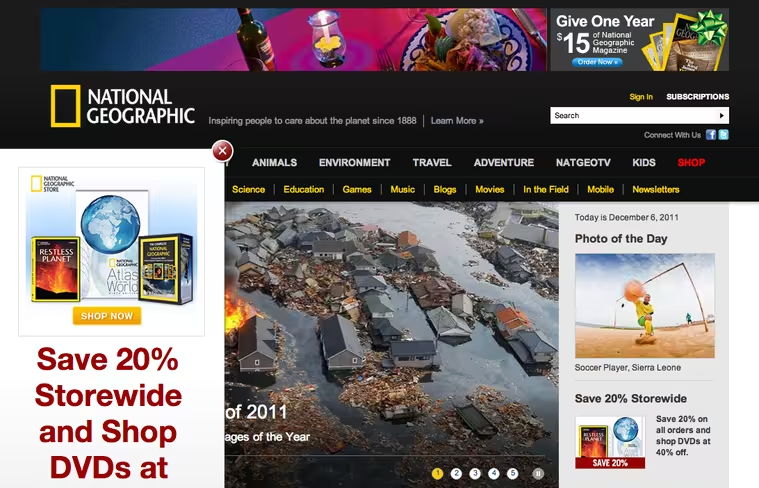
This highly respected print magazine does its handsome web presence a diservice with a massive, overlaid ad that hides content as you scroll. But don’t worry National Geographic, only content has been covered up. The ads are fine.
Forbes
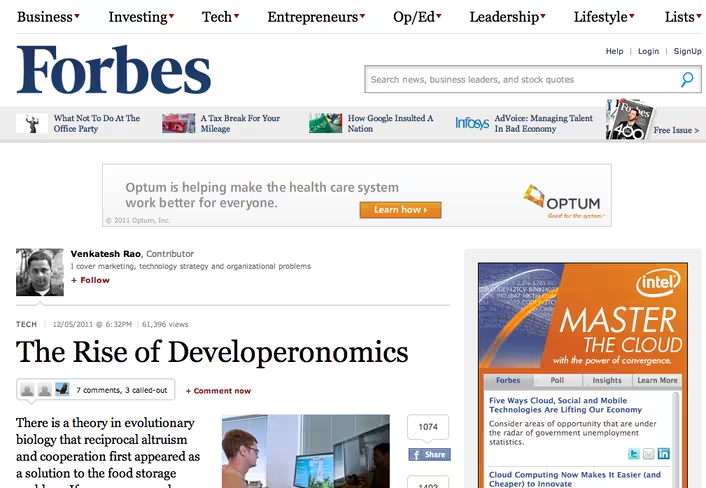
Forbes‘ offenses are two-fold. First, video ads autoplay with sound on the homepage, distracting visitors from reading the headlines. Second, like Mashable and Reader’s Digest, individual post pages show around one to two sentences of content above the fold.
What makes matters worse? Every day, the first time you visit Forbes.com, readers are presented with a full page ad blocking the site. This is forced advertising in the worst way.
NBC
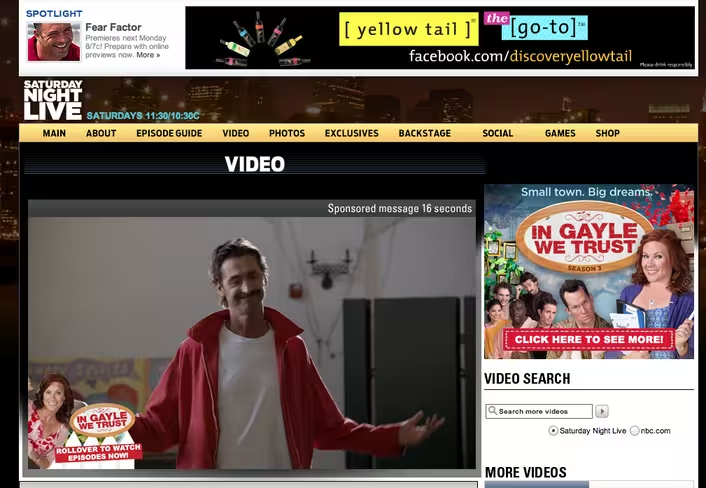
While attempting to watch an SNL skit (shown above), NBC manages to cover ads with ads to create a pile of clutter. I also have an overwhelming urge to try and get “In Gayle We Trust” cancelled.
OK!
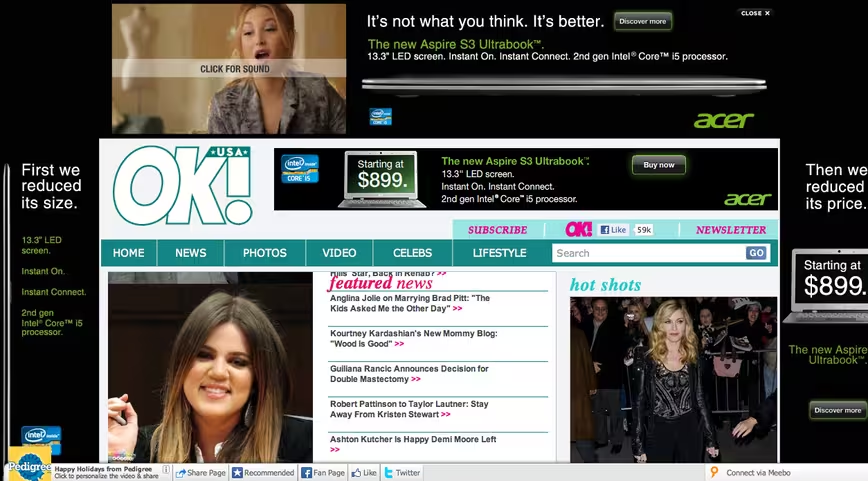
OK!, a well-known gossip magazine, is not renowned for its print design. That said, a visit to OK!’s online counterpart contains enough Acer Ultrabooks ads to make your eyes bleed. The glaring lack of respect for its own content should keep OK! on this list for life.
AOL
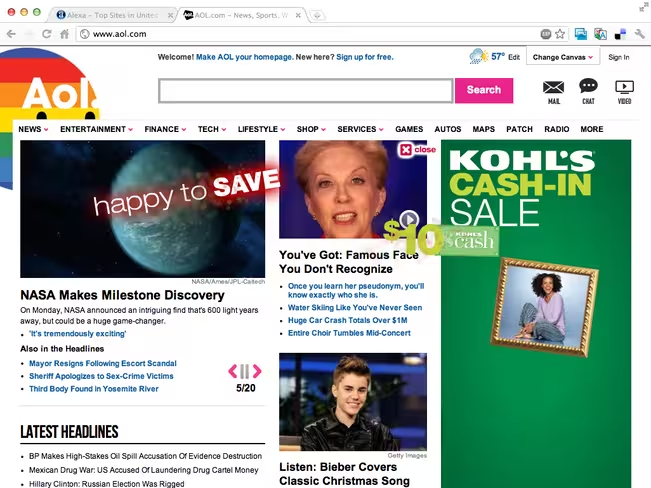
AOL‘s decently successful design feels fresher and cleaner than ever before. Crisp type and a clear information hierarchy make the viewing experience enjoyable — if it weren’t for all the floating, glittering Kohl’s dollar signs moving across the screen.
Marie Claire + Mens Health
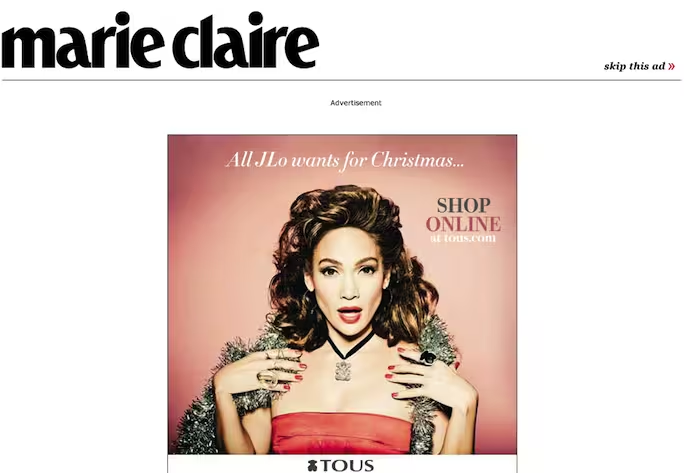
Would you buy a magazine if the only thing on the front page was an ad? Like Forbes, Marie Claire‘s homepage does just that, forcing readers to click a skip this ad button upon first arrival. Mens Health‘s acts similarly, with their content blocking, trial issue ad.
Is there a solution?
As much as I would enjoy picking out every single flaw within the major sites above, I understand that striking a balance between profit and content is hard to do online (especially for print publications making the online transition). But as content continues to be consumed digitally, it is hard to ignore the growing problems associated with a complete disregard for reading and viewing aesthetics.
Flipboard, a widely praised iPad app, brings print design to the tablet, and keeps ads separated between posts. PressJack, a US-based startup, turns RSS feeds into a Flipboard styled experience for standard browsers, and might be one of the better ways to enjoy quality content obscured by obnoxious websites.
Of course, there are some publications that provide a striking content presentation, while keeping ads on every page. Great examples of a quality balance include LIFE, TED, and The Atlantic. If only the companies above followed their lead.
Do you know of any UX train wrecks caused by advertising? Let us know in the comments!


In defense of Harrison (and me, and 1000 other tech analysts) "below the fold" is not an unread or useless commodity. However, "landing" on a page, the "call" to read or interacted, whatever, is far more important for new reader involvement, engagement, above the fold.
Writers, testers, analysts have abbreviated the idea of surfer conversion to suggest what's below is less useful "comparatively". There is also the notion that one call to action above the fold is many times more valuable than a Wikipedia of information below.
The term "above the fold" is not a webdesign concept or tech writer contrivance anyway. It is a newspaper term from before the day. http://en.wikipedia.org/wiki/Above_the_fold
Long story short, newspaper people knew about the fold before web designers existed. It is valid on the web too.
Always,
Phil
- spam
- offensive
- disagree
- off topic
LikeI never noticed this due to Adblock Plus. I appreciate it more and more every day.
- spam
- offensive
- disagree
- off topic
Like"Above / below the fold" is NOT a web design term. Dont use it as such PLEASE.
http://iampaddy.com/lifebelow600/
- spam
- offensive
- disagree
- off topic
LikeEvan Bohringer Above/Below the fold is completely relevant and perfectly fine for web use.
People read content below the fold on newspapers all the time. Anyone who buys them reads it. But just like online, someone passing by only sees what is immediately available.
Print design came first, and has influenced every ounce of web design. The concepts of kerning, cut and paste, and nearly everything else available in Photoshop came from print. These terms, including above/below the fold, continue to be useful ways of describing what we see.
- spam
- offensive
- disagree
- off topic
LikeI fully agree with the fact that some sites do piss-off their visitors with extreme advertisssing... Especially when it concerns premium brands like CNN.
We think we may have solved this issue by fully integrating the ads in our post at http://fan-tas-tic.com.
You're not distracted and you’re not tricked and the advertiser is sure their ad gets seen.
Our only concern is that some may find this solution maybe ‘too well integrated’...it’s still an experiment right now.
- spam
- offensive
- disagree
- off topic
LikeHarrison, I loved this. Interestingly, the post comes just at the right time. About when most of the tech blogs, their editors and writers, have forgotten what the heck technology is all about - the news end that is.
Do readers really get the full view of innovation? Or are people being spoon fed what AOL and others want to feed them? Is that article you read real, Memorex, or in fact an ad in and of itself?
We know the answers, don't we? This piece should be the centerpiece of a much larger story Harrison. Thanks for a good kickoff.
Always,
Phil
- spam
- offensive
- disagree
- off topic
LikeIn my work in managing the design and build of websites, I am constantly barraged by requests to "move the ads up." It degrades the UX and the design in every case. Creative compromise can't overcome a prioritization of ads over content. A mentality shift needs to occur. We got here because we each compete with at least one site in our industry that has no soul, and was willing to give our advertisers the better ad positioning. So we're stuck playing their game, pushing content out of the way to keep revenues up. This volume-based formula is unsustainable, and has done nothing but squander the design standards and improvements we reached in the 2.0 phase. The solution? We need a compelling alternative to display/impression-based advertising. And lead generation alone isn't the answer.
- spam
- offensive
- disagree
- off topic
Like"As much as I would enjoy picking out every single flaw within the major sites above, I understand that striking a balance between profit and content is hard to do online (especially for print publications making the online transition). But as content continues to be consumed digitally, it is hard to ignore the growing problems associated with a complete disregard for reading and viewing aesthetics."
How kind and generous a sentiment. I find it ironic that TNW isn't listed as one of those sites, so here's a screenshot to include in your analysis: http://i40.tinypic.com/15ggeu.jpg
The least you could do if you were choosing to directly attack other sites for their layouts and ad placement is acknowledge your own. You're not exactly innocent of this practice, or miles above many of the other sites mentioned above.
- spam
- offensive
- disagree
- off topic
Likenobodyspecial I'm sorry you feel this way. With my background in design, I have not yet found TNW's ads to be intrusive. I will say, only in Mashable's defense, that our content begins just above the fold as well. I do find that we have a better use of space, though.
Other than the fold comment, what do you find TNW has in common with the sites listed above? Mind you, I'm not bashing advertising in general.
Can we at least agree that we're miles away from AOL's glittery, floating $10 (lol)?
- spam
- offensive
- disagree
- off topic
Likenobodyspecial Wait til you read my upcoming book LOL
- spam
- offensive
- disagree
- off topic
Like¡Adblock plus!
- spam
- offensive
- disagree
- off topic
Likesergiom23 I had to turn it off while writing this :)
- spam
- offensive
- disagree
- off topic
LikeThat's the reason why Adblock is the most popular Firefox add-on with 14 million installs. Heck, it has twice the installs as the #2 add-on. A clear reflection of the issue this article discusses.
- spam
- offensive
- disagree
- off topic
LikeIt is understandable that a business' purpose it to make money, but once everything starts to revolve around earning more, the whole place starts to fall apart.
Imagine a new site is created and before you even have time to appreciate whatever it provides, you are bombarded by ads. That is why Facebook and YouTube waited several years to get people hooked up before setting up advertising on their site. Take Google: this massively successful company's MO is all about simplicity and innovation. Does that stop them from making money? Focus on providing quality content and soon enough, the cash will be rolling in.
Killian Lansingh
http://livinginthebalance.blogspot.com/
- spam
- offensive
- disagree
- off topic
LikeKillian Lansingh Ortiz Google's properties are a great example of using restraint with advertising!
- spam
- offensive
- disagree
- off topic
LikeIf there were more companies like Google, the world would be a better place. Great postHarrison Weber
- spam
- offensive
- disagree
- off topic
LikeKillian Lansingh OrtizHarrison Weber And therein lies the problem, guys. In your article and in your comments, you cite Flipboard and Google as terrific examples of restraint. BUT THEY AREN'T PUBLISHERS IN THE TRADITIONAL SENSE. They don't pay writers. They don't even pay trained journalists to aggregate content. They package other people's content in a nice easy to use format and then sell ads around them in such a fashion as to create a "race to the bottom" pricing structure. While I agree that many publishers have whored-out their websites for schlocky ad gimmicks, I think it would be productive for you both to acknowledge that the real issue is the inefficiency of the advertising market and the general lack of respect that advertisers (and their ad agencies) have for the publishing industry. Until advertisers recognize that UX is worth paying extra for, you will continue to see these things happening, while services like Google and Flipboard continue to set market pricing.
- spam
- offensive
- disagree
- off topic
Likeron lichtingerKillian Lansingh Ortiz
At the end I said "Of course, there are some publications that provide a striking content presentation, while keeping ads on every page. Great examples of a quality balance include LIFE,TED, and The Atlantic. If only the companies above followed their lead."
But yeah. Some respect from ad agencies would do everyone some good. :)
- spam
- offensive
- disagree
- off topic
LikeTotally agree!. Autoplay is just rude. And why is it that it always seems to start up on a mystery tab you opened up and forgot about?
- spam
- offensive
- disagree
- off topic
LikeGiftGenies.com have you heard of http://www.mutetab.com/ ?
- spam
- offensive
- disagree
- off topic
LikeI'm sooooooo with you. Major pet peeve of mine is the auto-playing video. Hate that. Sometimes I forget I was rocking out and had the volume up loud when I last used my Mac, so when the video starts it startles me. Instant see-ya.
- spam
- offensive
- disagree
- off topic
LikeConversation from Twitter
mekalav priority to advertising dollars over #ux karma. But it will all come full circle soon...
AmritaMathur absolutely agree with you ..donno why this happens in first place ..short term thinking or company growing big may be :-((
mekalav you are not at tell talk this evening?
sherenejose unfortunately no :-((( could not attend ,hope there are lots of things I'm missing :-((
Ben_Kaplan Yes