
Brian Solis, a globally recognized expert on online PR and Social Media, compiled a set of statistics from a number of the most popular social networks using Google Ad Planner. The stats showed estimated figures for unique visitors, reach, page views, total visits, avg visits per visitor, avg time on site, age and gender, household income and education level.
The post is a terrific source of data (bookmark it) and aside from the dominance of the older generation over the younger, one of the most significant pieces of information to result from the research is the gender gap on most social sites. To illustrate the gender slant, data visualisation site Information is Beautiful put together a fitting diagram. And if you’re still unsure which sex dominates the social networks, the title should make it perfectly clear.
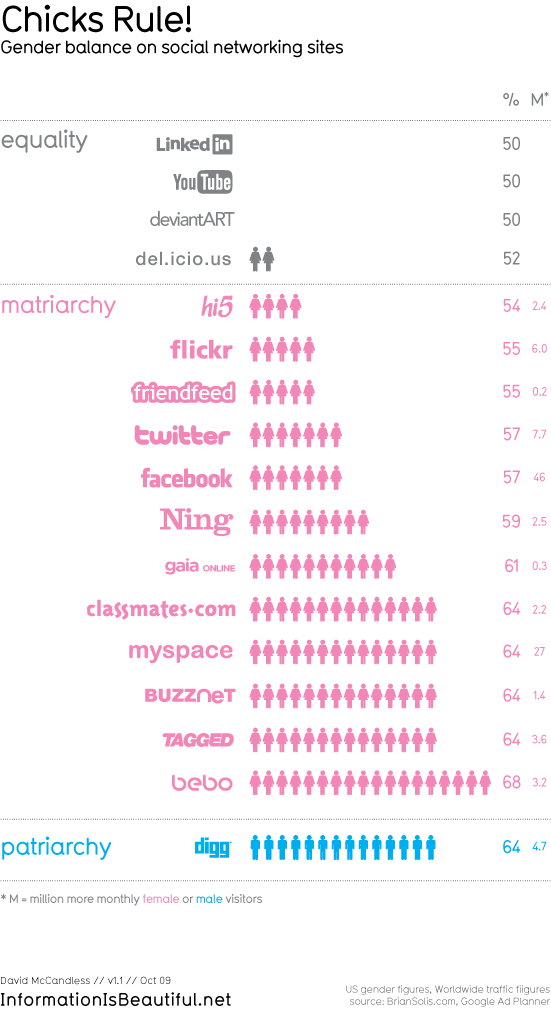


I’m not sure how much these figures are to be believed most of my male friend’s band’s pages are as “women” by default.
I’m not sure how much these figures are to be believed most of my male friend’s band’s pages on MySpace are as “women” by default.
I dunno. Most methods of measuring audience gender/lifestyle are meager at best. I mean, my girlfriend, three sisters, mother and I use the same computers often, and are often logged out or blocking tracking urchins. So, is my browsing logged as female? Or is theirs, Male?
Surprised? I’m not and nor should anybody active in social networks be.
After all social networking is a female thing. And it didn’t start in recent years. It’s been the centre point of female socialising since forever.
YouTube’s Insights for Audience shows 30,4% of the worldwide users are female so not 50-50 as presented here.
So bringing this data and visualization as a fact is kinda useless. This post should be an opinion on how female users seem more active on social networks, which might actually be true.
I’m not terribly surprised at this. Nothing against the guys but gals are just more social in general.
You shouldn’t fall for wrong conclusions. To be present in large numbers, larger than men’s, does not mean to “dominate” a social network. Let’s look at women’s actual sphere of influence. Who are the most followed, the most retweeted, the most authoritative members of a given network? It’s usually guys. I’d bet that, for any substantive measure of influence, it’s the men who “dominate” even sites where more women than men have an account.