TL;DR
Amazon’s Zoox upgraded its robotaxi interior and exterior based on rider feedback as it awaits NHTSA approval for paid commercial rides.
The Amazon-owned company updated seating, lighting, and exterior communication systems based on rider feedback, and says its Hayward factory can now build up to 100 vehicles a week
Zoox
 Credit: Zoox
Amazon’s Zoox upgraded its robotaxi interior and exterior based on rider feedback as it awaits NHTSA approval for paid commercial rides.
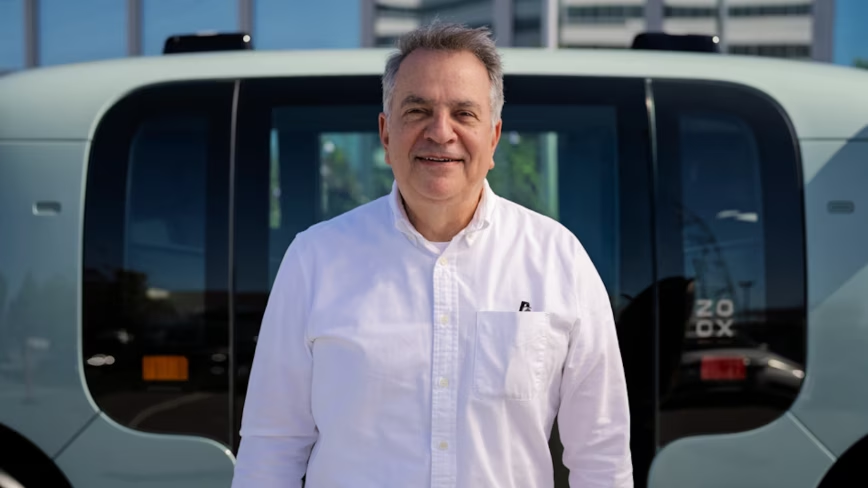
Amazon’s Zoox revealed a series of design upgrades to its custom-built robotaxi on Wednesday, refining the interior comfort and exterior communication of a vehicle that still lacks a steering wheel, pedals, or any traditional driver controls. The changes are based on rider feedback from the company’s free ride programme and are timed to coincide with the ramp-up of volume production at its Hayward, California factory.
The core vehicle remains unchanged: a cube-shaped, bidirectional electric pod with four-wheel steering, 40 cameras, radars, lidars, and infrared sensors, capable of carrying four passengers at up to 75 miles per hour. What Zoox has updated is everything a rider actually touches.
Inside, the company added more padding and ergonomic curves to seats and headrests, and switched to a lighter colour palette of aloe green seating with stone grey flooring and trim. Zoox says the lighter interior creates a calmer environment and also provides contrast that makes it easier to spot personal items like phones left behind. Other tweaks include fluting on the wireless charging pad to keep devices in place, larger cupholders, and a more visible touchscreen.
Outside, Zoox relocated its bidirectional reflectors for better visibility and added a new speaker and microphone to the door interface along with two-way audio. The company says the improvements will help communication between the vehicle and riders, other road users, and between Zoox Support and first responders.
Chris Stoffel, director of robot industrial design and studio engineering at Zoox, said the goal is a “simple elevated interior design that doesn’t demand a rider’s attention like so many of the features found in today’s passenger cars.” The updates are designed for a vehicle that shuttles thousands of riders, not one that sits in a showroom.
Production is a key part of the announcement. Zoox opened a 220,000-square-foot factory in Hayward last year, designed to eventually build 10,000 robotaxis annually. The company says it can now produce up to 100 vehicles per week, preparing for the volume it will need if commercial service launches later this year.
That launch hinges on one decision Zoox cannot control. The company has requested a commercial exemption from NHTSA to operate its robotaxi without standard controls mandated by federal law, and NHTSA granted a demonstration exemption in August 2025 allowing it to test on public roads. The agency published a request for public comment on the commercial exemption in March 2026, the comment period has closed, and Zoox is now waiting for a ruling.
If approved, the exemption would allow Zoox to deploy up to 2,500 vehicles without steering wheels, mirrors, or traditional braking systems. If denied or delayed, the upgrades announced Wednesday become improvements to a free ride programme with no revenue attached.
For now, Zoox is testing and offering free rides in four cities: Austin, San Francisco, Las Vegas, and Miami. The company also struck a partnership with Uber in March to make its robotaxis available through the Uber app in Las Vegas this summer, its first integration with a third-party ride-hailing platform.
The competitive pressure is real. Waymo recently launched its purpose-built Ojai robotaxi, which cuts sensor count by 42 percent and costs roughly 75,000 dollars less per unit than the Jaguar it replaced. Waymo delivers more than 500,000 paid rides per week across 10 US cities and is targeting one million weekly by year-end.
Zoox’s fleet is far smaller, with roughly 50 vehicles across its operating cities. The gap is not just one of fleet size but of commercial maturity: Waymo has been charging riders for years, while Zoox has yet to collect a single fare.
The design refresh is incremental, not transformational, and Zoox is not unveiling a new vehicle but refining one that has been in testing since 2020. But the timing tells the real story: these are the kinds of changes a company makes when it expects to start charging riders and scaling production, not when it is still experimenting. Everything now depends on whether NHTSA agrees.
Get the most important tech news in your inbox each week.


