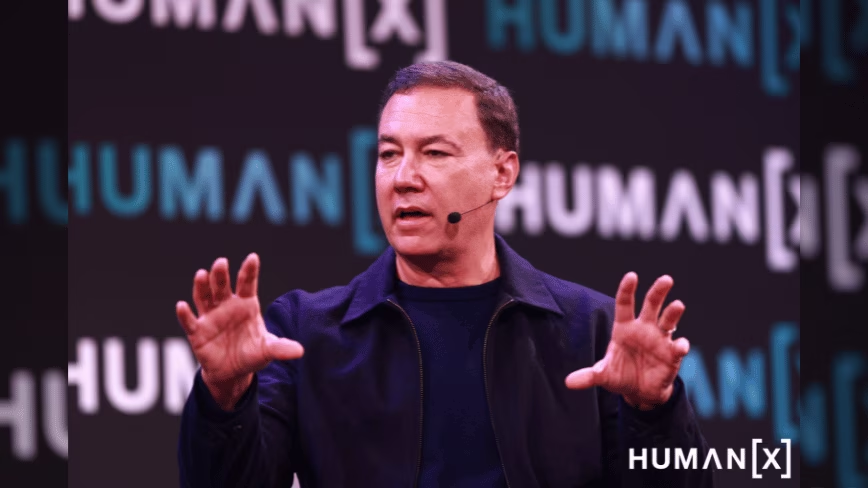
Yahoo CEO Jim Lanzone at HumanX in Amsterdam, 23 September 2026.
 Credit: Sam Pinto / HumanX
Yahoo will keep its AI answer engine Scout full of links back to publishers, CEO Jim Lanzone said on Wednesday. He spoke on stage at HumanX in Amsterdam. He also said micropayments from AI companies will never pay publishers enough.
“The large language models effectively photocopied the entire internet to build their answers, without linking back,” Lanzone said.
Unlike the large language models or Google’s AI Mode, Scout shows many blue links to publishers, he said. He gave two reasons. Users need to see sources because these systems often get things wrong or serve outdated information. Sending traffic back is also part of the internet’s social contract, he said, and he hopes other AI answer engines copy Scout’s design.
How Scout works
Yahoo Scout launched in beta in the first quarter, Yahoo’s first search engine of its own in 17 years. Yahoo outsourced search to Microsoft in 2009, and to Google before that, Lanzone said. Yahoo’s launch announcement in January said Scout runs on Anthropic’s Claude and Microsoft Bing’s grounding API.
Lanzone said Yahoo does not use a large language model as the answer engine itself. A lightweight model, first Anthropic’s Haiku and now others too, only processes Yahoo’s data at the token level. Yahoo then ranks and renders the answer. The data comes from 30 years of search queries, Yahoo’s knowledge graph and its publisher relationships.
Besides the three or four big model makers, only Yahoo and Perplexity are putting different search products into the world, he said. Yahoo will grow Scout through its own users first, the way Google spreads Gemini and Meta spreads Muse. In some months, Yahoo is the third-largest internet property, ahead of Amazon and Facebook, he said.
Ads, not micropayments
Lanzone said subscriptions will not scale, because most people want the free version. Micropayments from AI companies will not work either, he said, because publishers have no real power in those deals. Yahoo is itself a top-20 publisher whose content the models take. It sees the problem from both sides.
“It will never be enough, even for someone like Reddit,” Lanzone said of the micropayments.
His answer is the model search already had: advertising. Sponsored results would become a paragraph full of blue links from advertisers, instead of a list. Click-through rates will change and efficiency may dip, he said, but he expects volume to grow and clicks to convert better.
In January, Yahoo said it was joining Microsoft’s Publisher Content Marketplace pilot, which it said would support revenue for publishers. Cloudflare has told AI crawlers to pay publishers or get blocked. In the UK, Mirror owner Reach cut 220 editorial jobs as Google’s AI summaries hit its traffic.
A new company with an old brand
Yahoo has 700 million monthly users, and each of its main products has more than 100 million, Lanzone said. Three in four Gen Z users use Yahoo, and Gen Z and millennials make up half its audience, he said. Mail is growing fast with Gen Z. The top way people come back to Yahoo is by importing Gmail into Yahoo Mail.
Yahoo spent five years inside Verizon before Lanzone took over in 2021. It has since sold AOL to Bending Spoons and let go of TechCrunch and other assets.
“I like to say it’s a five-year-old company running a thirty-year-old brand,” Lanzone said.
Yahoo is highly profitable and private, he said. He expects it to find a buyer or go public again.
Get the TNW newsletter
Get the most important tech news in your inbox each week.
Also tagged with


