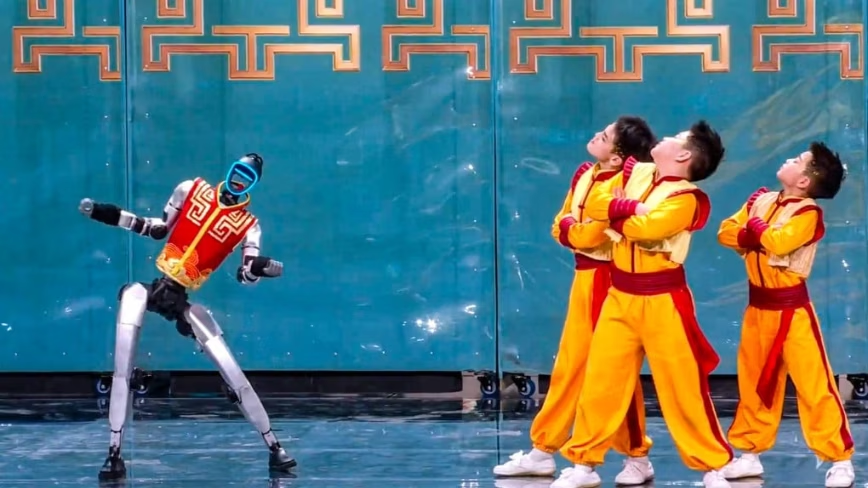

If you tuned in to China’s 2026 CCTV Spring Festival Gala looking for traditional lion dances and nostalgic tunes, you may have done a double-take when what greeted you was a squad of humanoid robots performing kung fu, synchronized moves, and comedy sketches with more precision than most of us manage during family reunions.
It was not just spectacle; it was industrial policy with flair
This year’s gala, which is China’s equivalent of the Super Bowl meets cultural heritage broadcast, featured everything from high-speed martial arts sequences to choreographed routines done by humanoid robots from leading local makers like Unitree Robotics, Galbot, MagicLab and Noetix.
Watching them flip, strike poses, and dance isn’t just futuristic entertainment; it’s a deliberate signal about where Chinese tech wants to sit at the global table.
From props to protagonists
Just last year, robot appearances were charming but clunky: think awkward “dances” that needed human help to keep upright.
Instead, this year, they executed complex actions; backflips, martial arts inspired routines, even comedic timing that was surprisingly sharp for machines. C
lips of the robots went viral almost immediately, flooding social platforms and dominating international tech feeds.
Chinese state media and commentators have leaned into the moment as proof of rapid progress in humanoid robotics, placing it squarely within China’s “AI+manufacturing” industrial ambitions.
While some viewers showered praise on the displays, others grumbled that the new lineup made the gala feel more like CES Lite than a cosy celebration of culture, and yes, robots “stealing the Year of the Horse thunder” is now a real complaint.
Why robots at the Gala?
The optics are unmistakable. China’s robotics sector, already responsible for a lion’s share of worldwide humanoid robot production, is eager to tell a simple story: we don’t just build hardware in factories, we animate it with AI brainsthat can perform with finesse.
Whether it’s a crowd-pleasing kung fu sequence or a scripted comedy routine, these robots have become ambassadors of technological prowess on very prime cultural real estate.
But let’s not overstate their practical chops just yet. Despite impressive stage routines, robotics experts point out that most current humanoids are still best at pre-programmed movements and lack true autonomous adaptability in unpredictable environments.
In other words, they’re amazing performers on cue, not yet ready to be your personal caregiver or industrial line worker without a lot more training and development.
Still, the spectacle accomplishes something important: it thrusts humanoid robots into the public imagination while signalling to investors, startups and rival nations that robot development is now prime time tech theatre, not just a research lab curiosity.
Whether you see this as a fun blend of culture and innovation or a high-stakes display of national tech strategy, China’s robotics presence at the gala is now part of a broader conversation about where AI embodied in hardware might go next.
It’s less about whether robots will “replace us” and more about how they’re being introduced into narratives that billions of people watch together, shaping perceptions and expectations about the future.
China’s robots danced their way into billions of screens this Lunar New Year, and they did it with style, precision, and a well-timed cultural wink.
So yes, in the end, we might admire the spectacle and applaud the engineering. But as these machines become more visible, the question isn’t just whether they can dance with us, it’s whether we understand what we’re asking them to do, and what it means for the future of work, creativity, and human identity.
When robots outshine humans, we should be impressed, and cautious about what comes next.
Get the TNW newsletter
Get the most important tech news in your inbox each week.


