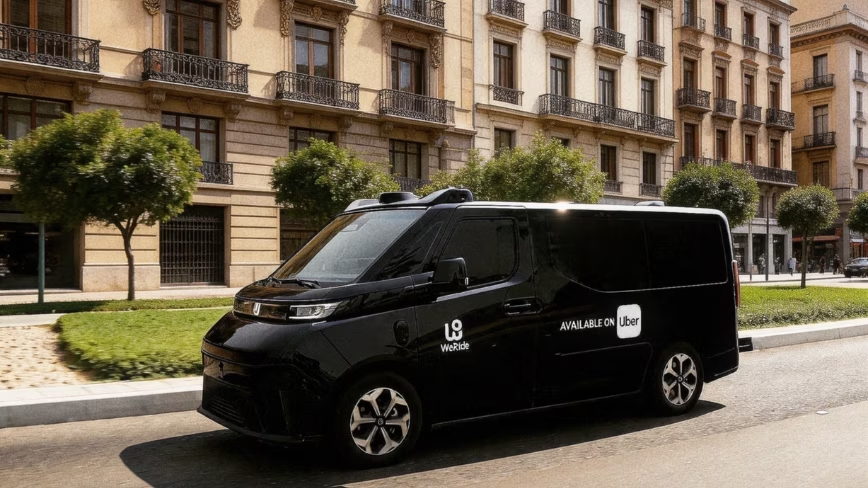
The robotaxi map of Europe has been filling in city by city, and on Tuesday Madrid joined it. WeRide and Uber said they will launch what they call Spain’s first commercial robotaxi pilot in the Region of Madrid, with rides bookable through the Uber app and operations expected to begin later this year.
The launch is the companies’ first joint entry into the European market, and it arrives with the Madrid regional government, the Comunidad de Madrid, named as a partner.
The service will start with trained safety operators behind the wheel rather than empty driver’s seats. The companies say the fleet will scale “progressively,” with WeRide, Uber, and fleet operator AVOMO committed to adding hundreds of vehicles as performance milestones are met, and to expanding to fully driverless rides across core urban areas after that. No precise launch date, fleet size, or fare was disclosed.
The third name on the announcement is the one worth pausing on. AVOMO, part of the Moove Cars Group, is the company that actually runs the cars: it already operates Uber’s autonomous fleets in Austin and Atlanta, managing around 400 vehicles with a team of more than 200.
Its presence reflects WeRide’s “asset-light” strategy, in which the technology company supplies the autonomy and leaves fleet ownership and day-to-day operations to partners. “After nearly two years of close collaboration with Uber in the United States, we are entering this next phase,” said Manuel Puga, chief executive of Moove Cars Group.
For WeRide, Madrid is a fifth European market and, the company says, the fourth of 15 cities mapped out under an earlier expansion agreement with Uber, with 11 more due by 2030 and a stated ambition of tens of thousands of robotaxis worldwide. WeRide, the first publicly traded robotaxi company, holds driverless permits in eight markets and says its vehicles have run in more than 40 cities.
The Madrid plan leans heavily on its Gulf experience, where it operates commercial driverless services in Abu Dhabi and Dubai, with Riyadh expected to follow.
Uber, which sold its own self-driving division in 2020, has built its autonomy strategy almost entirely on arrangements like this one. The same partnership model underpins its Tokyo pilot with Wayve and Nissan and its tie-up with Pony.ai and Verne, whose cars became Europe’s first commercial robotaxi service in Zagreb earlier this year.
Sarfraz Maredia, Uber’s global head of autonomous mobility, called Madrid “a natural place to become a leading European market for AVs,” citing what he described as a clear regulatory path.
That regulatory path remains the variable. The announcement is studded with the language of forward-looking statements, and like every robotaxi launch in Europe so far, it is a plan contingent on approvals, milestones, and the slow business of proving the cars are safe. For now, Madrid is a date on a roadmap, with operators still in the front seats.
Get the TNW newsletter
Get the most important tech news in your inbox each week.


