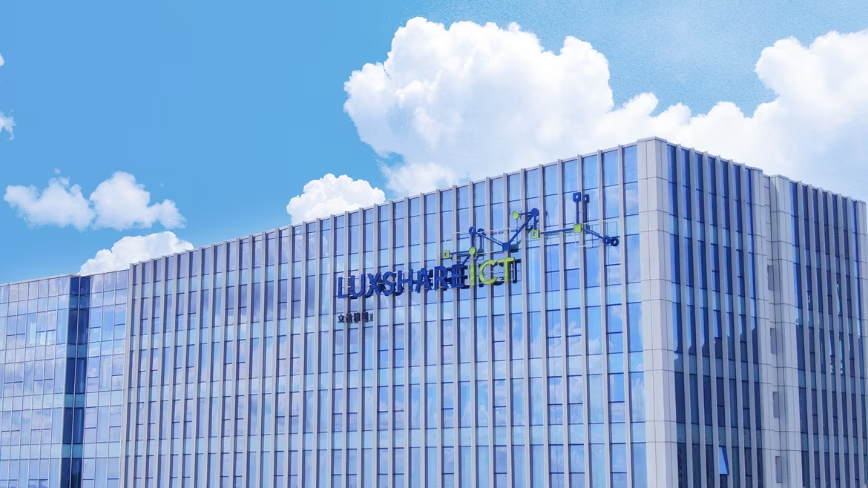
Luxshare Precision Industry began trading in Hong Kong on Thursday with a stumble, its shares sliding on a debut that had been trailed as the city’s biggest listing of 2026.
The stock fell as much as 9.6% below its offer price before clawing back part of the loss, an underwhelming opening for one of the year’s most closely watched share sales.
The Apple supplier had priced the listing at HK$63.28 a share, the very top of its range, raising about HK$24.3bn ($3.1bn).
Coming days after it set the offer at the ceiling, the soft start was a reminder that a well-covered order book does not always deliver a strong first session.
The shares touched a low of about HK$57.2 against the HK$63.28 offer price and were changing hands near HK$60 through much of the morning, according to figures cited by Bloomberg and other outlets. It was not a rout, but it was well short of the pop that the deal’s billing had implied.
Even with the wobble, the offering keeps its record. The raise makes it Hong Kong’s largest initial public offering so far this year, edging past Victory Giant Technology, whose Huizhou-based components business took in roughly HK$20.1bn in April.
Luxshare sold 383.5 million H-shares in the deal, adding a second and more internationally accessible venue to its existing Shenzhen listing.
The company’s mainland-traded stock has more than doubled over the past year, giving it a market value well above $77bn and a shareholder base that has outgrown the pool of onshore investors able to buy it.
Most buyers of Apple gadgets have handled Luxshare’s work without ever seeing the name. Founded by Wang Laichun in 2004, the firm assembles AirPods and a growing share of iPhones, and has climbed into higher-value final assembly, including for the Vision Pro headset.
That ascent from connectors and cables toward the centre of Apple’s manufacturing base is the story it has been pitching, part of a wider sprint by Apple’s Chinese suppliers to Hong Kong.
The concentration that powers Luxshare is also its clearest risk. Apple accounts for roughly 70% of its revenue, according to figures reported around the listing, leaving the supplier heavily exposed to a single client’s product cycles and to the pace at which that client moves assembly elsewhere.
That shift is well under way. Apple has been steering more of its production toward India and Vietnam to cut its reliance on China, and its Chinese suppliers have had to follow the work abroad or find fresh business at home.
A war chest raised in Hong Kong gives Luxshare the means to build capacity outside China and to chase customers beyond the iPhone, from 5G equipment to automotive electronics.
The company reported revenue of 332.3 billion yuan, about $48.9bn, in 2025, up 24% on the year, according to its listing disclosures. CITIC Securities, Goldman Sachs, and China International Capital Corp led the offering, a heavyweight line-up for a deal the exchange had hoped would cement a broader revival.
For Hong Kong, the debut is a slightly awkward data point in an otherwise encouraging run. The city’s IPO market spent several lean years before a series of large deals in 2026 revived it, and Luxshare’s soft open, alongside other lukewarm listings the same day, suggested investors are turning choosier even as the headline numbers grow.
Regulators have also kept a close watch on the company, having earlier fined Luxshare and Wingtech over the handling of a deal, a reminder that its rise has drawn official scrutiny as well as investor enthusiasm. None of that dented demand for the book, which priced at the top regardless.
Wang, who started on a Shenzhen production line in 1988, has now taken the business she founded to a multibillion-dollar dual listing.
Whether the shares recover from a shaky first day will say as much about Hong Kong’s appetite as it does about Luxshare itself.
Get the TNW newsletter
Get the most important tech news in your inbox each week.
Also tagged with


