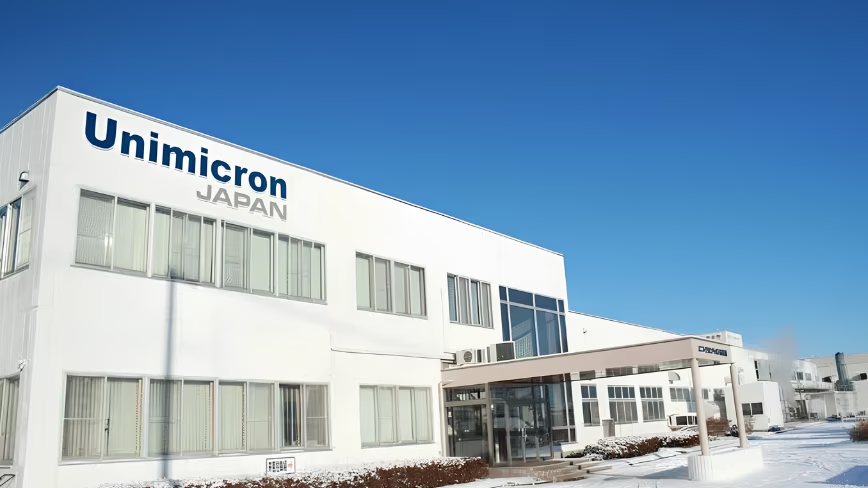
Unimicron Technology is looking to raise as much as $1.4bn from a sale of global depositary shares, joining the long line of companies cashing in on investors’ appetite for anything tied to artificial intelligence.
The Taiwanese firm is selling 50 million shares at $26.96 to $27.76 each, a discount of roughly 3% to 6% to its recent close in Taipei, according to Bloomberg. It is the kind of raise that only makes sense in a market as forgiving as this one, where the AI chip build-out has pulled valuations up across the supply chain.
Unimicron is not a name most consumers would recognise, but it occupies an increasingly critical link in that chain. It makes printed circuit boards and the IC substrates that connect chips to the boards, the unglamorous plumbing that has become a genuine bottleneck as processors grow larger and more complex.
As chipmakers push toward advanced packaging, the substrate is no longer an afterthought.
That is the thread connecting a modest circuit-board supplier to the AI story. The most powerful accelerators now rely on advanced packaging techniques that stitch multiple dies and stacks of memory into a single module, and every one of those modules needs a high-end substrate to sit on. Demand for that layer has tightened alongside demand for the chips themselves.
The stated use of proceeds is deliberately unglamorous. Unimicron says it plans to use the money to procure raw materials in foreign currencies, a reminder that even companies riding a technology boom spend much of their capital on the basic inputs of manufacturing. It is a working-capital raise dressed, by the market’s mood, in AI colours.
The discount tells its own small story. Pricing global depositary shares a few percentage points below the Taipei quote is standard practice, a modest inducement to draw international buyers into a secondary venue, and the narrow size of the discount suggests the company expects the shares to clear without having to give much away. In a colder market, that spread would be wider.
The choice of instrument is telling too. A global depositary share lets a Taiwan-listed company reach international investors without a full foreign listing, which is a practical way to tap dollar demand while keeping the primary listing at home.
For a manufacturer that buys much of its raw material in foreign currencies, raising in that currency also trims the mismatch between what it earns and what it spends.
Timing is the real subject here. Taiwanese suppliers across the semiconductor landscape have seen their shares climb as capital floods toward AI infrastructure, and the substrate makers have been swept up in the same current that lifted memory and packaging names.
Unimicron is choosing to raise while sentiment is warm, which is what companies tend to do when the window is open, as recent moves by memory suppliers have shown.
There is a note of caution in the setup, even so. Substrate demand is closely tied to the pace of high-end chip production, and that pace depends on packaging capacity at the likes of TSMC, on hyperscaler spending plans, and on a demand cycle that has run hot but will not run hot forever. A raise timed to peak enthusiasm is efficient for the company and, by definition, priced for the good case.
For now, the transaction is a clean read on where money wants to go. Investors are willing to fund a Taiwanese circuit-board maker’s raw-material purchases at a slim discount because it sits, however indirectly, beneath the chips powering the AI boom.
Whether that enthusiasm holds through the next turn of the cycle is the question the substrate makers, and their new shareholders, will eventually have to answer.
Get the TNW newsletter
Get the most important tech news in your inbox each week.


