TL;DR
Space stocks are selling off sharply as the SpaceX IPO approaches and a Blue Origin rocket explosion rattles investor confidence. The Procure Space ETF dropped 11% in two sessions, with Rocket Lab, Intuitive Machines, and AST SpaceMobile falling 17-23%.
A rally that carried space-related stocks to extraordinary gains this year is showing serious cracks. The Procure Space ETF, which trades under the ticker UFO, has dropped almost 11% in just two sessions. Intuitive Machines and Rocket Lab have each fallen roughly 17%. AST SpaceMobile, which had become a retail-trading favourite, has sunk nearly 23%. The selloff extends losses that began late last week and accelerated on Monday.
Two catalysts converged. On Thursday, Blue Origin’s reusable New Glenn rocket exploded during a routine hot-fire test at Cape Canaveral, a spectacular failure that damaged the launchpad and reminded investors that the space business remains physically dangerous and technically unpredictable. On Friday, SpaceX cut its IPO valuation target to $1.8 trillion from at least $2 trillion, signalling that even the sector’s dominant player is acknowledging that market expectations may have run ahead of reality.
The proxy trade unwinds
The space stock rally of the past several months was driven substantially by the anticipation of SpaceX’s record-setting IPO. With SpaceX private, investors who wanted exposure to the space economy bought publicly listed proxies: Rocket Lab for launch, Intuitive Machines for lunar services, AST SpaceMobile for satellite communications, Redwire for space infrastructure. As SpaceX’s IPO filing moved from rumour to reality, these proxy stocks surged on the assumption that a rising tide would lift all rockets.
The Procure Space ETF is still up almost 60% year to date despite the two-day rout. Rocket Lab entered the selloff up 413% over the past year. But Bloomberg Intelligence analyst George Ferguson identified the structural problem: once SpaceX is actually available to buy, investors may dump the proxies in favour of the real thing.
“The market may be worried investors that want exposure to space will drop the currently listed names for SpaceX, as it has a much larger and better record of space launches,” Ferguson said. “At similar valuations, SpaceX would likely be the better company to own.”
Valuations detached from financials
Jefferies analyst Greg Konrad underscored the disconnect on Monday by downgrading Redwire from buy to hold, writing that the stock’s recent gains “do not correlate with financials” and instead reflect “multiple expansion on the excitement of the SpaceX IPO that has shed a positive spotlight on the space sector.” Redwire had nearly tripled in the previous month to a record high before dropping 16% on Monday. SpaceX’s own S-1 filing revealed the financial scale that makes comparisons with smaller space companies difficult to sustain.
AST SpaceMobile trades at roughly 260 times estimated 2026 sales. Rocket Lab, despite its operational progress with the Electron and Neutron rockets, carries a valuation built on optimism about future government and commercial contracts rather than current revenue. The space sector has followed a pattern familiar from the AI boom: a narrative-driven rally that prices in years of growth before the revenue materialises.
The Blue Origin factor
The New Glenn explosion added a visceral dimension to the correction. The rocket erupted during a hot-fire test of its seven BE-4 first-stage engines, sending debris across the Cape Canaveral launchpad and causing heavy damage to the infrastructure. While SpaceX has experienced its own launch failures, the Blue Origin incident reminded public market investors, many of them new to the space sector, that rockets are not software. Hardware failures destroy expensive assets instantly and set development timelines back by months or years.
“That implies valuations are a bit rich,” Ferguson said. The Blue Origin explosion was “a reminder that this is a difficult business.”
Virgin Galactic’s divergence
Not every space stock fell. Virgin Galactic soared as much as 44% on Monday before paring gains to as little as 1.1%, a move that illustrated the speculative, momentum-driven character of the sector rather than any fundamental shift in the company’s business. SpaceX’s lowered valuation target may have triggered short-covering in some names while accelerating selling in others.
The question for the space sector is whether the SpaceX IPO, expected to price in early June with marketing beginning on 4 June, draws capital into the sector or pulls it out of everything that is not SpaceX. If institutional investors consolidate their space exposure into the one company with a proven business model, consistent launch cadence, and Starlink revenue, the proxy stocks that rode the wave up could face sustained pressure even as the overall sector grows.


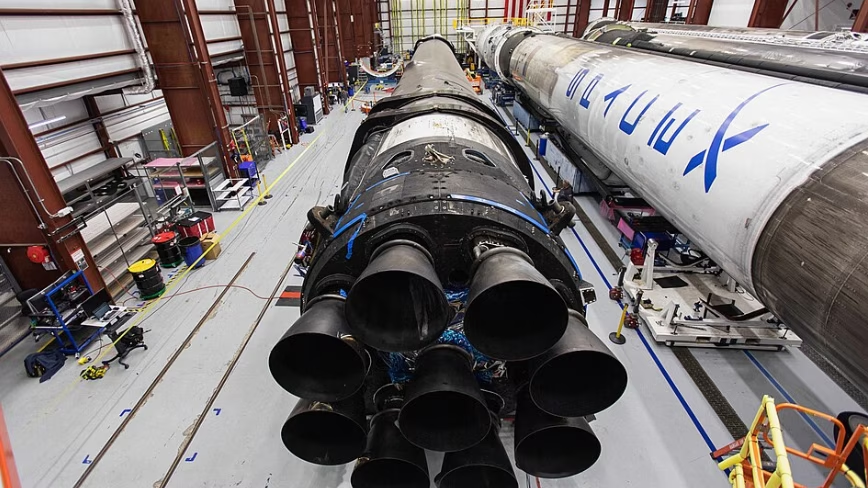
 Credit: Austin Lowery NASA/SpaceX