TL;DR
SpaceX drew $89 billion in demand for its debut bond sale, seeking $20 to $25 billion across five tranches to refinance bridge loan debt.
The five-tranche offering will refinance a $20 billion bridge loan that replaced high-interest junk debt inherited from X and xAI
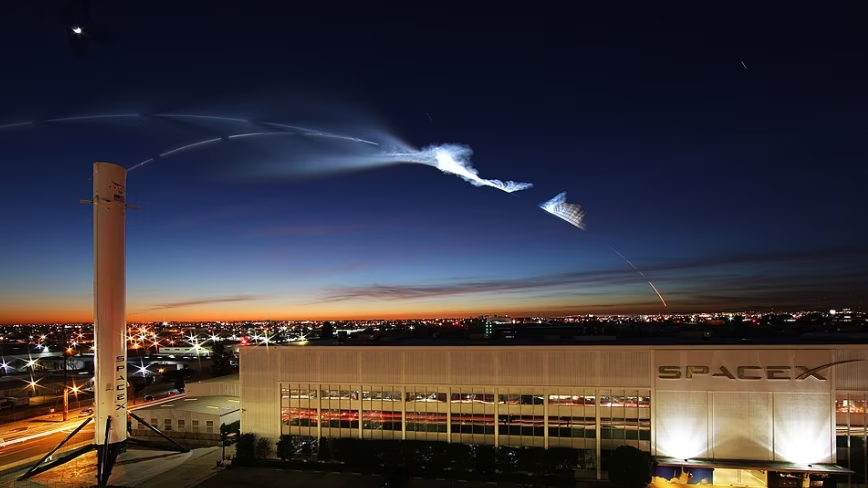
SpaceX
 Credit: Official SpaceX Photos
SpaceX drew $89 billion in demand for its debut bond sale, seeking $20 to $25 billion across five tranches to refinance bridge loan debt.
SpaceX has drawn roughly $89 billion in investor demand for its debut US bond sale, Bloomberg reported on Tuesday, setting the stage for one of the largest investment-grade offerings this year. The company is seeking to raise between $20 billion and $25 billion from a five-tranche deal expected to price on Tuesday. At the lower end of that range, demand would exceed the offering by more than four times.
Price talk on the longest-dated tranche, which matures in 2056, tightened by about a quarter of a percentage point to 1.75 percentage points above Treasuries. The five banks managing the sale, Goldman Sachs, Morgan Stanley, JPMorgan Chase, Bank of America, and Citigroup, either declined to comment or did not respond to requests for comment.
Proceeds from the sale will refinance a $20 billion bridge loan that SpaceX used earlier this year to retire roughly $17 and a half billion of high-interest junk debt accumulated by X and xAI. That bridge loan, arranged by the same five banks, carried an effective rate of about four and a half percent, roughly half the cost of the junk bonds it replaced. The bond sale converts that temporary financing into permanent capital market debt.
The offering comes less than two weeks after SpaceX completed the largest initial public offering in history. The company raised $75 billion by selling shares at $135 each, valuing it at roughly one and three-quarter trillion dollars. Shares initially surged to $225 before falling sharply, with the stock losing more than 30 percent from its peak as investors digested the company’s spending plans and cash burn.
All three major credit rating agencies granted SpaceX investment-grade ratings on June 18, days after the IPO. Moody’s assigned Baa1, Fitch assigned BBB-plus, and S&P assigned BBB, all with stable outlooks. The agencies cited SpaceX’s dominant position in orbital launch and Starlink’s 12 million subscribers as strengths, while flagging execution risks tied to the company’s AI expansion and governance concerns around Musk’s concentrated control.
SpaceX disclosed roughly $101 billion in cash as of June 19 and $29 billion in long-term debt. Those figures mask significant cash consumption. The company reported a net loss of nearly $5 billion in 2025 and lost another $4 billion in the first quarter of 2026, with negative free cash flow of $14 billion last year, more than double the prior year’s burn.
Starlink generated $4 billion in operating profit in 2025, but the AI division is consuming it. SpaceX acquired xAI in February 2026 as part of Musk’s consolidation of his companies, and used a $60 billion all-stock deal to buy AI coding startup Anysphere, the maker of Cursor, just days after the IPO. The bond sale is part of the financing architecture required to support those acquisitions while keeping the core rocket and satellite businesses funded.
Bloomberg Intelligence analyst Robert Schiffman noted that the transaction offered investors a chance to buy debt from a first-time issuer while diversifying their exposure to companies linked to the AI boom. Debt investors tend to be more conservative than equity buyers, and the four-times oversubscription suggests that even cautious capital views SpaceX’s revenue streams, particularly Starlink, as durable enough to service the debt.
The scale of demand echoes the IPO itself, where individual investors placed orders exceeding $10 billion. SpaceX has now tapped both equity and debt markets within the span of two weeks, raising what could total $100 billion in combined proceeds. No company in history has extracted that much capital from public markets in such a compressed timeframe.
The question for bondholders is whether SpaceX can generate enough cash to service the debt while simultaneously funding Starship development, Starlink expansion, AI infrastructure, and the integration of multiple acquisitions. The company has the revenue base, with $19 billion in 2025, but is spending far more than it earns. The bond market’s answer, at least on day one, is that it is willing to take the bet.
Get the most important tech news in your inbox each week.


