TL;DR
Sony announced the Crystal LED UNIFY, a 135-inch all-in-one dvLED for boardrooms at an expected $55,000. Two people can install it in one hour. Ships early 2027.
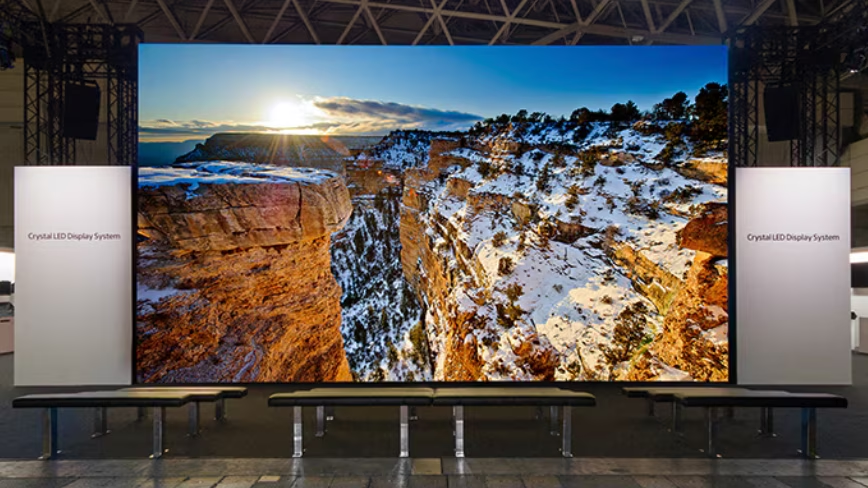
The ZRL-135SG is Sony's first all-in-one direct-view LED display, targeting corporate meeting rooms and university lecture halls with a package designed to undercut the cost and complexity of modular LED video walls
Sony
Sony announced the Crystal LED UNIFY, a 135-inch all-in-one dvLED for boardrooms at an expected $55,000. Two people can install it in one hour. Ships early 2027.
Sony Electronics announced the Crystal LED UNIFY, a 135-inch all-in-one direct-view LED display designed for corporate boardrooms and university lecture halls. The display, model ZRL-135SG, ships as five pre-assembled panels and a control unit that two people can install in approximately one hour with no electrical work required. Pricing is expected at $55,000, with availability in early 2027.
The UNIFY is Sony’s first all-in-one entry in its Crystal LED lineup. Until now, the range has consisted of modular panels requiring professional AV integrators to assemble, calibrate, and maintain. The comparable 135-inch Full HD configuration of Sony’s modular Crystal LED S Series retails for $90,000 at B&H Photo, before installation fees that typically add $25,000 to $50,000 on top.
At $55,000 with near-zero installation cost, the UNIFY undercuts the modular S Series by roughly half once labour is factored in. That changes the addressable market. A display that previously required a six-figure commitment and specialist installers is now within reach of mid-size companies outfitting a single boardroom.
The display features a 1.5mm pixel pitch, 800 cd/m² of maximum brightness, and Sony’s Anti-Reflection Surface Technology, which the company says maintains visibility in brightly lit rooms with large windows. At Full HD resolution on a 135-inch diagonal, the pixel density is relatively low. The UNIFY is designed for viewing distances of several metres rather than close-up work at a desk.
Once wall-mounted, the display sits less than 100mm from the wall, meeting Americans with Disabilities Act protrusion requirements. It uses the same device management platform and remote interface as Sony’s BRAVIA professional displays. IT teams can manage both from a single system.
“Sony has a robust ecosystem of display solutions built upon our rich history in imaging and visual technology,” Rich Ventura, Vice President of Professional Display Solutions at Sony Electronics, said. “Expanding our portfolio to include a 135-inch all-in-one model helps us meet customer demand, makes our solutions easier to spec and deploy.”
The announcement lands in a dvLED market growing roughly 14.7% year-over-year in 2026. Corporate buyers are replacing projectors and LCD video walls with seamless LED panels, and dvLED prices have dropped 40 to 50% over the past three years. Sony is not the only company chasing this shift. LG’s MAGNIT Active, a 136-inch display, sells for around $300,000, while Samsung recently reshuffled its display division leadership as Chinese rival TCL closes the gap.
Hisense has been particularly aggressive, pricing its 136-inch 136MX at $100,000, roughly 60 to 70% below Samsung and LG equivalents. At $55,000, the UNIFY would sit below even Hisense on price, though with Full HD rather than the higher resolutions some competitors offer.
The timing also reflects where Sony’s broader business is heading. The company’s FY26 guidance projected operating profit of ¥1.6 trillion, with music and image sensors doing most of the work. The professional display business is a smaller revenue line, but the UNIFY represents an attempt to grow it by lowering the barrier to entry.
Sony will display the Crystal LED UNIFY at booth C8301 at InfoComm in Las Vegas from June 17 to 19, alongside its Crystal LED S Series. The S Series uses the same Anti-Reflection Surface Technology and 800 cd/m² brightness in a modular format with finer pixel pitches of 1.25mm and 1.56mm. Together, the two lines cover the corporate display market from mid-range all-in-one installations to fully custom video walls.
Get the most important tech news in your inbox each week.


