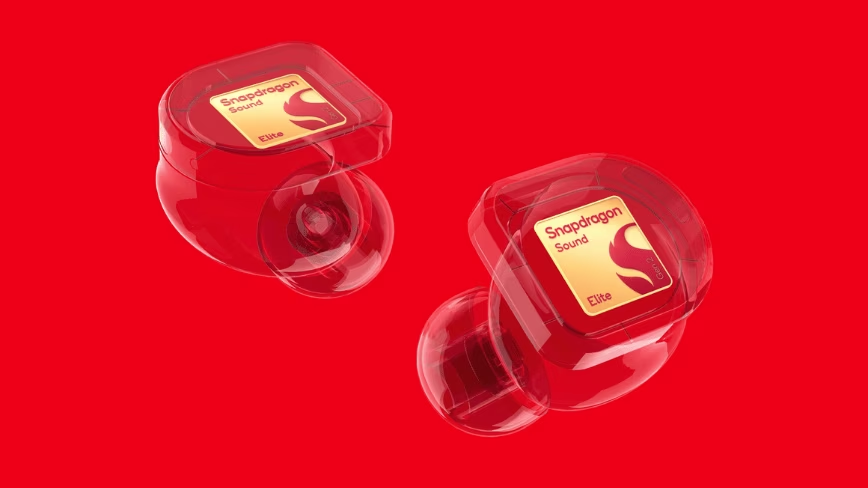

Qualcomm wants earbuds and glasses, not phone screens, to be the way people talk to AI agents. At its Snapdragon Summit in Maui, it launched Snapdragon Sound Elite Gen 2, its first audio chip built for AI agents, and new platforms for smart glasses.
Ziad Asghar, who runs Qualcomm’s XR, wearables and personal AI business, presented both on Wednesday. Qualcomm also launched a health alliance for data from wearables.
“Our research tells us that up to 70% of users want advanced AI capabilities in their wearable devices,” Asghar said.
Earbuds that connect to the cloud
Sound Elite Gen 2 targets earbuds, headphones, open-ear designs, audio glasses and earbuds with cameras. It has built-in low-power Wi-Fi 6E, so earbuds can reach cloud services without a phone.
Qualcomm says the chip has up to twice the AI capability of the Snapdragon S7 Gen 1 and a footprint up to 30% smaller. It also uses up to 40% less power, a figure its footnotes say comes from design simulation, not final chips.
A service called Snapdragon Sound Apps & Agents connects earbuds directly to AI assistants and streaming services. Cleer showed a concept for earbuds with cameras, which could answer questions about what the wearer is looking at, Asghar wrote in a blog post.
“Those interactions won’t always happen through a screen. They will happen through natural conversations, where users can simply speak to an AI assistant and receive help in real time,” he said.
Glasses on 1-bit models
For glasses, Qualcomm presented what it called the world’s first personal AI platforms to support 1-bit models. These are AI models stored with very low precision so they fit on small devices.
It also launched START, a programme to help companies build AI glasses faster. It pairs a chip package for the glasses with software for the phone and the cloud. In the demo, a wearer spoke to a voice assistant to ask about the weather and identify fruit.
Meta, Snap’s Specs, Samsung and Warby Parker featured in the keynote as glasses partners. Eyewear maker INSPECS showed enterprise safety glasses with a 12MP camera and LED recording lights. It also showed audio-only and hearing-assist frames.
Qualcomm and Mastercard showed a shopping agent that runs on XR glasses and a phone. The user picks an offer and gives consent, and the agent completes the payment through Mastercard.
A health alliance
With the Connected Health Alliance, Qualcomm also launched the Personal AI Health Alliance. It has more than 30 members, including Optum, Scripps and Merck KGaA.
The alliance wants wearables to spot health problems as they happen, such as falls or heart rhythm changes, and pass that information to care teams. It says time-sensitive health data should be processed on the device.
Meta, one of the partners, shipped 81% of AI glasses sold, according to Omdia this year, and at Connect this week turned its own glasses into hearing aids.
The wearables launches were part of a wider summit that also brought new phone chips and PCs. Our summit roundup has the rest.
Get the TNW newsletter
Get the most important tech news in your inbox each week.


