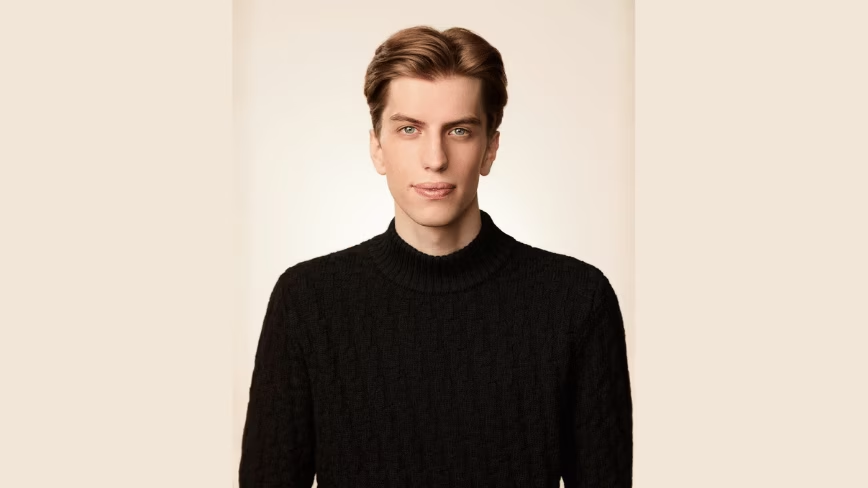
AI researcher and investor Leopold Aschenbrenner.
 Credit: FOR OUR POSTERITY
American securities regulators have subpoenaed the banks that lent Situational Awareness the money it used to make its AI bets.
The Securities and Exchange Commission wants the timing of the fund’s trades, and its communications with lenders about the money it was borrowing. It also told the banks to preserve any information they hold on the San Francisco firm.
Rob Copeland and Matthew Goldstein broke the story for The New York Times, citing three people briefed on the outreach.
Four banks, none of them commenting
The subpoenas went to Goldman Sachs, JPMorgan Chase, Citigroup and Bank of America, Hugh Leask reported for CNBC, citing Reuters.
All four were major clients of the fund, according to a regulatory filing the Times cites. Spokespeople for each declined to comment. So did the SEC.
The SEC accuses nobody of anything here. An inquiry does not mean a firm is the focus of an investigation, and these things end without enforcement action often enough.
The fund says this was predictable
“It is to be expected that regulators would closely examine any funds that are high profile, produce significant returns or have particularly dramatic drawdowns,” a Situational Awareness spokesman said.
“We are a highly regulated business and will cooperate to the fullest extent with any regulatory request,” the statement added.
That is a reasonable answer and it is also the only one available. The alternative is silence.
The sources disagree on how big it got
The Times puts the peak at more than $30bn, with tens of billions more borrowed on top. CNBC and the Wall Street Journal both say $45bn.
The direction is not in dispute. CNBC reports the fund fell to around $10bn in late July, and Reuters put the portfolio down 67% for the month.
On leverage the accounts line up. Berber Jin, Ben Cohen and Anissa Gardizy reported in the Journal that Situational borrowed about $3 for every $1 of capital it held. CNBC reports leverage of up to 400%.
Why the borrowing is the whole story
The SEC asked about leverage, and leverage turned a bad month into a near-collapse.
The fund was long the AI supply chain and short the traditional software companies it expected AI to displace. When AI stocks fell in July and the older names rose, both sides of the book moved against it at once.
Margin calls followed. Lenders forced a fire sale of most of the public portfolio. Citadel bought the positions at a discount understood to be around 10%.
Ken Griffin told investors on Friday that Citadel has since offloaded roughly 80% of the risk it took on. SK Hynix and CoreWeave, two of the holdings, have rallied.
Jane Street lost $15bn
The fund’s backers took the damage with it. Jane Street lost about $15bn, the worst monthly loss in the trading firm’s history, according to the Journal.
Jane Street rarely allocates capital to outside managers. It backed Situational anyway, and it has kept investing in the sector, leading Etched’s $700m round this month.
Patrick and John Collison, the Stripe founders, were also investors.
Twelve employees, four of them investors
The Financial Times found the fund ran with eight employees in total, four of them investment professionals.
That is a very small number of people to have been managing tens of billions of borrowed dollars, and it is the sort of detail a regulator asks about.
Leopold Aschenbrenner founded the fund two years ago at 22. OpenAI had fired him shortly before, and he brought no prior investing experience to the job.
The stake that survived is in Anthropic
Situational held on to its Anthropic position through the fire sale. Aschenbrenner considered selling a $3.5bn stake in the company and dumped most of his public book instead, the Journal reported.
That decision looks better every week. Anthropic is heading for a listing that could value it near $2tn.
The connection runs closer than a shareholding. Aschenbrenner married Avital Balwit, the chief of staff to Anthropic chief executive Dario Amodei, earlier this month.
Amodei attended the wedding, along with the company’s top scientist and more than a dozen Anthropic employees, according to the Journal. The fund had blown up two days earlier.
None of that is an allegation
Holding equity in a private company while marrying an executive’s chief of staff is not a securities offence, and no source suggests otherwise.
It matters because the surviving asset in a fund now under regulatory scrutiny is a stake in a company whose leadership sat in the front rows at the founder’s wedding.
The SEC has asked about trades and leverage. It has not, on any account published so far, asked about Anthropic.
He is already raising again
Aschenbrenner came back with a $400m bet within days of the collapse. Thousands of retail investors still copy his trades through automated portfolios.
His standing in Silicon Valley has, if anything, gone up. One Anthropic researcher predicted this year that Situational would be bigger than Citadel by the end of the decade.
What the subpoenas do not tell us
The SEC has not said what it is looking for. The subpoenas ask for trade timing and lender communications, which is standard in an inquiry into a leveraged blow-up.
Citadel declined to say whether it received one. That is a meaningful gap, because Citadel was the counterparty on the other side.
No filing, letter or formal allegation exists in public. Everything the reporting rests on comes from people who lacked authorisation to discuss it.
Why Europe should care about a San Francisco fund
AI did not fail here. Borrowing against AI did, and one fund does not hold a monopoly on that.
Broadcom has sought more than $60bn in debt to fund chips for Anthropic. European operators are financing data centres the same way.
The question the SEC is asking of four banks is the one supervisors everywhere will eventually ask: who lent the money, on what terms, and what happens when the collateral is AI equity that all moves together.
Get the TNW newsletter
Get the most important tech news in your inbox each week.


