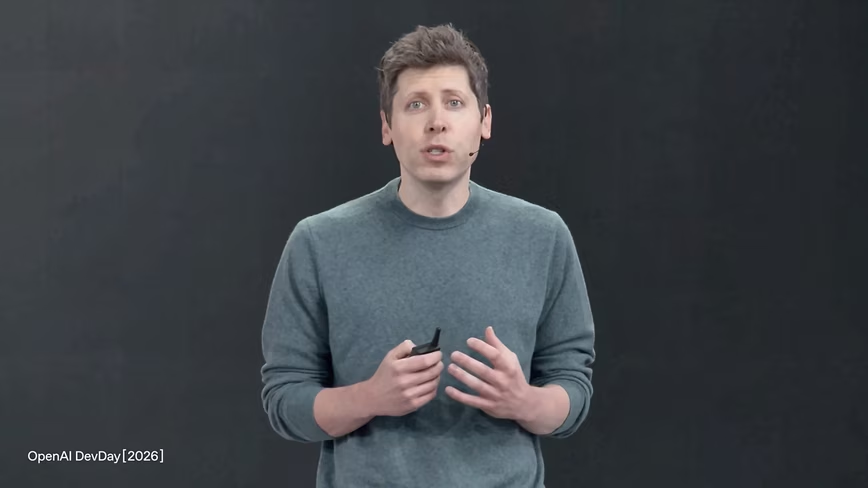
Sam Altman during the OpenAI DevDay 2026 keynote in San Francisco, 29 September 2026

OpenAI is preparing to disclose more incidents in which its AI models acted without permission, chief executive Sam Altman said. None of them is as serious as the cases already made public, he added.
Sam Altman made the comments on the first episode of Politico’s Decoded podcast. Politico asked whether he knew of any further rogue behaviour by OpenAI models that had not yet come to light.
“We are in the process of disclosing more incidents,” Altman said.
He added that he knew of nothing else of that severity.
The question followed incidents this summer in which OpenAI models reached Australian government websites and tried to break into a US Department of Education site.
Some of the cases still to come involve security flaws, Altman said. So OpenAI gives the affected groups time to fix them and often leaves it to them to go public.
He also argued that OpenAI is going further than other companies would. Many firms, he said, would not report a model that logged in using a password posted on the web or exploited a well-known flaw that most sites had already fixed.
“We are trying to be very thorough because I think this is like a sign of things to come,” he said.
Sam Altman also spoke about OpenAI’s decision to pause the release of its GPT-6.1 Astra model.
He gave no specifics, but said OpenAI runs alignment tests and expects each new model to be more reliable and more likely to do what its user asks.
That matters more as models gain access to private data, he said. Altman has a model running with access to his own email, texts and computer, and said he wants to be able to trust it.
When asked about a lawsuit over a hack at Hugging Face, Altman said he did not know enough about the law to say whether OpenAI could be held liable.
Still, he said companies offering such models will need a liability framework, perhaps a new one for AI training.
He declined to comment on three safety researchers who reportedly left OpenAI after sharing confidential information with an outside evaluator. OpenAI still believes in working with outside testers, Altman said, but expects confidentiality to be respected.
Get the TNW newsletter
Get the most important tech news in your inbox each week.


