Four months ago, AI looked like it might gut the software industry. This week, one of its biggest investors declared the threat over. The truth sits somewhere in between.
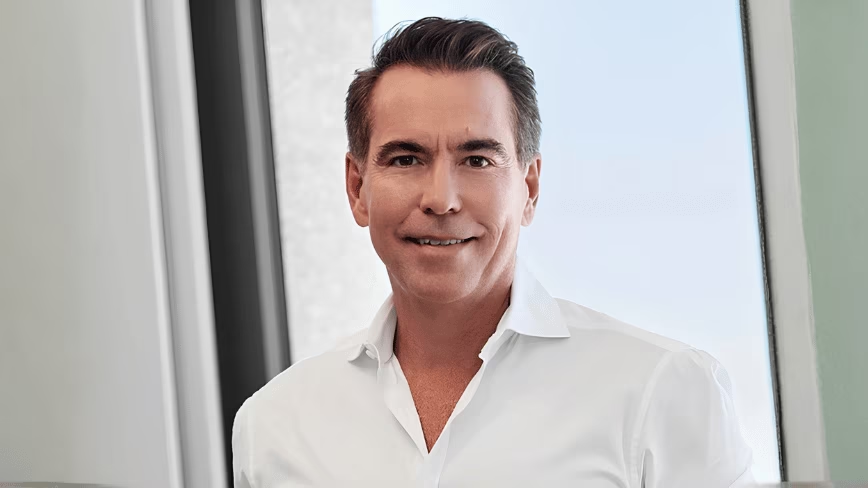
Speaking at the SuperReturn International conference in Berlin, Orlando Bravo, founder of Thoma Bravo, one of the world’s largest software-focused private equity firms with almost $200bn under management, told CNBC that the panic had passed.
“The SaaSpocalypse is over. It’s finished, no more,” he said, calling AI “an enormous tailwind for software companies.” Around half of the new revenue across his portfolio, he added, is now “AI revenue, agentic revenue,” and he expects software and AI to fuse into “a new agentic solution” for corporate customers.
The term he was burying was coined in February, when Anthropic’s Claude Cowork agent tools triggered a brutal selloff.
Investors took fright at the idea that AI agents could collapse the number of human “seats” that subscription software is priced on, wiping roughly $285bn off software, financial, and asset-management stocks in a 48-hour window and repricing per-seat software as AI-native spending surged.
Salesforce fell around 30 per cent on the year; SAP shed roughly a third of its market value.
Bravo has the rebound on his side. The iShares Expanded Tech-Software ETF rallied 21 per cent in May, its best month since October 2001, and software has since gone from the market’s pariah to one of its leaders, with names left for dead in March staging a sharp fightback.
But “over” is too clean a word for what is actually happening.
The recovery is a bifurcation, not a tide. The companies that own the picks-and-shovels of the AI build-out, infrastructure and consumption-priced businesses, have soared: DigitalOcean is up more than 220 per cent this year, Datadog around 76 per cent, CrowdStrike over 50 per cent.
Seat-based application software is still climbing out of a hole. HubSpot is down roughly 46 per cent on the year despite growing revenue more than 20 per cent, Monday.com around 45 per cent. The market is paying a premium for AI-defensibility and discounting anything an agent might plausibly replace, even when the underlying numbers are fine.
Not everyone in the industry is ready to ring the all-clear.
Snowflake chief executive Sridhar Ramaswamy this week refused to say the SaaSpocalypse was over, arguing it is “better to be paranoid” in a market where a rival’s improvement can erase a lead overnight. His caution points at the next reckoning: the cost of actually running AI agents.
Uber capped its engineers’ agentic-AI coding spend at $1,500 a month each after blowing through its 2026 budget, and even Microsoft reportedly pulled back on Claude-powered agents once the bill outran what human staff cost. The economics that were supposed to doom software may yet bite the AI tools meant to replace it.
Bravo himself left the door open, conceding that questions over governance, cybersecurity, and returns on agentic tools remain unresolved. “It is a period of discovery now, which creates pressure on the whole system,” he said. It is also worth remembering that, as one of the world’s biggest software investors, he has every reason to call the bottom.
So is the SaaSpocalypse over? The share-price panic clearly is.
The deeper repricing, away from software earning a premium simply for being software and toward usage, proprietary data, and genuine AI leverage, is only beginning, and plenty of people still argue the funeral was oversold in the first place. Bravo is calling the bottom. Ramaswamy is calling for humility.
On the evidence so far, both can be right at once.
Get the TNW newsletter
Get the most important tech news in your inbox each week.


