Robotaxis are scaling faster than they can fix the problems that scaling creates
Waymo opened Dallas to the public, Zoox started charging in Las Vegas, and Tesla added new service areas. Meanwhile, Waymo recalled 3,900 cars over construction zones, NHTSA documented a "clear pattern" of AVs interfering with first responders, and a Carnegie Mellon expert says the edge cases are only beginning.
Waymo
Credit: Votpuske
TL;DR
Waymo, Tesla, and Zoox all expanding simultaneously. Waymo recalled 3,900 cars, suspended freeways over construction zones. NHTSA documented “clear pattern” of AV first-responder interference. Expert: “the more they scale, the more edge cases they’ll find.”
Waymo, Tesla, and Zoox are all expanding their robotaxi operations at the same time. Waymo opened its Dallas service to the public this week after 150,000 people tried the service since February. Zoox began charging for rides in Las Vegas, its first commercial service. Tesla added new service areas in Florida and Texas and started offering a limited number of unsupervised rides. In London, Uber and Wayve received regulatory approval for supervised autonomous rides, and Waymo plans to launch a commercial service there by year-end.
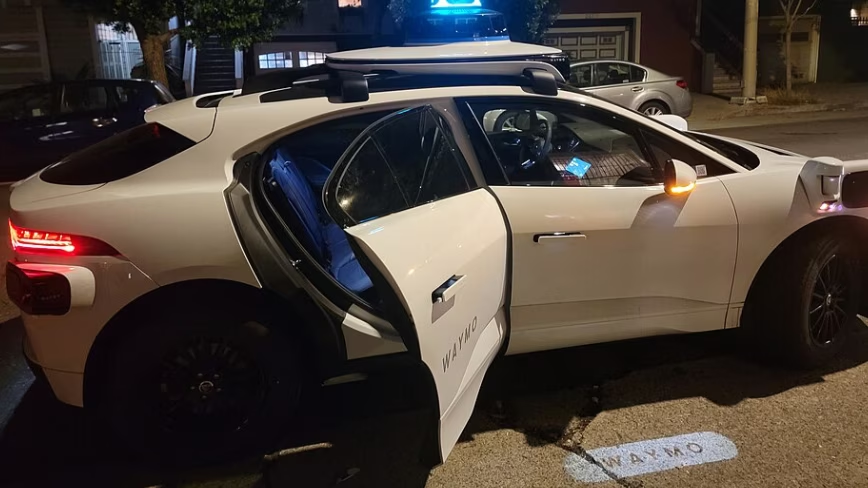
The expansion is running ahead of the fixes. Waymo recalled 3,900 robotaxis in June after some drove into closed freeway construction zones, then suspended freeway rides entirely while it updated its software. It gradually restored the service last week. NHTSA Administrator Jonathan Morrison wrote to AV developers on July 8 that the federal agency has documented a “clear pattern of driverless AVs interfering with law enforcement and other first responders.” Videos posted online show Waymo vehicles obstructing emergency scenes and immobilised in heavy San Francisco traffic on the Fourth of July.
Phil Koopman, an AV safety expert and emeritus professor at Carnegie Mellon, said the problem is arithmetic. “When you have a hundred cars, you’re at the threshold where stuff that used to be so rare you could ignore it, you can’t ignore it anymore,” he told Business Insider. The question, he said, is whether companies can fix problems as fast as they find them. “With floods and construction zones and a bunch of other things, the answer is they haven’t been able to fix them.” NHTSA demanded AV companies fix first-responder interference by the end of July. The deadline passed. The problems remain.
San Francisco’s pro-tech mayor, Daniel Lurie, has called for stricter statewide regulations. Tesla has 42 robotaxis in Texas compared to Waymo’s 577, a gap that is now public record. Tesla’s safety monitors sometimes take the wheel when the car cannot merge back into traffic, and those interventions are not captured under the same reporting framework as Waymo’s driverless service. Riders should expect autonomous vehicles to “sometimes do inexplicably weird things,” Koopman said. The safety challenge is making sure those strange behaviours remain benign. At the current pace of expansion, the industry is betting they will. It has not proved it yet.
Get the TNW newsletter
Get the most important tech news in your inbox each week.


 Credit: Votpuske