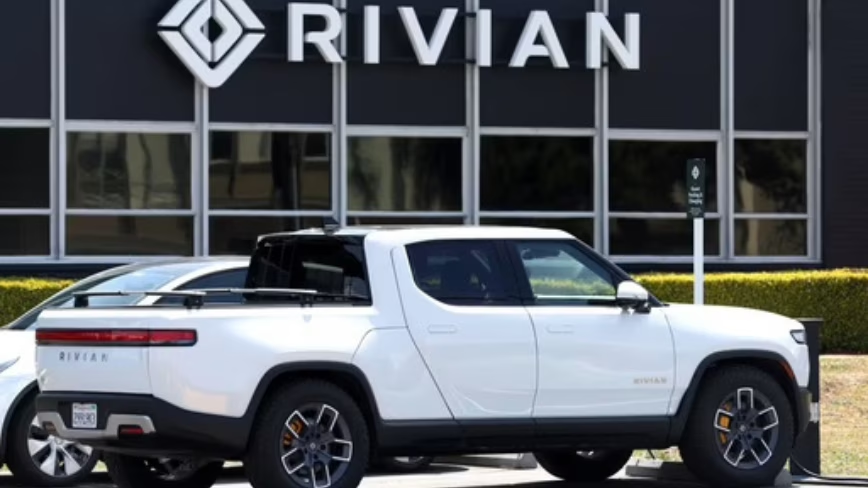
 Credit: Rivian
Rivian is facing a class action lawsuit alleging it spent five years making false promises about the autonomous driving capabilities of its first-generation R1T truck and R1S SUV. The complaint, filed Wednesday in the US District Court for the Central District of California, claims Rivian represented that its flagship vehicles would be capable of hands-free, eyes-off driving, a capability classified as Level 3 autonomy by the Society of Automobile Engineers.
Rivian declined to comment, citing pending litigation.
The marketing gap
The lawsuit centres on Driver+, Rivian’s driver assistance system, which the company allegedly marketed as a stepping stone to full hands-free operation on all its vehicles. The complaint cites a “coordinated nationwide marketing campaign” spanning five years, including statements by chief executive RJ Scaringe at TechCrunch Disrupt in 2022.
“No software update, no matter how sophisticated, will enable its Gen 1 vehicles to perform as advertised,” the complaint reads. The three named plaintiffs, represented by Coleman Law and Tycko & Zavareei, are seeking a jury trial on claims of fraud, negligent misrepresentation, and unjust enrichment.
The core allegation is that Rivian knew its first-generation hardware was incapable of the driving features it advertised, but continued to tout them to induce purchases. The first-generation R1 vehicles do not offer hands-free driving and never will, because the sensor suite and computing platform cannot support it.
Gen 2 can do what Gen 1 cannot
Rivian’s second-generation R1 vehicles, which were overhauled in 2024, do offer hands-free driving. The revamp introduced the Rivian Autonomy Platform, which comes standard and includes 11 cameras, five radar sensors, and a computer that is 10 times more powerful than its predecessor.
In December 2025, Rivian rolled out Universal Hands-Free via a software update to second-generation vehicles only. The feature allows drivers to take their hands off the wheel on more than 3.5 million miles of roads in the United States and Canada, as long as lane lines are visible.
The lawsuit’s core argument is that this capability was always going to require hardware the first-generation vehicles did not have, and that Rivian knew it.
A pattern across the industry
Rivian is not the first EV maker to face legal consequences for self-driving promises. Tesla has spent a decade claiming its vehicles would be fully autonomous via its Full Self-Driving software, and multiple owners have sued the company for failing to deliver unsupervised driving.
In December 2025, a California administrative law judge ruled that Tesla’s marketing of Autopilot was “a long but unlawful tradition” of using ambiguity to mislead consumers, and the company has separately been found to have supplied European regulators with misleading safety data about its driving systems. Tesla subsequently dropped the “Autopilot” name from its California marketing, though it has since sued the DMV to reverse the false advertising ruling.
Even some of the engineers who trained Tesla’s self-driving AI have said they would not ride in it. Waymo, widely considered the industry leader in autonomous driving, has issued six recalls as its robotaxis encountered situations their software could not handle.
It would not be the first costly legal setback for Rivian. In October 2025, the company agreed to pay $250 million to settle a class action shareholder lawsuit filed after it abruptly hiked prices on R1 models by nearly 20 per cent in 2022.
The new lawsuit targets a different promise, but raises the same underlying question: how far automakers can stretch their marketing of capabilities that do not yet exist, and whether buyers are paying for technology the company knows it cannot deliver on the vehicles they are purchasing.
Get the TNW newsletter
Get the most important tech news in your inbox each week.


