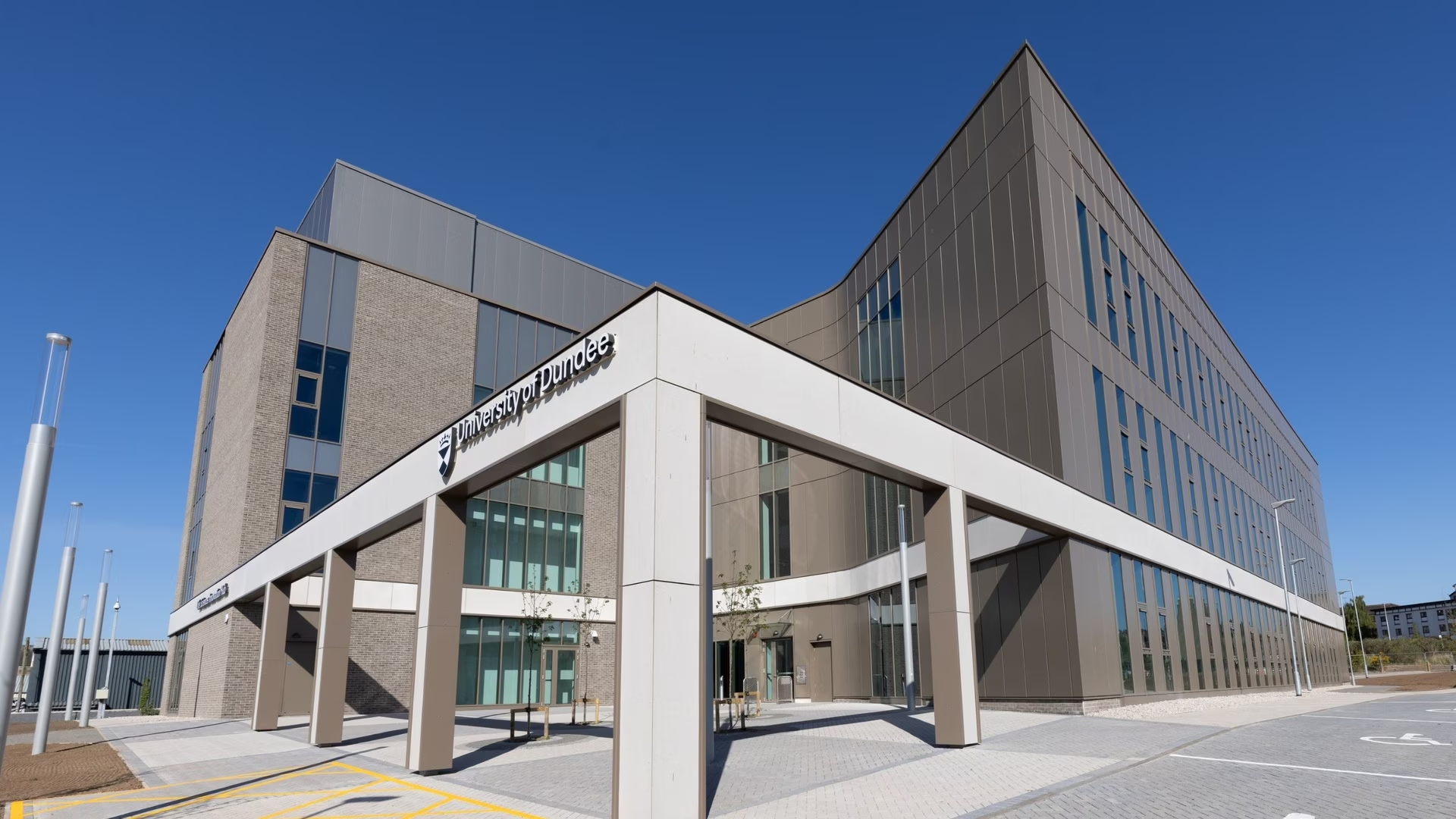
A University of Dundee building in Dundee, Scotland
 Credit: PhaSER Biomedical
Scottish biotech PhaSER Biomedical has won a $2.7M (£2m) grant from the Gates Foundation to help find new drugs for diseases such as TB and malaria. The company announced the award in a statement this morning.
The two-year grant renews PhaSER’s place in the foundation’s Global Health Discovery Collaboratory, a programme that gives Gates-funded teams access to shared lab tools. Through it, scientists around the world can use PhaSER’s mice and its know-how on how the body handles drugs.
The award follows a $2.3M Gates grant announced in 2024. During that period, researchers used PhaSER’s 8HUM model in work on tuberculosis, malaria, schistosomiasis and Chagas disease, the company said.
The 8HUM mouse carries human versions of the main genes that break down drugs. Mice usually clear drugs much faster than people do. As a result, tests in normal mice can give the wrong picture.
A PNAS study by University of Dundee researchers found that drugs behaved in 8HUM mice much more like they do in patients.
PhaSER was set up in October 2022 to sell access to the model. It was built by Professor Roland Wolf at the University of Dundee with CXR Biosciences, Taconic and Scottish Enterprise.
The company is also using 8HUM to build HERALD, an AI tool that predicts harmful side effects in people who take several medicines at once. It is developing the tool with the University of Dundee and the UK’s medicines regulator, the MHRA. In October 2025, the regulator said the project would get £859,650 in government funding.
“Over the last two years we have seen how the humanised models provide human-relevant data that can rescue promising compounds, de-risk candidates and save valuable drug development time,” said Wolf, PhaSER’s founder.
“Human-relevant evidence earlier in development means better choices about which medicines to take forward,” said Chris Wardhaugh, PhaSER’s chief executive.
Meanwhile, PhaSER is hiring experts in AI and computer modelling. It has also appointed Richard Bickerton, a co-founder of AI drug company Exscientia, to its board. Exscientia was bought by Recursion in 2024.
The company said it is in talks with investors to help it grow.
Get the TNW newsletter
Get the most important tech news in your inbox each week.


