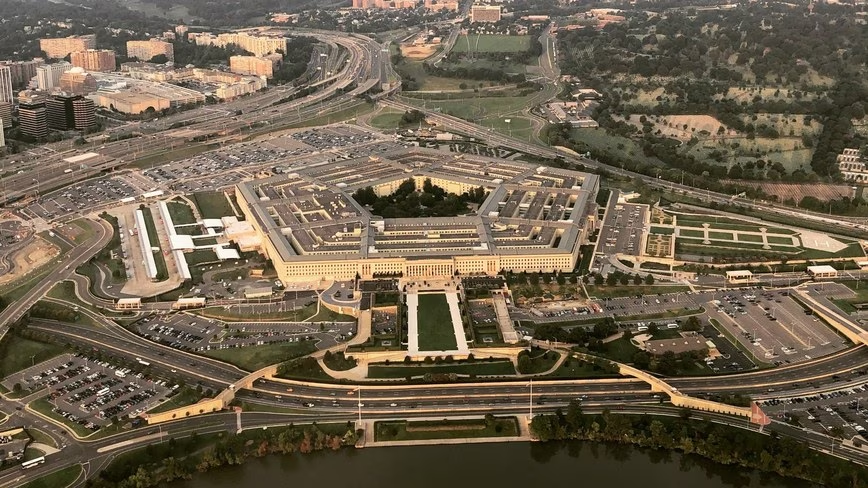
The Pentagon, headquarters of the US Department of Defense, in Arlington, Virginia

The US military is establishing a new command to develop and field drones, robots, and other autonomous systems across all its branches.
US Defense Secretary Pete Hegseth announced Autonomous Warfare Command, or AutoWarCom, on Wednesday.
Hegseth made the announcement in his annual State of the Force speech to junior officers and enlisted personnel at Marine Corps Base Quantico in Virginia. He said a four-star officer would lead the command.
“The pace of war is changing faster than the process to support it,” Hegseth said.
New commands are rare, as the last one was US Space Command in 2019, according to Reuters. The Pentagon currently has 11 combatant commands, each covering a region of the world or a specific task.
Unlike most of them, AutoWarCom will have powers similar to those of the armed services, Hegseth said.
That means it can drive the design, development and fielding of its own systems. He said the command would be set up over several months and launched within a year, Air & Space Forces Magazine reported.
Until that time, an interim measure known as Project Agincourt will be put in place. Hegseth also stated that the services would establish new military job specialties for soldiers who operate autonomous systems.
The command is based on previous changes; in June, Hegseth set up a single drone office to oversee almost all of the Pentagon’s unmanned programmes, with responsibilities that include the Defense Autonomous Warfare Group and Joint Interagency Task Force 401, which is tasked with countering enemy drones.
The funds behind the initiative have increased rapidly. For the Defence Autonomous Warfare Group, the Pentagon’s budget proposal for fiscal year 2027 requests about $54.6 billion, an increase from the current level of about $226 million. However, Congress has not yet approved that request.
This was also the proposal put forward by the senators during discussions of next year’s defence policy bill, as reported by Air & Space Forces Magazine.
This development occurs as security experts warn of the dangers of allowing military AI to develop without limits, with experts from both the US and China calling for common rules governing AI in weapons systems, including nuclear weapons.
Get the TNW newsletter
Get the most important tech news in your inbox each week.


