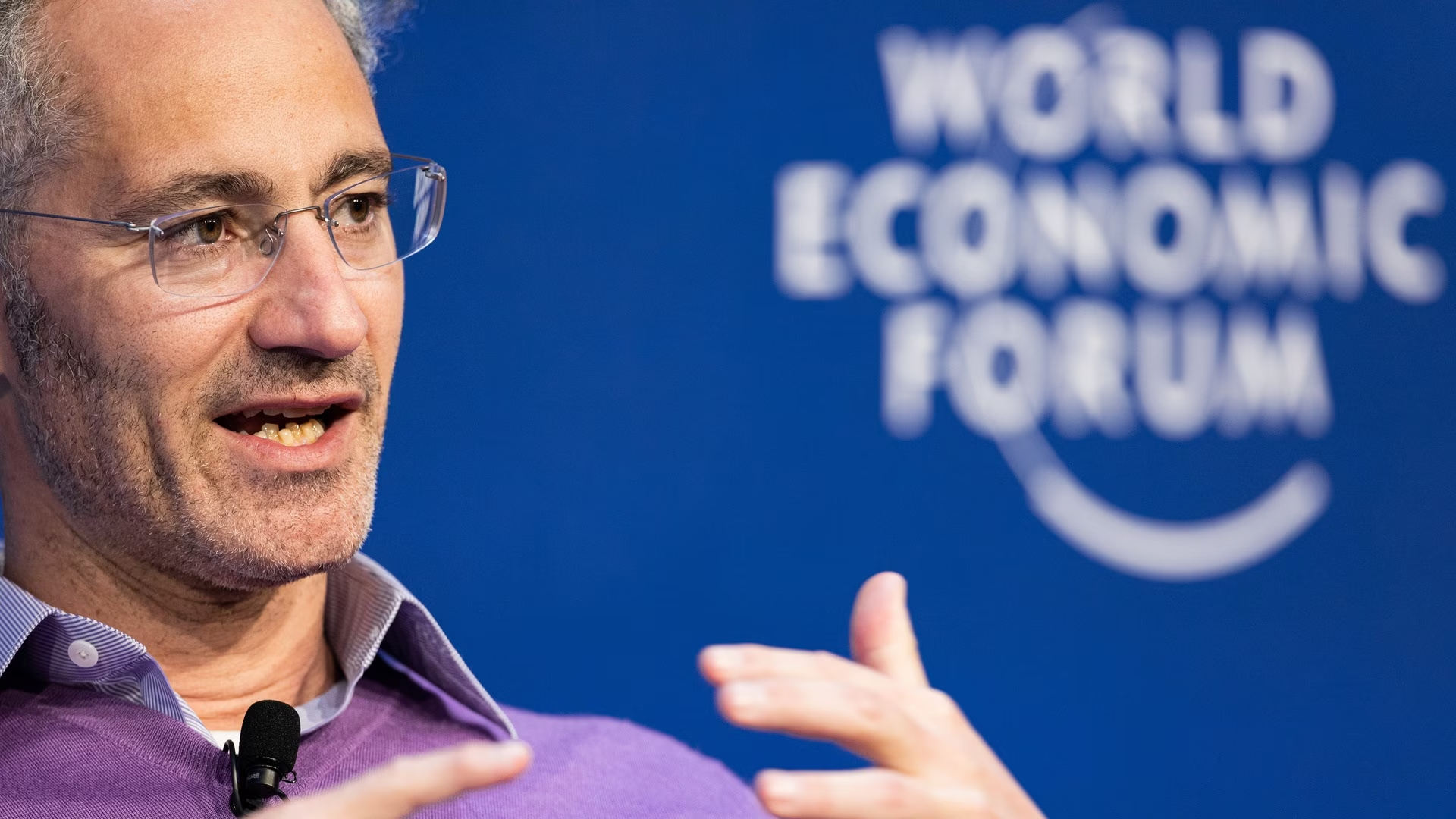
Alex Karp, chief executive and co-founder of Palantir, speaking at the World Economic Forum Annual Meeting in Davos, Switzerland, in May 2022.

Palantir’s US commercial business brought in more revenue than its US government work for the first time in the third quarter. US commercial revenue rose 148% from a year earlier to $984m, the company said in its earnings release on Monday. Revenue from the US government rose 96% to $953m.
Total revenue also rose 96%, to $2.31bn, the first quarter above $2bn. Analysts had expected $2.18bn, according to LSEG estimates reported by CNBC. Adjusted earnings of 44 cents a share beat the 41 cents analysts expected.
Net income more than doubled to $1.13bn, or 44 cents a share, from $476m a year earlier.
“I don’t believe anyone’s had consistent results like this in the history of software AI, ever,” chief executive Alex Karp told CNBC’s Seema Mody.
Karp also told CNBC the business is succeeding without salespeople.
A higher forecast
Palantir raised its full-year revenue forecast to between $8.530bn and $8.534bn, which would mean growth of 91%. Analysts had expected $8.2bn on average, according to data compiled by Bloomberg.
The company now expects more than $3.559bn in US commercial revenue this year, growth of at least 143%. Three months ago, it forecast $3.42bn. For the fourth quarter, it expects revenue of about $2.65bn.
Palantir closed 212 deals worth at least $1m in the quarter, 64 of them worth at least $10m. It ended September with $10.4bn in cash and US Treasury securities.
Karp on sovereign AI
“The Sovereign AI movement is imposing the most dramatic dichotomy between haves and have nots that I have witnessed in 30 years of business,” Karp said in the release.
Karp has backed open-weight AI models and criticised the leading AI labs. On Monday, he repeated his call to nationalise them. He told CNBC it was the “only realistic way” to manage liability. In June, he said Senator Bernie Sanders would regret asking for only 50% of AI companies.
What worries investors
Palantir shares closed at $178.34 in New York on Monday, down 3.1%, and were volatile in after-hours trading, Andrew Martin reported for Bloomberg. Investors have worried that the stock may be overvalued, amid more competition and tough comparisons with strong earlier quarters, he wrote.
In August, investors also feared competition from AI developers such as Anthropic, which sell their own software. Another fear was that governments outside the US would turn to homegrown tech firms. In September, Germany’s military was evaluating 30 AI tools, with a prototype due in 2027. In May, Palantir’s first-quarter results landed in the middle of an AI software sell-off.
Get the TNW newsletter
Get the most important tech news in your inbox each week.


