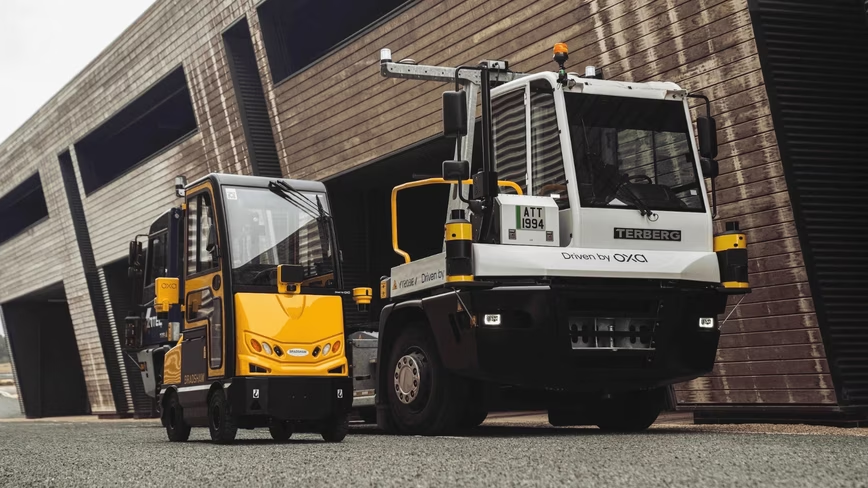

Oxford-based autonomous vehicle software company Oxa has raised $103 million in the first close of its Series D round to expand deployment of its industrial self-driving platform. The round includes a $50 million commitment from the UK National Wealth Fund, alongside investments from NVentures (NVIDIA’s venture arm), IP Group, Hostplus, and bp Ventures.
The capital will support the rollout of Oxa’s autonomous mobility software in controlled industrial environments such as ports, airports, factories, and solar farms.
Oxa builds autonomous vehicle software designed for structured industrial settings rather than public roads. Its technology stack is centred around three components: Oxa Driver, the autonomy software that controls vehicles; Oxa Foundry, a development toolkit for configuring deployments; and Oxa Hub, which manages fleets and operational data.
Instead of manufacturing vehicles itself, the company integrates its software into existing vehicles, such as tow tractors or logistics shuttles, allowing companies to retrofit fleets already operating in industrial environments. These systems can handle repetitive tasks like transporting goods across factory yards or monitoring large facilities.
The commercial focus is narrow but deliberate. Oxa targets industrial logistics operators and infrastructure owners, including ports and large energy facilities, where autonomous driving can operate in closed environments with fewer regulatory barriers. Customers mentioned publicly include DHL, Vantec, and bp.
The $103 million represents the first close of Oxa’s Series D, with additional capital expected in a later closing. The UK National Wealth Fund alone contributed $50 million, signalling a strategic government interest in supporting domestic robotics and autonomy technologies.
Other investors include NVentures, NVIDIA’s venture capital arm, alongside existing backers IP Group, Hostplus, and bp Ventures. The company has not disclosed a valuation or the exact breakdown of investments by each participant.
The new capital will fund continued development of Oxa Driver and its developer tooling, while also supporting commercial deployments in Europe, the UK, and the Middle East.
Oxa’s bet is that autonomy will scale first in logistics yards rather than city streets. If that thesis holds, the company’s industrial focus could prove less spectacular than the robotaxi visions that once dominated headlines, but potentially far more deployable.
Get the TNW newsletter
Get the most important tech news in your inbox each week.


