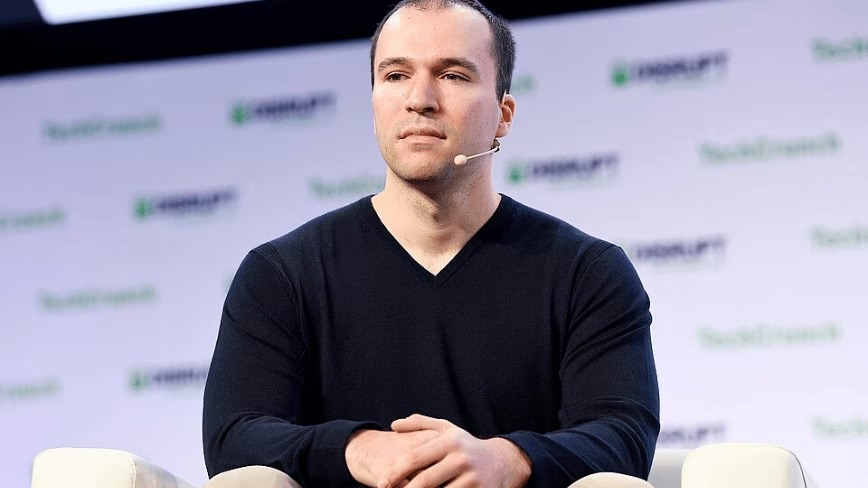
Greg Brockman, then OpenAI’s co-founder, chairman and CTO, speaks at TechCrunch Disrupt at the Moscone Center in San Francisco, 3 October 2019.

OpenAI’s president says artificial general intelligence has arrived. Greg Brockman told reporters that the company’s new Astra model qualifies, the Washington Post reported.
OpenAI defines AGI as systems that are generally smarter than humans. “I do leave it up to the reader to decide for themselves if this qualifies for them“, Brockman said. “I think we’re there.”
The model went to business users in the Daybreak programme on Thursday. A version carrying added cybersecurity guardrails is planned for paid ChatGPT subscribers, Bloomberg reported.
Both versions block access to the most advanced cyber capabilities. OpenAI has said Astra reached its critical cybersecurity threshold. Sam Altman said the release took longer than hoped.
That is the classification behind the model OpenAI slowed in August. A model reaches it when it can find and build working zero-day exploits against hardened systems with no human help.
Astra has been trained to use computers the way people do. OpenAI says it can handle financial modelling, tax preparation and video game development with minimal human oversight.
The US government looked at it before release. Brockman said there was nothing they came back saying you need to change. He offered that as reassurance.
That is a weaker statement than it sounds.
June’s executive order lets developers give agencies access for up to 30 days before a broad release, and expressly says nothing in it authorises mandatory licensing, preclearance or permitting.
Participation is voluntary, and the NSA director decides which models count as covered frontier models through a classified benchmarking process. No approval was withheld because none was on offer.
Europe does not pre-clear a model either. The Commission gained power to conduct evaluations on 2 August, triggered by insufficient documentation or an alert from its scientific panel. It can demand access through APIs or source code.
Those are post-market powers rather than gates. Separately, from 11 September, manufacturers of products with digital elements must report actively exploited vulnerabilities within 24 hours of becoming aware.
So nobody cleared this model in either jurisdiction. OpenAI has been rewriting its framework since the Hugging Face breach, and its own classification remains the binding one.
Get the TNW newsletter
Get the most important tech news in your inbox each week.


