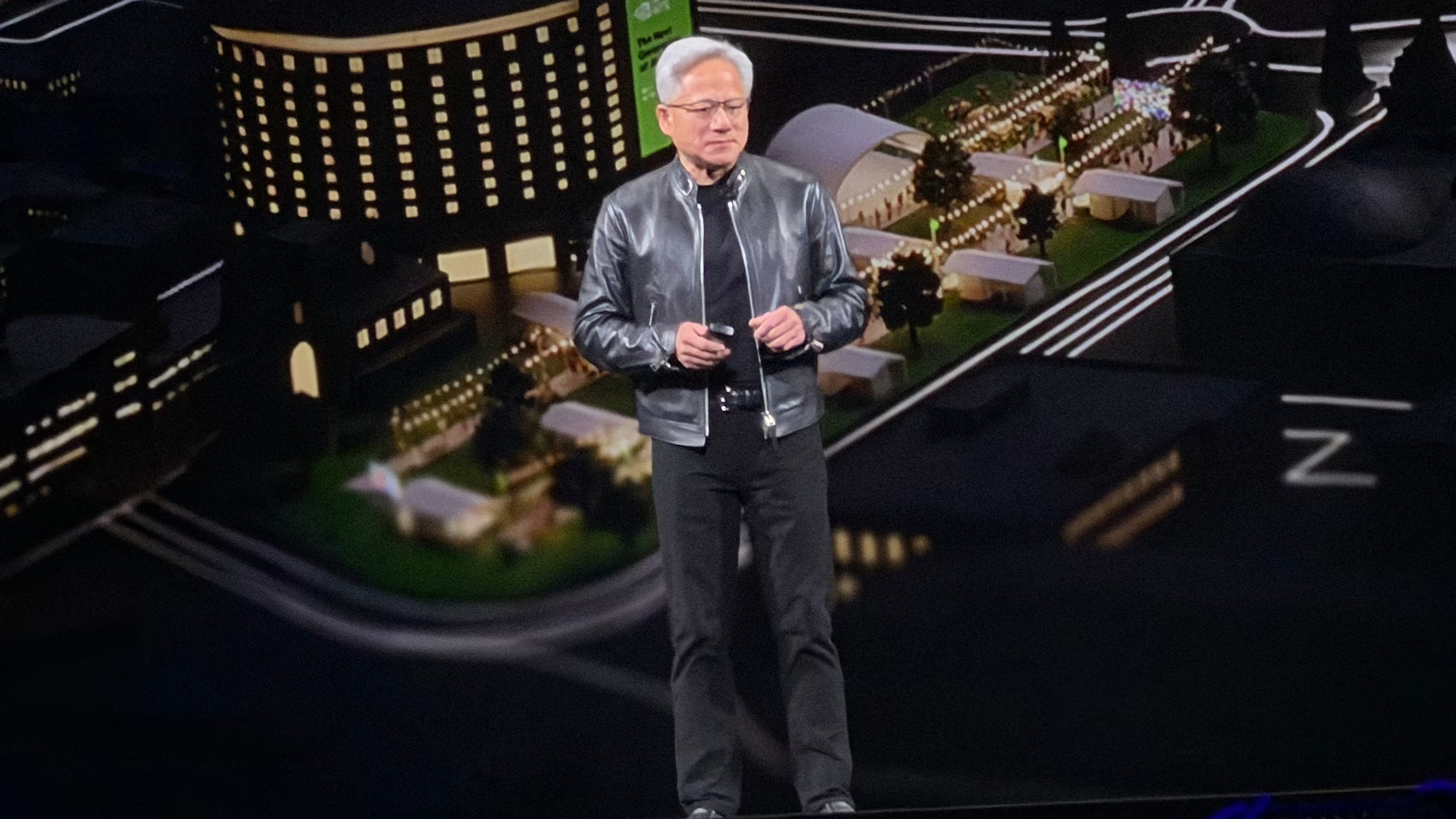
NVIDIA founder and CEO Jensen Huang during his GTC 2026 keynote at the SAP Center in San Jose, 16 March 2026
 Credit: TNW
Nvidia’s independent directors have hired the law firm Wachtell, Lipton, Rosen & Katz to investigate chief executive Jensen Huang. The board retained Joon H. Kim, a former acting US Attorney in Manhattan, and his firm to run it. The board announced the choice on Tuesday, CNBC reported.
“The independent members of the NVIDIA Board have retained former acting U.S. Attorney of the Southern District of New York Joon H. Kim and his firm Wachtell, Lipton, Rosen & Katz to conduct a thorough and independent investigation as was announced on Sunday,” the board said in a statement.
The board opened its own inquiry after Huang admitted an affair with Alice Huang, a former executive at the chip buyer Megaspeed. US intelligence agencies have concluded she was a spy for China, which has rejected the claims. Huang would not take part in choosing counsel and would keep leading the company, a spokesman had said, according to the Times.
The Nvidia board has a combined 161 years of service, Kalley Huang and Don Clark reported for The New York Times. Huang, Tench Coxe and Harvey Jones have sat on it since 1993, according to Nvidia’s proxy statement.
Directors from the start
Sequoia Capital and Sutter Hill Ventures led a $2m round in Nvidia in 1993. Their investors, Mark Stevens and Coxe, then joined the board. Stevens left in 2006 and returned in 2008, the proxy shows. Brooke Seawell, a former Synopsys finance chief, joined in 1997. Jones and Seawell held Nvidia shares worth a combined $1.86bn as of June, the Times reported.
Before the hire, people familiar with the inquiry told the Financial Times it would probably be led by Stephen Neal, the lead independent director. Neal ran the law firm Cooley from 2001 to 2008 and is still its senior counsel. Cooley set up Nvidia in 1993 and has been its main outside counsel since, CNBC reported, citing the firm. Neal did not respond to CNBC.
Average director tenure is almost 15 years, nearly twice the S&P 500 norm, Semafor reported. No director is a current or former S&P 500 chief executive, and none has national security experience. None of the directors responded to the Times.
The rules on paper
Nvidia has a lead independent director instead of a board chair. The proxy says this gives each member “an equal voice”. Huang told Bloomberg’s Emily Chang that he skipped the chairman role so the chief executive could be held accountable, Bloomberg reported.
“Unlike many CEOs, I’m completely fireable,” Huang said.
Nvidia’s code of conduct tells staff and directors to avoid any activity that conflicts with the company’s interests, the proxy says. That includes anything that looks like a conflict. The company does not have a chief compliance officer, the filing confirms. Nvidia has said a committee of its finance, operations and human resources heads checks that staff follow its policies, Fortune reported.
Nvidia’s annual report does not name Huang as a key person. It says the company depends heavily on its longstanding executive team.
“Failure to ensure effective succession planning, transfer of knowledge, and smooth transitions involving executives and key employees could hinder our strategic planning, execution, and long-term success,” the filing says.
One man at the centre
Huang is Nvidia’s co-founder, chief executive and president. He has 33 direct reports this week, according to internal records reviewed by CNBC. He told CNBC in September 2025 that he had as many as 60. The proxy says the senior managers who work directly with him give the board a pool of candidates for promotion.
Huang owned 3.58% of Nvidia in March, the proxy shows, and he has no special voting rights, the Financial Times reported. He told Bloomberg he hoped the next chief executive already worked at Nvidia. In January, he said a chief executive who does not do the job “is let go”, the Times reported. He added a second thought.
“There will never be one like me, and the reason for that is because I was raised by the company,” Huang said.
The family at Nvidia
Three relatives work at Nvidia. His son Spencer is a director of product management in robotics, and his daughter Madison is a senior director of product marketing, according to the Times. His son-in-law, Nico Caprez, works on business development, the Times reported. Fortune gives his title as vice president of global AI infrastructure growth.
Nvidia paid Madison about $1.23m and Spencer about $1.32m in its 2026 financial year, the proxy shows. Neither is an executive officer, shares a household with Huang or reports directly to him. Their pay was set under the company’s normal practices without Huang’s involvement, the filing says.
Asked last month whether Madison was in line to succeed him, Huang said he did not wish the job on her. She cancelled a trip to Seoul on Monday, citing a “family matter”, according to Bloomberg. Huang asked for privacy for them in his memo to staff.
“My family bears no responsibility for my choices. I do. Please give them privacy,” he wrote.
Nvidia reports its third-quarter results on 17 November. A day later, House committee chairs expect Huang at a closed-door briefing on Megaspeed.
Get the TNW newsletter
Get the most important tech news in your inbox each week.


