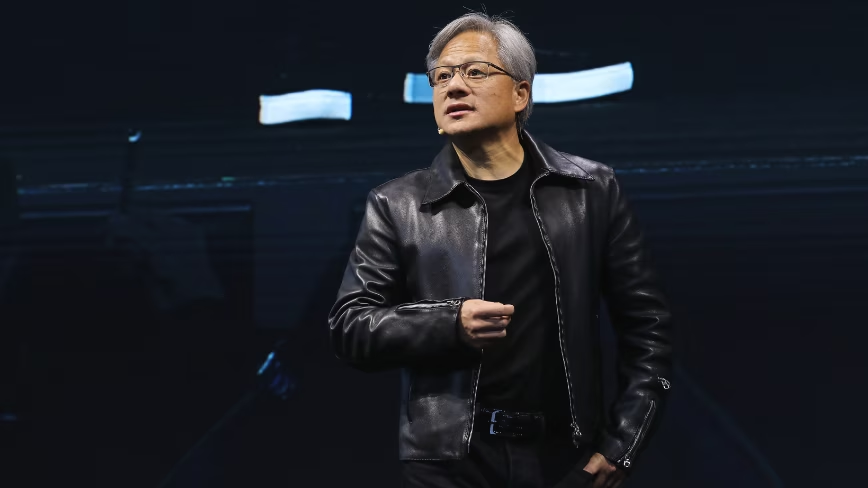
Jensen Huang NVIDIA’s Founder, President and CEO at Computex Taipei.
 Credit: glen photo / Shutterstock
You can read Nvidia’s philosophy in a job advert. The chipmaker is assembling a new AI safety and security engineering team, Business Insider reported. A cluster of listings posted late last month gives it away. The pitch is not caution about what AI might do. It is a bet that trust is what makes people buy it.
The team is small but senior. Nvidia wants a distinguished engineer as its “founding technical leader”. It is also hiring a security research engineer, an evaluation engineer and a senior manager. Their brief, per the listings: vet AI agents before deployment, and build AI-powered tools that patch software flaws.
The case for open
One listing states the belief plainly. It calls open-weight models, transparency and broad scientific scrutiny “foundational to American AI leadership and cybersecurity defense”. Open-weight models publish the trained weights that decide how a model behaves. The training data and source code stay private. They are the opposite of the closed systems built by OpenAI and Anthropic.
Nvidia has been making this argument loudly. In his first ever post on X last month, chief executive Jensen Huang shared a letter urging US policymakers to back open models. They “strengthen safety and cybersecurity”, he wrote. Days later, Nvidia became a founding member of the Open Secure AI Alliance.
The 120-company group includes Microsoft, Palantir and SpaceX, and is building open-source security tools. The safety-team listings appeared just before that launch, and describe much of the same work.
Why safety sells chips
The philosophy has a balance sheet behind it. Open models put AI into far more hands than a closed service does. Every new user needs silicon to run it. That is why rivals such as AMD are chasing the same open-source opening. Nvidia does not want to cede it. More adoption means more chips.
Safety is the part that unlocks the adoption. AI is shifting from chatbots to agents that can reach sensitive company data and act on it. At that point the barrier stops being capability and becomes trust. A company will not hand an autonomous agent the keys to its systems unless it believes the thing is safe.
That is why firms now test agents for unauthorised actions before switching them on.
The open-model case is not settled. Critics argue that publishing weights hands capable tools to bad actors as readily as to defenders. Researchers have documented a safety gap, where open models match the frontier on capability but trail it on safeguards.
Nvidia did not respond to Business Insider’s request for comment, so its own account rests on the adverts. And it is worth noting who gains if the argument wins. The company insisting that safe, open AI should spread everywhere also sells the hardware it runs on.
Get the TNW newsletter
Get the most important tech news in your inbox each week.


