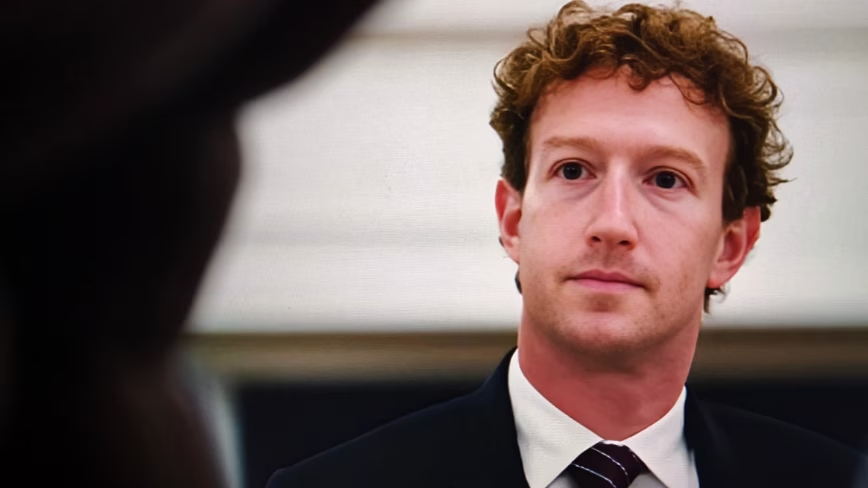
Meta CEO Mark Zuckerberg at a dinner with tech leaders in the State Dining Room of the White House in Washington, Sept. 4, 2025.
 Credit: FotoField via Shutterstock.com
Two Florida financial advisers, John Suddeth and Sara Perkins, say fraudsters stole their likenesses to lure victims into a stock scheme. On 21 May, Meta moved to dismiss their amended complaint in the Northern District of California, as Courthouse News reported. It told Judge Richard Seeborg the case should end now, and for good. “This is a case about impersonation,” the motion begins.
The stock at the centre of it was Pheton Holdings, traded as “PTHL”. The advisers argue Meta profited from the scam ads and did too little to stop them. They bring claims under the Lanham Act, California’s unfair-competition law and Florida’s deceptive-practices statute, plus misappropriation, unjust enrichment, breach of contract and negligence.
The law Meta keeps reaching for
Meta’s shield is Section 230, the 1996 provision that treats platforms as carriers, not publishers, of what users post. A judge already used it once here. In March, the court dismissed the original complaint on those grounds, the same reasoning that recently freed Apple in a separate suit.
Then the case narrowed. The advisers dropped their claims about the ads themselves. They now concede the impersonation happened only inside WhatsApp group chats, which are end-to-end encrypted. Meta calls that concession “fatal”. If the harm lived in users’ private messages, it argues, Section 230 covers it completely.
Where the shield has cracked
The argument is not a sure thing. In a sister case known as Bouck, the same judge found Section 230 did not protect the company. The reason: Meta’s own AI ad tools had generated the offending images and text. Authorship, the court reasoned, is not neutral hosting. That case later collapsed on separate securities grounds, but the crack it exposed remains.
Courts have been testing that shield all year. It surfaced in a design-defect suit against Meta and Discord. In another case, it failed to shield Meta from a coalition of US states. The pattern is a platform defence that holds until a company’s own systems, increasingly its AI, help make the thing that caused harm.
The stakes are not small.
Meta is fighting on several fronts at once. A New Mexico court recently ordered it to pay $567m over harm to teenagers. In the advisers’ case, Meta wants dismissal with prejudice, meaning no second attempt. Judge Seeborg heard arguments this week. His ruling will show how far the old shield still stretches.
Get the TNW newsletter
Get the most important tech news in your inbox each week.


