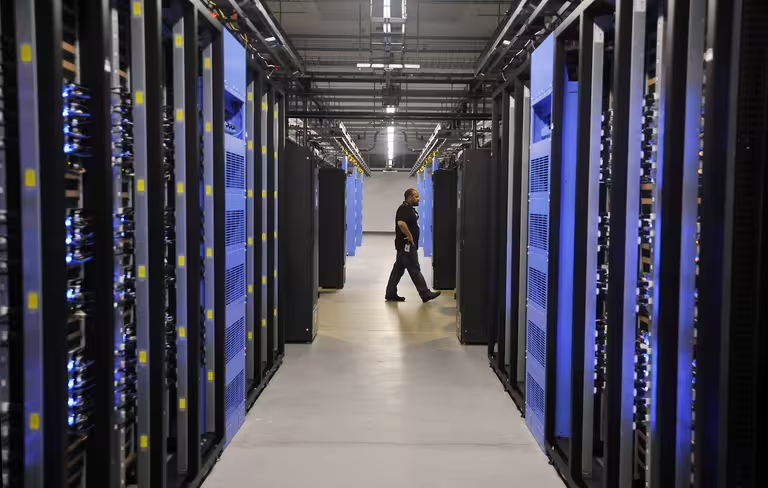
FOREST CITY, NC – APRIL 19: An employee walks past servers in one of four server rooms at the new Facebook Data Center on April 19, 2012 in Forest City, North Carolina. The company began construction on the facility in November 2010 and went live today, serving the 845 million Facebook users worldwide. (Photo by […]
 Credit: Rainier Ehrhardt/Getty Images
AI can seem like magic, a voice from a phone, an answer from nowhere. Step inside the buildings that make it, and the magic evaporates. What is left is noise, heat, metal, and an enormous appetite for power.
Axios’s Amy Harder toured a test server hall run by Digital Realty in Ashburn, Virginia, the heart of America’s “data center alley.”
The first thing she noticed was the sound, which she called “demented white noise.” It comes from fans fighting the heat of racks of AI chips. A glass floor showed the cooling pipes running beneath her feet.
At the bottom of one closet-sized rack sat a gold-coloured Nvidia system. The colour is deliberate, if fake. “Gold is associated with high value and performance,” an Nvidia spokesperson said.
The value is real enough. “That’s about $1 million right there,” a Digital Realty engineer said of the rack.
Built to be boring
For all the money, a data centre is dull by design. “If excitement is happening inside a data center, something has probably gone wrong,” Harder wrote. From outside, the buildings are windowless warehouses.
The drama is in the power and the cooling: substations, water towers, or long rows of industrial air conditioners.
The scale shows in the details.
Harder counted almost 40 diesel generators bolted to one building, for backup only, the company said. Virginia’s grid, which normally feeds the site, runs largely on gas and nuclear. The nearby Digital Dulles campus could eventually hold 13 data centres, a bet worth more than $10bn.
Cooling here will lean on energy rather than water, so no giant towers.
Why the doors stay shut
Getting in is the hard part. Some operators refused a tour outright. Others demanded non-disclosure agreements, and server halls are usually off-limits. That secrecy, Harder argued, is part of what feeds the backlash now spreading through communities worried about power bills and water.
She left convinced firms could show the public far more without giving away secrets.
The buildout is only accelerating. Digital Realty is scouting innovation labs in Singapore, São Paulo, and Johannesburg. AI’s physical footprint is growing fast, and mostly out of sight.
The less people see of it, the more they seem to distrust it, which may be the industry’s real design flaw.
Get the TNW newsletter
Get the most important tech news in your inbox each week.


