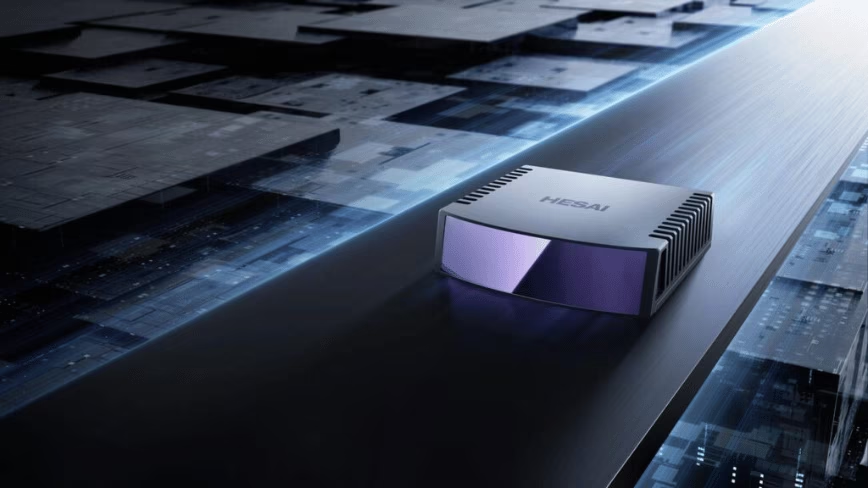
 Credit: Hesai
A lidar maker the Pentagon brands a Chinese military company quietly wires up America’s robotaxis, trucks, and even an airport. Nvidia is one of its partners.
Hesai makes many of the sensors self-driving machines use to see. The Shanghai firm also sits on a US Department of Defense blacklist of Chinese military companies, CNBC reports. The label blocks Pentagon contracts. It does nothing to stop American firms using the sensors, and Hesai’s US footprint keeps growing.
Blacklisted, but everywhere
Hesai holds about a third of the global market for automotive lidar. Its sensors sit inside Amazon’s Zoox robotaxis, trucking firms Waabi and Kodiak, and delivery outfit Nuro. They even watch the gates at New York’s JFK airport. An expanded deal, unveiled at January’s CES, made Hesai an option on Nvidia’s self-driving platform too.
Price explains the reach. Hesai says it has cut the cost of a unit from more than $10,000 to under $200. Critics counter that the price only works thanks to Chinese state subsidies. Hesai denies that.
The backdoor worry
Security researchers warn that attackers could hijack the sensors. A Duke University lab showed how planted malware can make a lidar see a phantom person. It can also hide a real one. In 2024 a botched Hesai firmware update hit a leap-year bug and froze every one of its sensors on the same day.
Hesai’s CEO David Li calls the threat fiction. He says the sensors store no data and cannot phone home. The leap-year fault, he adds, was a coding bug the firm fixed within a day. And Beijing, he insists, holds no stake in the company.
Why it matters
The pattern rhymes with Huawei, DJI, and router maker TP-Link. All three are Chinese firms flagged on the same Pentagon list before Washington moved to tear them out. US lawmakers now want to phase out Chinese lidar and bar Chinese cars from American roads.
Europe faces the same bind. Its carmakers lean on the cheap Chinese sensors that dominate the autonomous-driving race. Meanwhile Brussels and Washington keep tightening the screws on Chinese tech and blacklisted parts. Cheap hardware wins the market first. The Nvidia-powered robotaxi boom has arrived. Whether the trust catches up is the open question.
Get the TNW newsletter
Get the most important tech news in your inbox each week.


