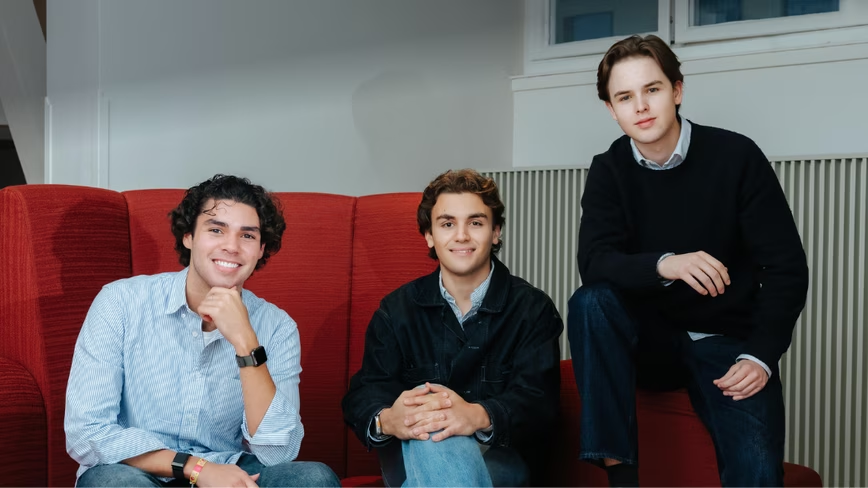
From left: Sam Stones Hälleberg (COO), Erik Romdhane (CEO) and Isaac Norin (CTO) of Fluencify.
 Credit: Fluencify
Fluencify, a Stockholm company that runs creator marketing campaigns with software agents rather than account managers, has raised an oversubscribed $4.3M pre-seed round led by byFounders.
It comes six months after the platform launched, a period in which the company says it passed $2M in annual recurring revenue.
Wave Ventures also took part, and Magnus Hambleton, a partner at byFounders, joins the board. The round is Fluencify’s first institutional money and takes its total funding to $4.3m.
byFounders invests at pre-seed and seed across the Nordics and Baltics, closed an oversubscribed fund of more than €130m in June, and was an early backer of Lovable when that company was also a small Stockholm team.
The product is built around a single premise, which is that almost none of the work in creator marketing is creative.
A brand describes the outcome it wants. Agents then handle creator discovery and matching, run the outreach, field the replies, brief creators on what the brand is after, and answer their questions before anyone starts filming.
Once a campaign is confirmed, the platform schedules posts and paid boosting and handles cross-border payouts in more than 85 countries.
It is the same wager being made across go-to-market software: that the coordination layer is the part worth automating first. AI sales agents and enterprise marketing agents are being sold on much the same reasoning, which is that the expensive humans in the process spend most of their time chasing other humans.
Fluencify works on an ambassador model, where a creator works with a brand on a recurring basis rather than doing a single paid post and moving on.
More than 13,000 creators are active on the platform, and the company puts the combined market capitalisation of the brands they work with at $30bn.
Its customers skew towards consumer and prosumer software, and specifically towards products that demo well on camera, which covers a lot of AI tools, productivity apps, and education software.
The wider question of whether audiences can tell, and whether they mind, sits underneath all of it, and survey work on the gap between AI-assisted marketing and consumer trust suggests the answer is not settled.
“From my experience on both sides of the table, as an influencer and running an agency, I found the creative elements of the work were the smallest part,” said Erik Romdhane, chief executive and co-founder.
Most of the hours, he said, went on finding creators, chasing replies, writing briefs, and paying people across borders, work that scales only by hiring.
The founders came to the problem from inside it. Romdhane has worked in creator marketing since his mid-teens and sold an influencer agency at 17, having run campaigns for more than 100 brands.
His co-founders Isaac Norin and Sam Stones Hälleberg built an AI voice note app as teenagers, and Hälleberg has more than a million Instagram followers and several hundred million views to his name.
The money goes on engineers in Stockholm, a New York office and a US sales team, a larger creator network, and further product work for existing customers.
The US expansion is the part worth watching, since it puts a six-person Swedish company into the most crowded creator marketing market in the world.
“As building products becomes easy, getting the word out about them has only gotten more important,” Hambleton said. “User-generated content is the purest way to do so: users recruit new users.”
Whether agents can hold up the parts of the job that agencies bill for, namely judgement about which creator suits which brand and what to do when a campaign goes sideways, is the thing the next twelve months will settle.
Get the TNW newsletter
Get the most important tech news in your inbox each week.


