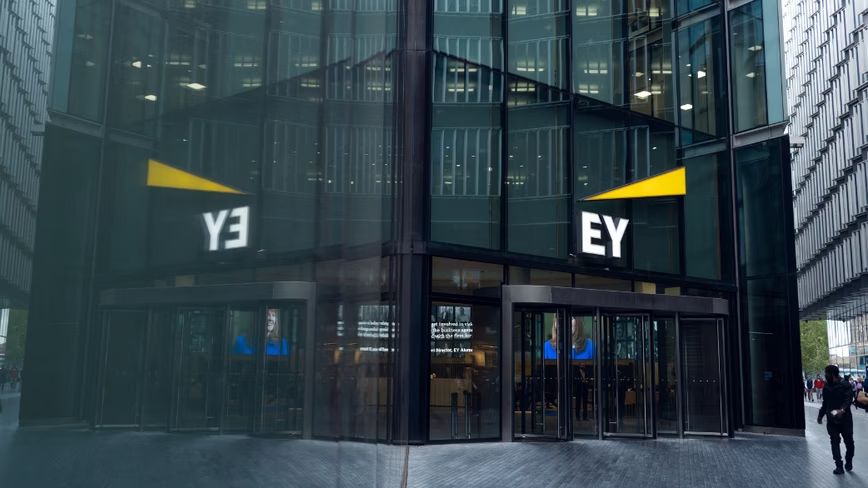
London, UK – May 12, 2022: Building in More London street of one of the headquarters of Ernst and Young in London. EY is one of the most famous consultancies worldwide.
 Credit: Sergio Rojo / Shutterstock.com
EY is launching a paid Career Residency that keeps assurance interns employed part-time for 8 to 12 months after their eight-week internship, working remotely on EY projects during their final year of college. Those who complete it and receive an offer join as analysts rather than staff.
EY has decided that eight weeks is no longer enough. The firm is launching a paid Career Residency that keeps assurance interns on for a further 8 to 12 months, working part-time and remotely on real projects while they finish their final year of university.
The reason is what AI has taken. Junior consultants used to spend their time on what Errol Gardner, EY’s global head of consulting, calls “assembly” work, pulling together presentations, drafting proposals and synthesising information.
What is left is harder to teach in a summer. The residency targets judgment, professional scepticism, critical thinking, collaboration and communication, taught through simulations and live EY work rather than a fixed course.
There is a reward at the end of it. Residents who finish and receive an offer join as analysts rather than staff, a rung above where new consultants currently start, with a pay increase tied to performance and assessment.
EY says the idea predates the technology. The firm had been reconsidering its internship model before generative AI arrived, said Ginnie Carlier, EY Americas chief talent and culture officer, but the technology has been “a catalyst.”
There is a less flattering way to read it. Entry to the profession now runs eight weeks of internship, then up to a year of part-time work, before anyone is offered a permanent job.
Demand for those places is not the constraint. EY says it received more than 24,000 applications from students on the CPA track in the past year, made 2,400 internship offers, and saw applications rise 33% year on year.
What makes this interesting is the alternative on offer elsewhere. PwC has been hiring fewer consultants as AI reshapes the same work, which is the other available answer to the same problem.
Both are responses to something already measurable. AI has been closing the internship pipeline that turned students into employees, and Swiss research has found fewer job ads aimed at career starters.
EY has chosen to lengthen the runway rather than shrink the intake, which is the more generous option. Whether it produces better juniors, or simply postpones the moment firms decide how many of them they still need, is what the next two years will show.
Get the TNW newsletter
Get the most important tech news in your inbox each week.


