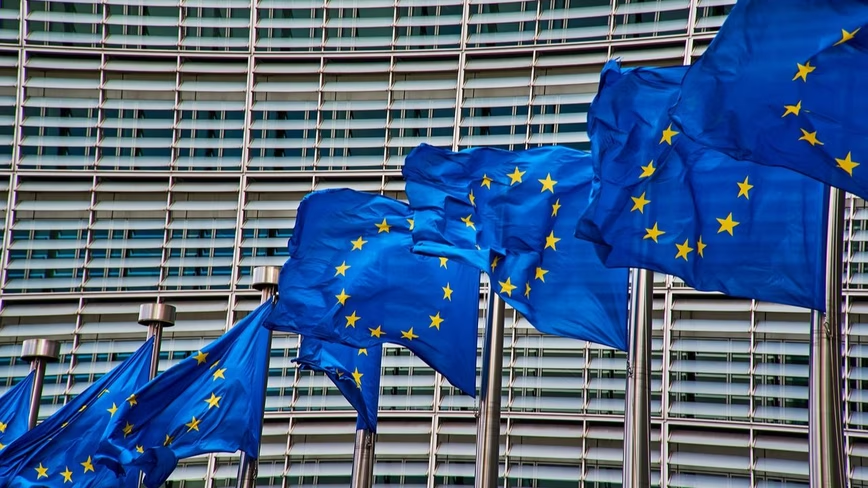
EU flags
The European Commission is preparing to fine Google a sum running into the high hundreds of millions of euros for breaching the Digital Markets Act, according to a Handelsblatt report on Monday, in what would be the largest penalty ever issued under the bloc’s new tech competition regime.
The Commission’s case rests on the long-running complaint that Google favours its own services, in particular shopping, travel and local search, when ranking results.
That investigation was formally opened in March 2024 as one of the first non-compliance probes under the DMA. Brussels concluded in early findings that Google’s ranking practices amounted to self-preferencing prohibited by Article 6 of the regulation.
A separate proceeding, opened in November 2025, deals with Google’s alleged demotion of news publishers in search results.
According to Handelsblatt, the decision in the self-preferencing case is nearing completion and is expected to be announced before the Commission’s August recess.
The fine would carry a high triple-digit million euro figure, which would place it above the €200m penalty handed to Apple in April 2025 over App Store steering rules, the previous DMA record.
Under the DMA, the Commission has the power to fine designated gatekeepers up to 10% of their global annual turnover for a first offence and up to 20% for repeat breaches. On Alphabet’s most recently reported revenues, a 10% cap would clear $35bn.
The figure under consideration is therefore at the bottom of the available range, which European Commission spokesperson Thomas Regnier has previously framed as a deliberate choice: the Commission, he has said, is more interested in compliance than in maximum penalties.
Google has objected to the case on substantive grounds. The company has described the changes Brussels is demanding to its search product as “the biggest downgrade in the product’s history,” arguing that the proposed remedies will damage the user experience for European searchers in ways that benefit neither rivals nor consumers.
The company has signalled it intends to challenge any adverse decision in the EU’s General Court.
The case has an unusually long tail. The DMA, in force since March 2024, was designed to move faster than the older antitrust regime, which produced a series of multibillion-euro Google fines over more than a decade.
A €2.4bn Google Shopping penalty was upheld by the EU’s top court in 2024, after eight years of litigation. The DMA case has already taken over two years to reach the fining stage, which is fast by Brussels standards but slow by the standards the legislation was supposed to set.
Other DMA cases are working through the pipeline behind this one. A separate Commission process is preparing to require Google to give rival AI assistants the same access to Android as it gives Gemini, with a binding decision expected by July 2026.
Preliminary findings on how Google must share search ranking and click data with competing search engines were published earlier this year and are still under consultation.
The Commission has declined to confirm the Handelsblatt figure. A formal decision, including the final fine, is expected within weeks.
Get the TNW newsletter
Get the most important tech news in your inbox each week.
Also tagged with


